Mostrar 330 resultados

Registo de autoridade
Mathew, Theobald, 1790-1856, Capuchin priest
IE CA DB/TM · Pessoa singular · 10 October 1790-8 December 1856

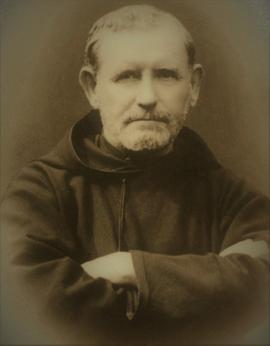
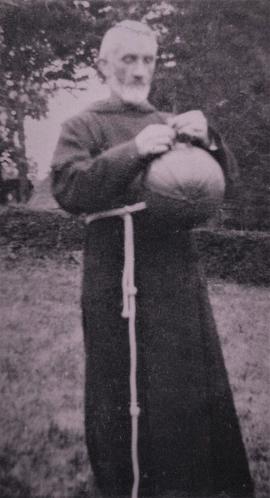
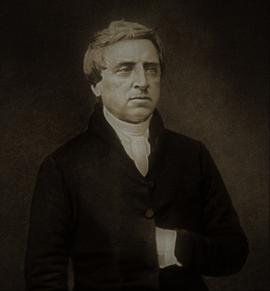
Theobald Mathew was born at Thomastown Castle near the village of Golden in County Tipperary on 10 October 1790. The Mathews were an old, landed family with both Catholic and Protestant branches. Francis Mathew (1738-1806) was the owner of Thomastown Castle. He was created Viscount Landaff in 1793, and then Earl Landaff in 1797 (the title derived from the place in Wales from which the family had come to Ireland in the seventeenth century). The title was sometimes referred to as the Earldom of Llandaff since that is the more common Welsh spelling, but it is Earl Landaff in the Peerage of Ireland. The Mathews of Thomastown held this title from 1797 to 1833. In the 1760s, Francis Mathew had adopted his orphaned cousin, James Mathew, Theobald’s father. On reaching adulthood, James was appointed the agent for the Mathew estate. Unlike many of the Mathews, James remained a Catholic throughout his life. His wife, Anne Whyte, was also a Catholic. They had twelve children, the fourth of whom was Theobald. The young Theobald Mathew had a privileged childhood, enjoying favoured treatment from his Protestant relation, Lady Elizabeth Mathew, the daughter of Francis Mathew. Lady Elizabeth knew and approved of Theobald’s priestly ambitions, and in 1800 she provided the money to pay for his education at St. Canice’s, a Catholic boarding school in Kilkenny. In September 1807, Theobald enrolled at St. Patrick’s College, Maynooth, for seminary training. However, his plans were upset when in his first year he was forced to leave Maynooth to avoid being expelled for holding what appears to have been a drunken party for his fellow students. He was subsequently accepted by the Capuchin Franciscan Order as a novice and he made his way to Church Street in Dublin to be trained. The Capuchins, in common with many of the religious orders in Ireland, were weak at this time and were thus extremely anxious for new recruits.

On 3 April 1813 Mathew was ordained a deacon. A year later he was ordained a priest by the Most Rev. Daniel Murray (1768-1852), later Archbishop of Dublin. After a brief sojourn in Kilkenny, Fr. Mathew moved back to Cork where he came under the influence of Fr. Daniel Donovan OSFC (d. 14 Jan. 1821) who was elected Provincial Minister of the Irish Capuchins in 1816. Fr. Mathew devoted a good deal of his time to practical charitable enterprises, establishing schools for poor and orphaned children. In these schools the children were taught household skills in addition to elementary subjects. In 1821, Fr. Donovan died, and Fr. Mathew was elected his successor as Provincial Minister. He would continue to hold this position until 1851. In 1832, he broke ground for an elaborate, Gothic-style Capuchin church in Cork (subsequently called The Church of the Most Holy Trinity), on Charlotte Quay (later renamed Father Mathew Quay). Due to a lack of funds the church would remain unfinished in Fr. Mathew’s lifetime. It was not until 1890 that the spire and façade were added. Nevertheless, Fr. Mathew gained an excellent reputation in the local community for his tireless endeavours in support of the poor of Cork. He was also noted for his exceptional spirit of ecumenism. He was on friendly terms with several leading Protestants and Quakers in the city. Fr. Mathew joined the total abstinence movement in Cork in April 1838. The Cork Total Abstinence Society was established with the avowed aim of encouraging people to make one enduring act of which would keep them sober for life. This act of will was enshrined in the pledge to abstain from the taking of intoxicating liquor.

From the very beginning Fr. Mathew’s endeavours in the cause of temperance gained striking success. Under his leadership, teetotalism drew many adherents in Cork and spread throughout Munster and eventually throughout Ireland. The Society’s ranks quickly grew, and within three months, Fr. Mathew had enrolled 25,000 new members in Cork alone. In five months, the number had increased to 130,000. He travelled across Ireland, convincing thousands more to pledge teetotalism. In August 1842, he began traveling internationally, first to Scotland, then England. At its height, just before the outbreak of the famine in 1845, Fr. Mathew’s temperance movement had enrolled three million people, or more than half of the adult population of Ireland. By the mid-1840s he was frequently travelling to Britain with equally dramatic results. The leading nationalist politician, Daniel O’Connell (1775-1847), described the temperance movement as Fr. Mathew’s ‘mighty moral crusade’. In 1847, the priests of the diocese of Cork selected him to be their bishop. However, there was strong opposition from members of the hierarchy. It was held against him that he had accepted a pension from the Government. One long-standing critic among the bishops described him as ‘the hired tool of a heretical government’. This reflected the long-standing determination of the Catholic Church in Ireland not to accept state funding and the interference that would come in its train. Fr. Mathew’s financial mismanagement (he was known to be bountiful and generous to the point of extravagance), liberal Catholicism and Protestant associations also told against him. The Pope acceded to the almost unanimous advice of the Irish hierarchy that Fr. Mathew should not be appointed to the bishopric. Nevertheless, his standing as a popular figure remained undiminished. In July 1849, he visited the United States where he was greeted with enthusiastic acclaim. In Washington, the Congress unanimously admitted to him to a seat on the floor of the House; he was the first non-American after the Marquis de Lafayette to be so honoured. Rallies and demonstrations were held across the country to honour Ireland’s renowned ‘Apostle of Temperance’.

Despite this personal adulation, it was clear that Fr. Mathew’s movement had reached its zenith. From the late 1840s the movement began to decline almost dramatically as it had risen. His health started to fail (he had suffered a stroke in 1848) and crippling debts began to accumulate, making it increasingly difficult to continue the temperance crusade. The onset of the famine, brought about by the failure of the potato crop in 1845, dealt a grievous blow to the movement; thousands of Fr. Mathew’s followers died or emigrated in those years. Many of those who remained in Ireland had to contend with more pressing concerns than the maintenance of their pledge to abstain from alcohol. In late 1853, despite declining health, Fr. Mathew ventured to Limerick where he administered the pledge in what was his last appearance at a public meeting. In October 1854, on medical advice, he travelled to Madeira, but his health continued to deteriorate. In the absence of its charismatic leader the temperance movement continued to weaken. He suffered a severe stroke in late 1856 and died in Queenstown, County Cork, on 8 December 1856. He was 66 years old. He was buried in St. Joseph’s Cemetery in Cork, which he had established twenty-six years earlier.
Neary, Paul, 1857-1939, Capuchin priest
IE CA DB/PN · Pessoa singular · 24 May 1857-20 June 1939

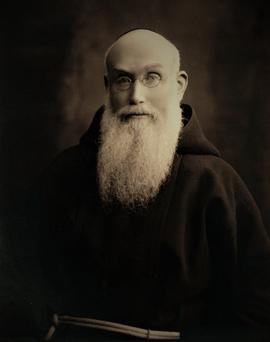
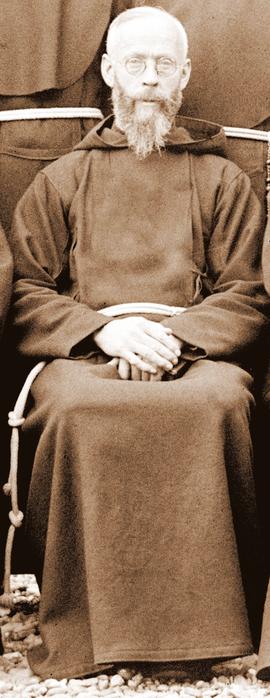
William Neary, the son of John Leary and Brigid Neary (née Dowling), was born on 24 May 1857 in Freshford, County Kilkenny. Michael Neary, an older brother, joined the Capuchins in 1875 and took the religious name of Fidelis. William followed in his brother’s footsteps and joined the Order in Kilkenny a year later in May 1876. He took Paul as his religious name and was solemnly professed as a friar in October 1881. Following his profession, he was sent to France to continue his studies. He returned to Ireland and was ordained a priest in April 1881. In 1884, the Irish friars succeeded in re-establishing administrative autonomy by reconstituting a canonical Irish Capuchin Province with a Belgian-born friar, Fr. Seraphin Van Damme OSFC (1820-1887), appointed as Provincial Minister (Superior). In January 1887, Fr. Paul was summoned to Rome and was appointed the first Irish-born Provincial Minister of the reconstituted Irish Capuchin Province. Fr. Paul played a key role in the organisation of the celebrations of the centenary of the birth of Fr. Theobald Mathew OSFC (1790-1856) in 1890 and in the campaign to secure funds to complete the church named in his honour (Holy Trinity, or Father Mathew Memorial Church in Cork). As Provincial Minister, and later as Vice-President of Father Mathew Hall in Dublin, he campaigned widely for the promotion of temperance. When the Catholic hierarchy invited the Irish Capuchins to undertake a nationwide crusade for the revival of temperance in 1905, Fr. Paul was the principal organiser and facilitator of this missionary campaign. Plagued by regular bouts of ill-health in his latter years, Fr. Paul Neary died in the Capuchin Friary on Church Street in Dublin on 20 June 1939 and was buried in Glasnevin Cemetery.

Baptismal name: William Neary
Religious name: Fr. Paul Neary OFM Cap.
Date of birth: 24 May 1857
Place of birth: Freshford, County Kilkenny (Diocese of Ossory)
Name of father: John Neary
Name of mother: Brigid Neary (née Dowling)
Date of reception into the Capuchin Order: 24 May 1876
Date of first profession: 27 May 1877
Date of final profession: 4 Oct. 1880
Date of ordination: 4 Apr. 1881
Date of death: 20 June 1939
Place of death: Capuchin Friary, Church Street, Dublin
Place of burial: Glasnevin Cemetery, Dublin
Leadership positions: Provincial Minister, 1887-90, 1890-3, 1904-7; Provincial Definitor, 1885-8, 1895-8, 1901-4, 1913-7.
Note: Fr. Fidelis (Michael) Neary OFM Cap. (1855-1932) was a half-brother of Fr. Paul Neary OFM Cap.

Murphy, Bonaventure, 1880-1968, Capuchin priest
IE CA DB/46 · Pessoa singular · 7 February 1880-26 April 1968

A native of Cork, Fr. Bonaventure Murphy OFM Cap. had a long association with the Capuchin College in Rochestown in the county and served as rector of the school for twenty-one years. While rector, he gave refuge to Captain Robert Monteith (1879-1956) who had accompanied Roger Casement to Ireland in a failed attempt to deliver German arms to be used by republican insurgents in the 1916 Rising. Monteith remained at Rochestown until arrangements could be made for his escape to the United States. Fr. Bonaventure was acquainted with many prominent republicans including Terence MacSwiney and Michael Collins and he reportedly sheltered Liam Mellows during the War of Independence. In 1934 he was appointed guardian (local superior) of the Capuchin Friary in Kilkenny, a position he held until 1940. He continued to reside in Kilkenny until his death.

Baptismal name: Martin Murphy
Name (in religion): Fr. Bonaventure Murphy OFM Cap.
Date of birth: 7 Feb. 1880
Place of birth: Glanmire, County Cork
Name of father: Michael Murphy
Name of mother: Mary Murphy (née Hegarty)
Date of reception into the Capuchin Order: 1 Oct. 1899
Date of first profession: 4 Oct. 1900
Date of final profession: 25 Sept. 1904
Date of ordination (as priest): 16 Mar. 1907
Date of death: 26 Apr. 1968
Place of death: St. Luke’s Hospital, Kilkenny
Place of burial: Foulkstown Cemetery, Kilkenny

Fitzgibbon, Edwin, 1874-1938, Capuchin priest
IE CA DB/25 · Pessoa singular · 26 January 1874-24 June 1938

Thomas Fitzgibbon was born in 1874 to a large Irish-speaking family in Ballynona near Castlemartyr in County Cork. He was educated at the Capuchin College in Rochestown, County Cork, and joined the Order in March 1893 taking Edwin as his religious name. He was solemnly professed as a Capuchin friar in December 1897 and continued his studies in the University of Louvain where he obtained a PhD. He was ordained in St. Mary of the Angels, Church Street, Dublin, by Archbishop William Walsh in February 1902. In 1906 Fr. Edwin was appointed Rector of the Capuchin College in Rochestown and he became an enthusiastic supporter of the school’s Gaelic sports’ teams. In December 1908, Queen’s College, Cork, became one of the constituent colleges of the new National University of Ireland (NUI). Fitzgibbon was one of the first appointees to the new college becoming Professor of Philosophy in 1909. In 1912 he was elected president of the university’s hurling club. Almost immediately, he donated his annual salary (reckoned to be about £80) for the purchase of a trophy to be contested by the hurling teams of various colleges within the NUI. The Fitzgibbon Cup was the last national Gaelic trophy to be named after a living person, and the donor remained a regular fixture at the presentation ceremonies for the next twenty-five years. Fr. Edwin was elected Provincial Minister of the Irish Capuchins on four occasions, holding this office from 1919-22, 1926-9, 1931-4 and 1934-7. He undertook several visitations to the newly established Irish Capuchin mission custody in the Western United States while Provincial Minister. Ill-health forced his resignation from the Chair of Philosophy in UCC in 1937. He died at the Bon Secours Home in Cork on 24 June 1938 and was buried in the cemetery adjoining the Capuchin Friary in Rochestown, County Cork.

Baptismal name: Thomas Fitzgibbon
Religious name: Fr. Edwin Fitzgibbon OFM Cap.
Date of birth: 26 Jan. 1874
Place of birth: Castlemartyr, County Cork (Diocese of Cloyne)
Name of father: John Fitzgibbon
Name of mother: Elizabeth Fitzgibbon (née Desmond)
Date of reception into the Capuchin Order: 23 Mar. 1893
Date of first profession: 24 April 1894
Date of final profession: 25 Dec. 1897
Date of ordination (as priest): 23 Feb. 1902
Leadership positions: Provincial Minister: 1919-22; 1926-9; 1931-4; 1934-7; Provincial Definitor: 1907-10; 1910-3; 1916-9.
Date of death: 24 June 1938
Place of death: Bon Secours Home, Cork
Place of burial, Cemetery, Capuchin Friary, Rochestown, County Cork

Butler, John, 1873-1950, Capuchin priest
IE CA DB/17 · Pessoa singular · 6 February 1873-3 October 1950

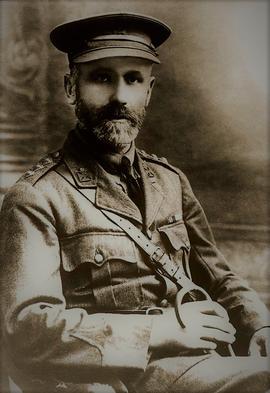
Patrick Butler was born in Sheastown, County Kilkenny, on 6 February 1873. He joined the Capuchins in 1890 (taking John as his religious name) and was ordained a priest in January 1899. For the following three years he worked as a science teacher in the Capuchin College in Rochestown, County Cork. He subsequently joined the missionary staff and was involved in giving missions and retreats throughout Ireland. In 1914, he travelled to Harrisburg in Pennsylvania. He spent nearly two years in the United States assisting Irish Capuchin missionaries in preaching activities. Following the outbreak of the First World War, he returned to Ireland, and in April 1916 was appointed a chaplain in the British Army with the rank of Captain. He served for a short time with the home garrisons in Canterbury and in Blackpool. He was later sent to the Middle East and Palestine as part of the Egyptian Expeditionary Force (EEF), an Allied military formation which fought the Ottoman Turks for control of this strategically important region. He was present at the Battle of Gaza (March 1917), and at the capture of Jerusalem (December 1917), and later acted as chaplain in a casualty clearing station in Damascus. Fr. John returned to Ireland in 1919 and spent the following eleven years in the Capuchin Friary on Church Street in Dublin. In 1930 he moved to Cork and was attached to the community at Holy Trinity Friary. He remained in Cork until his death on 3 October 1950.

Baptismal name: John Butler
Religious name: Fr. John Butler OFM Cap.
Date of birth: 6 February 1873
Place of birth: Sheastown, County Kilkenny (Diocese of Ossory)
Name of father: Tobias Butler
Name of mother: Catherine Butler (née Murphy)
Date of reception into the Capuchin Order: 23 June 1890
Date of first profession: 15 Aug. 1891
Date of final profession: 11 Oct. 1896
Date of ordination (as priest): 8 Jan. 1899
Missionary activity: Travelled to Harrisburg, Pennsylvania, United States on 18 May 1914; Returned to Ireland on 25 Mar. 1916.
Educational attainments: BA (RUI)
Date of death: 3 Oct. 1950
Place of death: Cork
Place of burial: Cemetery, Rochestown Capuchin Friary, Cork
Note: Fr. Casimir Butler OFM Cap. (1876-1958) was a younger brother of Fr. John Butler OFM Cap.

Corrigan, Salvator Maria, 1835-1919, Capuchin priest
IE CA DB/SC · Pessoa singular · 25 April 1835-6 October 1919

William Corrigan was born in Dublin on 25 April 1835. He was received into the Capuchin Order in Italy in 1854 as at this time there existed no novitiate for the training of friars in Ireland. He took Salvator Maria as his religious name upon joining the Order. He was ordained a priest in Bologna on 23 April 1859. He returned to Ireland soon afterwards and ministered in Dublin and Cork until 1867. His time in Dublin was marked by a vigorous campaign to secure funds for the construction of St. Mary of the Angels on Church Street. He became a well-known figure in Smithfield Market, appealing to local traders and sellers for funds to aid the completion of the new Gothic-style church. He also travelled to England and Scotland in search of contributions. In 1868 he was sent to the United States to collect money to defray the enormous debt incurred in building the church. He spent approximately seven years traversing America raising funds. He returned to Dublin in 1875 and resumed his ministry in the Church Street Friary. He was present in Dublin when Fr. Gil de Cortona OSFC, General Minister of the Capuchin Order, came to Ireland on visitation in 1876. Having some knowledge of Italian, Corrigan accompanied the Minister General as an interpreter as he travelled around Ireland to visit the various Capuchin houses. In 1884 Corrigan volunteered for missionary work in the diocese of Allahabad in India. Seemingly a popular cleric, musicians from St. James’s Brass Band played before a large crowd from St. Michan’s Parish who had gathered at North Wall as he left for the Indian subcontinent. Failing health and the harsh climate forced him to return to Ireland just two years later. He remained a member of the Church Street community in Dublin until his death on 6 October 1919. He was buried in Glasnevin Cemetery in Dublin.

Baptismal name: William Corrigan
Religious name: Fr. Salvator Maria Corrigan
Date of birth: 25 Oct. 1835
Place of birth: Dublin
Name of father: John Joseph Corrigan
Name of mother: Teresa Corrigan (née Byrne)
Date of reception into the Capuchin Order: 27 Nov. 1854
Date of first profession: 29 Nov. 1855
Date of ordination (as priest): 23 Apr. 1859
Date of death: 6 Oct. 1919
Place of death: Capuchin Friary, Church Street, Dublin
Place of burial: Glasnevin Cemetery, Dublin

Maher, Columbus, 1835-1894, Capuchin priest
IE CA DB/CM · Pessoa singular · 9 June 1835-10 September 1894

Patrick J. Maher was born on North Brunswick Street, opposite, what was then, the Richmond Hospital in Dublin on 9 June 1835. His family’s property extended to North King Street and possibly included the site (No. 49) on which a former Capuchin House stood. He was baptized and made his first communion (8 September 1848) in the old Church Street chapel where he served Mass for Fr. Theobald Mathew OSFC from whom he took the total abstinence pledge. In 1851 he entered the Capuchin novitiate, taking the name Columbus, at Frascati near Rome, and made his solemn profession the following year. He then studied philosophy at Florence and theology at Sienna after which he was granted patents for preaching in 1855. The following year he received subdiaconate in Rome. Too young to be ordained, he spent some months with the Capuchin community in Pantasaph, Wales, until he returned briefly to Ireland to receive a diaconate from Cardinal Paul Cullen at Maynooth on 5 June 1857. The following year, at the age of twenty-three, he was ordained a priest in Liverpool with a dispensation of thirteen months from the Holy See. At the time it was noted that he was the first Capuchin priest to be ordained in England since the Reformation. At the Provincial Chapter in 1859 he was appointed guardian in Kilkenny where he served two terms and was in demand as a confessor and preacher until he was sent to Rome as a novice master. While there he was asked to go to Ancona to minister to about 800 men of the Irish Brigade who were on their way to defend Pope Pius IX.

Having returned to Ireland, he spent some time in Cork and again in Kilkenny until he moved to Dublin. Here, in 1880, he identified himself with the Temperance League and from then on, his whole life and energy were devoted to a crusade against the abuses of intoxicating drink. He became Vice-President of the Father Mathew Total Abstinence Society of the Sacred Thirst founded by his fellow Capuchin Fr. Albert Mitchell OSFC (1831-1893). When Fr. Albert left for missionary work in Australia in 1883, Fr. Columbus became President and undertook the herculean task of resuscitating the total abstinence movement, which had been declining ever since Fr. Mathew’s death. Gradually, as a result of his untiring efforts, Fr. Columbus made total abstinence popular, honoured and respected in Dublin. He succeeded in constantly enlisting individuals rather than enrolling large numbers at a time. Eventually, the old Temperance Hall at 3 Halston Street proved inadequate to meet the demands upon its space. With the centenary of the birth of Fr. Mathew approaching (1890), Fr. Columbus decided to perpetuate his hero’s memory by building a Memorial Hall on Church Street and by erecting a statue in Dublin. All classes and creeds contributed to collections made throughout the city, the country, and abroad. A committee presided over by the Lord Mayor met regularly in the Oak Room of the Mansion House, Fr. Columbus being one of its most attentive members. A competition for a suitable design for a statue was won by Mary Redmond (1863-1930). It would be eight feet tall, sculptured in light grey Sicilian marble and standing on a pedestal of limestone fourteen feet high.

On 30 October 1890, a procession of 50,000 made its way from St. Stephen's Green to O’Connell Street for the laying of the top stone of the pedestal. All the city trades turned out with bands and banners; and the various temperance societies and sodalities, the League of the Cross and other bodies were fully represented. On the platform there was a representative group of clergy, merchants, and other citizens of all denominations. Among them were sixty-five total abstainers who had taken the pledge from Fr. Mathew himself in 1840. It was a proud moment for Fr. Columbus when he was given the silver trowel, now preserved in the Irish Capuchin Archives, used by the Lord Mayor to lay the top stone of the pedestal. Three years later the statue itself was put in place.

Although the Memorial Hall’s foundation stone was blessed and laid in the centenary year, it took twelve months to build. Then on 25 January 1891 it was opened by Archbishop William Walsh who had been a supporter of Fr. Columbus from the outset. Before extensions were added (1904) the main auditorium was 73 feet in length and 39 feet wide and there was a gallery on three sides. Altogether there was accommodation for between 800 and 900 people. In addition to the main hall there was a coffee bar, a billiard room and reading rooms. Among the large representative group attending the opening were the Lord Mayor, the Sheriff, William Conyngham Plunket, the Church of Ireland Archbishop of Dublin, and the Irish nationalist politician John Redmond who regretted that Dublin was the worst city for drunkenness that he had ever visited. The Temperance League now moved from Halston Street to their new Memorial Hall on Church Street. A monthly meeting was also held in the nearby Church of St. Mary of the Angels, but after only two years it was necessary to hold two meetings – one for men and another for women. Indefatigably, Fr. Columbus presided over the thousands striving for sobriety.

Fr. Columbus Maher OSFC died suddenly of a suspected heart attack on the morning of 10 September 1894 in the Capuchin Friary on Church Street, Dublin. He was 59 years old. At his funeral Mass Fr. Matthew O’Connor OSFC, Provincial Minister, stated that the Capuchin community had been deprived of an exemplary member, Church Street of a devoted confessor and preacher, the Temperance League of its protector and the City of Dublin of a public benefactor. The universal esteem in which he had been held was clear from the long file of mourning carriages and the estimated 6,000 people who attended his funeral in Glasnevin Cemetery.

Farrell, Mel, 1914-1963, Capuchin priest
IE CA DB/MF · Pessoa singular · 9 May 1914-7 November 1963

Peter Anthony Farrell was born in Newtowncashel in County Longford on 9 May 1914. He joined the Capuchin Franciscan Order on 28 October 1933 and took Mel as his religious name. He was ordained a priest on 12 June 1941. Following his ordination, he resided at Rochestown Friary for about a year. The remainder of his priestly ministry (nearly twenty years) was spent in Holy Trinity Friary in Cork. While there he organised and directed the work of the Capuchin Foreign Missions in the city. He was guardian (local superior) of the Holy Trinity community from 1952 to 1958. He died in Holy Trinity Friary on 7 November 1963 and was buried in the cemetery adjoining the Capuchin Friary in Rochestown, County Cork.

Baptismal Name: Peter Anthony Farrell
Religious name: Fr. Mel Farrell OFM Cap.
Date of birth: 9 May 1914
Place of birth: Newtowncashel, County Longford (Diocese of Ardagh)
Name of father: Peter Farrell (Farmer)
Name of mother: Mary Farrell (née Brennan)
Date of reception into the Capuchin Order: 28 Oct. 1933
Date of first profession: 29 Oct. 1933
Date of final profession: 29 Oct. 1937
Date of ordination (as priest): 12 June 1941
Educational attainments: BA (1937)
Date of death: 7 Nov. 1963
Place of death: Holy Trinity Friary, Cork
Place of burial: Cemetery, Rochestown Capuchin Friary, County Cork

Roche, Fintan, 1898-1953, Capuchin priest
IE CA DB/96 · Pessoa singular · 30 July 1898-9 May 1953

Daniel Roche was born in Newcastle West in County Limerick on 30 July 1898. He was educated in the local primary school in Newcastle West and later at the Capuchin College in Rochestown, County Cork. He entered the Capuchin Order in August 1914 and took Fintan as his religious name. He made his solemn profession as a friar in 1920. He graduated with a philosophy degree from University College Cork and studied theology at Rochestown. He was ordained a priest by Bishop Daniel Cohalan in Holy Trinity Church, Cork, on 29 June 1923. Shortly after his ordination, in October 1923, he travelled to the United States as a missionary friar. Ten years later, he became one of the pioneering missionaries in the newly established Capuchin mission territory in Barotseland in Northern Rhodesia. While in Africa, he contributed regularly to ‘The Father Mathew Record’, a popular monthly publication of the Irish Capuchins which promoted the Order’s overseas’ missions (particularly in Africa). He returned to Ireland in 1940 to engage in fundraising activities to support the Order’s missionary endeavours. A decision was made to send Fr. Fintan back to the United States in January 1944. However, he suffered a serious accident during his transatlantic passage when the ship he was travelling on encountered a severe storm. He continued to suffer from ill-health in the years following his return to America. He spent some years as Pastor in McKenzie Bridge, a picturesque if isolated region located about halfway between Roseburg and Bend in Oregon on the American Pacific coast. In 1950, he described his life in McKenzie Bridge as ‘nothing strange, weeding and Mass every day and peace’. However, his health continued to decline and following several heart attacks he left his remote rural abode in Oregon to reside in California. He died in the Capuchin Friary in Flintridge, north of Los Angeles in California on 9 May 1953.

Baptismal name: Daniel Roche
Religious name: Fr. Fintan Roche OFM Cap.
Date of birth: 30 July 1898
Place of birth: Newcastle West, County Limerick
Name of father: James Roche (Shopkeeper)
Name of mother: Anne Roche (née Downey)
Date of reception into the Capuchin Order: 27 Aug. 1914
Date of first profession: 8 Sept. 1915
Date of final profession: 21 Mar. 1920
Date of ordination: 29 June 1923
Educational attainments: BA, 1919
Missionary activities: Travelled to the United States on 14 Oct. 1923; Travelled to Africa in 1933; Returned to Ireland in 1940; Travelled to the United States in January 1944
Date of death: 9 May 1953
Place of death: Flintridge, California

Field, Thaddeus, 1888-1962, Capuchin priest
IE CA DB/61 · Pessoa singular · 16 November 1888-9 December 1962

Denis Field was born in Kilcrea in County Cork on 16 November 1883. He was the son of a farmer and was educated at Kilbonane National School and later at the Capuchin College in Rochestown, County Cork. He was received into the Capuchin Order at Rochestown (taking Thaddeus as his religious name) in October 1905. He studied philosophy at Rochestown College and received a BA degree from the Royal University, Cork, in 1911. He was ordained to the priesthood in Holy Trinity Church, Cork, on 5 July 1914. Shortly after his ordination, Fr. Thaddeus was appointed to the teaching staff at the Seraphic College in Rochestown. Most of his religious life was spent in Rochestown and for many years he served as Vice-Rector of the College. Fr. Thaddeus also held other offices in the Irish Capuchin Province. At various times he was Guardian (local superior) of the Rochestown community, Vicar and Vice-Master of Novices in the Kilkenny foundation, and President of Father Mathew Temperance Hall in Cork city. His later years in Rochestown were affected by recurring bouts of ill health. He died in Cork on 9 December 1962 and was buried in the cemetery adjoining Rochestown Friary.

Baptismal name: Denis Field
Religious name: Fr. Thaddeus Field OFM Cap.
Date of birth: 16 Nov. 1888
Place of birth: Kilcrea, County Cork
Name of father: Denis Field (Farmer)
Name of mother: Ellen Field (née Murphy)
Date of reception in the Capuchin Order: 1 Oct. 1905
Date of first profession: 4 Oct. 1906
Date of final profession: 21 Jan. 1912
Date of ordination (as priest): 5 July 1914
Educational attainments: BA, (RUI) 1911
Date of death: 9 Dec. 1962
Place of death: Lindville Hospital, Cork
Place of burial: Cemetery, Rochestown Capuchin Friary, County Cork