Brief document outlining the education of women in the tribe of Efik. Written by Maurice Archibong, Headmaster of the Sacred Heart primary school in Calabar.
AI CLEANED TEXT:
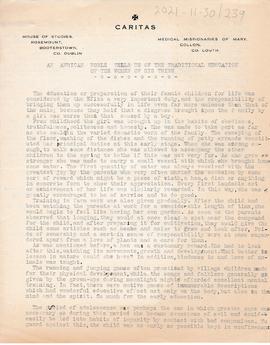
AN AFRICAN NOBLE TELLS US OF THE TRADITIONAL EDUCATION OF THE WOMEN OF HIS TRIBE
o - o - o - o - o - o -
The education or preparation of their female children for life was considered by the Efiks a very important duty, and the responsibility of bringing them up successfully in life even far more onerous than that of the male, because they held that a disgrace brought upon the family by a girl was worse than that caused by a boy.
From childhood the girl was brought up in the habits of obedience, truthfulness, politeness and honesty. She was made to take part as far as she could in the varied domestic work of the family. The sweeping of the floor, washing of the dishes and the running of petty errands constituted her principal duties at this early stage. When she was strong enough to walk some distance she was allowed to accompany the other children to the spring to bathe if this was not very far. As she grew stronger she was made to carry a small vessel with which she brought home some water. The first quantity of water was always received with the greatest joy by the parents who very often marked the occasion by some sort of reward which might be a piece of cloth, a hen, a dish or anything in concrete form to show their appreciation. Every first laudable act or achievement of her life was similarly rewarded. In this way, she was greatly encouraged to be of service and to do good.
Training in farm work was also given gradually. After the child had been watching the parents at work for a considerable length of time, she would begin to feel like having her own garden. As soon as the parents observed that longing, they would at once clear a spot near the compound for the child, and after preparing it for cultivation, they would give the child some articles such as yams and maize to grow and look after. Pride of ownership and a certain sense of responsibility were at once engendered apart from a love of plants and a care for them.
As was mentioned before, a hen was a customary reward. She had to look after this, watching its movements, growth and development. What better lesson in nature could she have? In addition, kindness to and love of animals was taught.
The running and jumping games often practised by village children made for their physical development, while the songs and folklore generally given by the grown-ups during moonlight nights afforded excellent mental training. In fact, there were native games of innumerable descriptions which had wonderful educative effect not only on the body, but also in the mind and the spirit. So much for the early education.
The period of adolescence was perhaps the one in which greater care was necessary as during this period she became conscious of evil and could easily be led into habits of impurity by contact with bad companions. To guard against this, the child was as early as possible kept in confinement.
(that is about the age of twelve) and here the next stage of her education began.
Before this time she was betrothed to a person whom the parents approved as being good and she had to look forward to him as her future husband. She was taught to look forward to him exclusively.
While in confinement in what was known as the "fattening house" the maiden was, as it were, in a domestic training institution. She was given by her mother or by some other woman versed in the various native arts and crafts, a thorough training in the principles of sanitation, cookery, embroidery, knitting, calabash and woodcarving, beadwork, claymoulding, the writing of NSIBIDI (native hieroglyphics), the only form of literary education then in vogue. This period of training generally lasted from three to seven years.
By the end of this period when the girl had become fat as a result of excessive feeding and lack of strenuous exercise, she was completely trained for life.
What a striking contrast is there between this system of education and that of the present day when a girl concentrates more on acquiring the three Rs than on what really matters, the preparation of herself for home life. What a remarkable precaution was taken by the parents of old against impurity when in our days we negligently leave our girls open to very serious temptations against holy purity at a most critical and delicate part of their existence. Little wonder that most of the Efik women of old were such excellent and efficient wives and mothers.
Maurice ARCHIBONG
N.B. Mr. M. Archibong is a chief of the Efik tribe. He is a Catholic for many years and is headmaster of the Sacred Heart Primary School at Calabar.
(Note of the Editor of "Africa" where that article was published June 1939)
Mr. Archibong's children were the first to be baptized at their birth in Nigeria.
(A Note from a report of Mother Mary of the Incarnation.)
ORIGINAL OCR
AN AFRICAN NOBLE TEELS US OF THE TRADICLONAI. EDUCAION
OF TE WOMEN OF HIS TRIBE
o - o - o- o - o - o -
The dducation or preparation of their female children for Life was
considered by the Efiks a very important duty, and the responsibility of
bringing them up successfully in Life even far more ominous than that of
the male, because they held that a disgrace broucht upon the f amily Dy
a girl was worse that that caused by a boy.
From childhood the girl was brought up in the habits of obedience,
truthfulness, politeness and honesty. She was made to take part as far
As she couldin the varied domestic work of the family. The sweeping of
the floor,washing of the dishes and the running of petty errands constib
uted her principal duties at this early stage. when she was strong en.
ough, to walk some distance she was allowed to accompany the other
children to the spring to bathe if this was not wery far. As she grew 21
stronger she was made to carry a small vesscl with which she brought hom
Some water. The first quantity of water was always received with the
greatest joy by the parents who very often marked the occasion by some
sort of reward which might be a picce of cloth,a hen,a dish or anything
in concrete form to show their appreciation. Every first Laudable act
or achievement of her life was similarly rewarded. In this way,she was,
grcatly encouraged to be of service and to do good.
Training in farm work was also given gradually. After the child had
been watching the parents at work for a cansiderable length of time, she
would begin to feel like having her own garden. As soon as the parents
observed that Longing, they would at once clear a spot near the compound
for the child,and after preparing it for cultivation, they would give the
child some articles such as eahs and maize to Mrow and Loolkt after, Pri.
de of ownership and a certain sense of responsibility were at once engen
dered apart from a love of plants and a care for them.
As was mentioned before,a hen was a customary reward.She had to Look
After this, watching its movements,growth and developyment.What be tter 1e
Lesson in nature could she heve7 in addition, kindness to and Love of an.
imals was taught.
The running and jumping games often practided by village children Madc
for their physical develspoment, while the songs and folklore generally zE
given by the grown-ups during moonlight nichta afforded excellent mental
training. In fact, there were native games of immumaerable descriptions
which had wonderful educative effect not only on the body,but also in the
mind and the spitit. So much for the carly education.
mhe b2iod of adolescence was perhaps the one in which grcater care wo.
necessary as during this period she became conscious of ewil and could-E
casily be led into habits of impurity y contact with bad companions. Qo
Suard against this, the child was as carly as possible kept in confinemenl
Lchat is about the ace of twelve) and here the hext stage of her educaticr
Degan.
Before this time she was betrothed to a peson whom the parents approv.
ed as being good and she Had to 1ook forward to hin as her future husband.
She was taught to Look forward to him exclusively.
Mhile in confinement in what was known as the "fattening houset the
maiden was,as it were,in a domestic training institution. She was given
Dy her mother or by some other woman versed in the various native arts
And crafts, a thorough training in the principles of sanitation, cookery,em.
broidery,knitting, calabash and woodcarvind, beadwork, claymoulding, the writ,
Hing oiSIBIDl (native hieroglyphics) the only form of literary education
then in wogue. This period of training generally lasted from three to sev-
en years,
By the end of this period when the girl had beEthezds 2fEsult of exces.
sive feedins and lack of strenuous exercise,she was completely trained for
1ife. o
Mhat a striking conlrast is there betweem this system of education and
that of the present day when a girl concentrates more on acquiring the
three Rs than on what really matters,the preparation of herself for home
Life. What a remarkable precaution was taken by the parents of old against
impurity when in our days we negligently leave our girls open to very
Serious temptations against holy purity at amost critical and delicate
part of their existence.Little wonder that most of the Efik women of old
were such exccllent and efiicient wives and mothers.
Haurice ARCHIBONG
N.B. Mr M.Archibong is a chief of the Mfik tribe. He is a Cat
Catholic for many years and is headmaster of the Sacred
Heart Primary School at Calabar,
.ote of the Editor ofAfricalt where that article was
. published June 1939)
M.Acchibongschildren were the first to be baptized at
their birth in Migeriat
AMote from a report of Mother Mary of the incarnat.