Affichage de 330 résultats

Notice d'autorité
Presentation Brothers
PB · Collectivité · 1795-2021

The Presentation Brothers are an international, Catholic congregation of religious brothers, founded in 1802 by Blessed Edmund Rice in Waterford, Ireland. The expressed mission of the Presentation Brothers is to "form Christ in the Young" and traditionally they have worked to achieve this through education.

Edmund Rice was born in the townland of Westcourt near the village of Callan in County Kilkenny on 1 June 1762. His parents, Robert Rice and Margaret Tierney Murphy, were prosperous farmers. At the age of 17, Rice was apprenticed to his uncle, Michael Rice, in Waterford city. Several years later, Edmund’s uncle signed the business over to him and Edmund began to invest his growing fortune in land and property. At the age of 25, Edmund married Mary Elliott but, sadly, Mary died in January 1789 following a horse-riding accident. Edmund and Mary had a daughter who was also called Mary.

After his wife’s death, Rice became more religious and he developed a devotion to St. Teresa of Avila. He also became involved in charitable works and regularly visited the poor of Waterford providing financial assistance to those in need. In 1798, Edmund helped the Presentation Sisters open a convent and school for girls in Waterford. Rice decided to try something similar for young boys, and in 1800 he began to teach youngsters at his business premises in Barronstrand Street with the assistance of some volunteers. The following year, Rice converted some stables on New Street into a makeshift school. His friends and colleagues described it as an act of "mad folly". Two men, Patrick Grosvenor and Patrick Finn, arrived to help. The three men lived above the school where they prayed together and shared their possessions. This school would go on to be known as Mount Sion Primary School which exists to this day.

Between 1802, when he opened his first school and 1808, Rice gathered around him a group of companions to help him in his work. These first Brothers took their vows on 15th August 1808 in the chapel of the Presentation Convent, Waterford, and together they became known as the Society of the Presentation. They lived their religious life based on the Rule of the Presentation Sisters (founded by the Venerable Nano Nagle in 1775), adapted for men. The Presentation Rule defined the new institute as a diocesan institute. This meant that, initially in Waterford, and later on in other dioceses where the Brothers worked, the local Bishop was their Superior. Unlike institutes of pontifical rite, the new religious institute had no Superior General of its own.

As the work of Edmund Rice expanded to Dublin, Cork and other Irish cities and towns, a need for central planning and direction emerged in the developing educational mission of the Brothers. From 1817 onwards, Edmund Rice began to consider adopting a constitution along the lines of that used by the Brothers of the Christian Schools in France. The De La Salle Brothers were an institute of pontifical rite, and had their own Superior General and elected administration. They were, to a great extent, independent of local bishops and this gave them great freedom in the development and expansion of their work. Rice felt that the Presentation Rule had served the group well in its early years, but Rome would only grant his group pontifical status if they adopted a pontifical rule already in existence. He decided to propose to his Brothers that the group should adopt a new De La Salle style rule. Controversy and debate ensued over a number of years and ultimately led to a division within the group. The vast majority of the Brothers ultimately accepted the adoption of a rule along the lines of that used by the Brothers of the Christian Schools in France. A minority of two continued to live the Presentation Rule and remained under the jurisdiction of their local bishops. The majority, known as the Christian Brothers since 1822, elected Edmund Rice as their first Superior General. The group experienced considerable expansion and development during the following decades.

Of the two Brothers who chose to remain with the Presentation Rule, Brother John Ignatius Mulcahy taught at a school in Cappoquin, County Waterford until his death in 1845. He was not joined by any followers. The second Brother, Michael Augustine Riordan of Cork, was joined by a number of followers and continued to follow the Presentation rule.

Brother Michael Augustine Riordan had entered the North Monastery in Cork in 1814 (there had been a community of Brothers in Cork since 1811; Brother Jerome O'Connor and Brother John Baptist Leonard founded the Peacock Lane Monastery, also known as the North Presentation Monastery, and were given charge of the Cork Charitable Society’s North School off Chapel Lane by the Bishop of Cork, Dr Francis Moylan). There had been considerable division in the North Monastery concerning the acceptance of the new rule over a number of years. An architect by profession, Riordan had helped in the building of many Cork churches before his entrance to the Brothers. His personal sense of loyalty to the then Bishop of Cork, John Murphy, greatly influenced his decision to remain with the Presentation Rule. In 1827, with the support of Bishop Murphy, he left the North Monastery and was given a house in Douglas Street, on the south side of the city. This became known as the South Monastery and Brother Riordan was joined there by some companions who lived as Presentation Brothers under the jurisdiction of the Bishop of Cork.

The Brothers began to conduct two schools in the city, one in the South Monastery itself, another a Lancasterian School on Great George's Street, today known as Washington Street. Thus, Brother Riordan played a pivotal role in the survival of the Institute of Presentation Brothers who would continue to live the original rule chosen by Edmund Rice and his early companions.

The Presentation Brothers continued their work in the Cork schools and expanded to Kerry in 1838. A foundation was made in Deptford, England in 1876 and in Birr, Co. Offaly, in 1879. By the 1870s however, a new younger group of Brothers began to address the issue of diocesan versus central control. As various types of schools were founded in diverse places, it became obvious that the Presentation Congregation should develop from its present diocesan status to being an institute of pontifical rite. In 1874, the Bishops of Cork and Kerry, on behalf of the Brothers, requested Rome to grant pontifical approval to the Presentation Institute. A Decree was received from Rome in the same year granting temporary approvaI. In 1885, the Presentation Brothers submitted a petition to Rome requesting its approval for a central government for the Presentation Institute under its own Superior General. By 1889, Rome granted temporary approval and final approbation came ten years later in 1899.

Throughout these developments, the Brothers retained the original Presentation Rule. Changes were inserted however to allow for a central government under a superior general and council. The first formal general chapter of the Brothers of the Presentation Institute was held in the South Monastery Cork in July 1889. Brother Patrick Shine was elected superior general and with him four assistants to help in the government of the Congregation.

The number of communities and schools established and managed by the Presentation Brothers greatly increased in the subsequent decades, both in Ireland (including Cork, Cobh, Kinsale, Bray, Dungannon, Enniskillen, Carrick-on-Shannon, Boyle, Letterkenny) and overseas (including Canada, USA, Ghana, Nigeria, Barbados, Grenada, St Lucia, Trinidad and Tobago, Peru, and Slovakia).

The Presentation Brothers have a presence in a number of these locations to the present day, and continue to work in the area of education as well as a wider range of ministries including with the homeless, elderly, disadvantaged youth and the Roma people.


Much of this history of the Presentation Brothers was sourced from 'The Contribution of the Presentation Brothers to Irish Education 1960-1998: A Study of a Roman Catholic Religious Teaching Institute in a Time of Change and Transition', a PhD thesis written and submitted to the University of Hull by Br Michael Martin Kenneally.
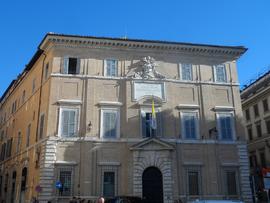
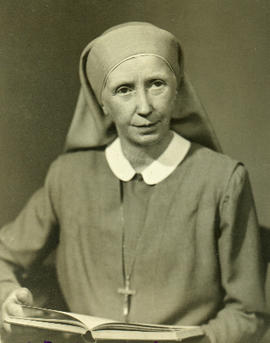
Sacra Congregatio de Propaganda Fide
VA/SCPF · Collectivité · 1622-2023

The Sacred Congregation de Propaganda Fide, whose official title is "sacra congregatio christiano nomini propagando" is the department of the pontifical administration charged with the spread of Catholicism and with the regulation of ecclesiastical affairs in non-Catholic countries. The intrinsic importance of its duties and the extraordinary extent of its authority and of the territory under its jurisdiction have caused the cardinal prefect of Propaganda to be known as the "red pope".

https://www.newadvent.org/cathen/12456a.htm

IE CA DB/28 · Personne · 24 October 1877-14 February 1925

Thomas Bibby was born on 24 October 1877 in Bagenalstown, County Carlow. He was baptised on 28 October 1877. His family were proprietors of a woollen mill at Greensbridge and operated two drapery establishments in Kilkenny City, one in Parliament Street and another on High Street. He entered the Capuchin novitiate at Rochestown on 7 July 1894 and took the religious name of Albert. He was solemnly professed on 8 May 1900 and was ordained a priest at St. Mary of the Angels, Church Street, Dublin, on 23 February 1902. A gifted scholar, Fr. Albert was among the first batch of Capuchin students to receive a BA degree from the Royal University. He later became a professor of philosophy and theology and taught these subjects to Capuchin students for some years after his ordination. One of his first students was Fr. Dominic O’Connor OFM Cap. Fr. Albert was active in the Gaelic revival movement and became a fluent speaker of Irish. He was also engaged in temperance advocacy and gave missions sometimes solely in Irish in Gaeltacht areas. He was also involved in the Columcille branch of Conradh na Gaelige in its early years. Briefly a part of the community of friars in Kilkenny, he moved to Church Street, Dublin, in the early 1900s. In the aftermath of the Easter Rising, Fr. Albert ministered to a number of rebel prisoners in Kilmainham Jail and in other locations. He was present at the execution of Seán Heuston on 8 May 1916 and wrote an account of his final hours. He was later a regular correspondent with prominent republicans and their relations. On 16 December 1920 both Fr. Albert and Fr. Dominic O’Connor OFM Cap. were arrested by British forces during a raid on the friary on Church Street. Fr. Albert was detained for some hours in Dublin Castle but was afterwards released whilst Fr. Dominic was sentence to five years’ penal servitude. When the Four Courts was attacked on 27 June 1922 in the opening engagement of the Civil War, Fr. Albert was present in the building alongside Fr. Dominic. Both priests remained with the Anti-Treaty irregulars until the Four Courts was evacuated. They then proceeded to administer to Cathal Brugha and other IRA men occupying the Hamman Hotel on O’Connell Street. In June 1924, Fr. Albert was sent to the United States and was eventually appointed Pastor of the Capuchin Mission at Santa Inez in California. He immediately set about restoring both the parish and the structures of the old Franciscan Mission. Modern plumbing and electricity systems were installed at Santa Inez and Fr. Albert was joined by Friars Reginald O’Hanlon and Colmcille Cregan. However, Albert’s health deteriorated and he was soon admitted to St. Francis Hospital in Santa Barbara County. He died on 14 February 1925, a mere three months after his arrival in Santa Inez. He was buried just outside the mission’s chapel. His remains (along with those of his former pupil Fr. Dominic O’Connor OFM Cap.) were later repatriated to Ireland and he was buried in the cemetery of Rochestown Capuchin Friary, Cork, on 14 June 1958.

IE CA DB/42 · Personne · 17 June 1881-20 Feb. 1962

Daniel Murphy was born on 17 June 1881 in Cork. He was baptised in St. Finbarr’s Church on 19 June 1881. His parents were James and Sarah Murphy (née Flynn) of Ethelville, Western Road, Cork. He was a student of Presentation College and later Rochestown College in Cork. He applied for entrance to the Capuchin novitiate in August 1898 taking the religious name of Columbus. He was ordained a priest in 1906. He subsequently studied at the Catholic University of Louvain and obtained a Bachelor of Divinity in 1909. His life as a friar was mostly devoted to missionary and retreat work. At the outbreak of the 1916 Rising Fr. Columbus was a member of the Church Street community in Dublin. He would go on to play an important role in bringing about a cessation of hostilities. The day after the surrender of the Four Courts garrison on 29 April there was still confusion in North King Street and in other locations as to whether this was a truce or a complete surrender. To clarify, Fr. Columbus went to the Four Courts to retrieve Patrick Pearse’s note which had led to the surrender of Commandant Edward Daly. He later negotiated with the British military to arrange a personal meeting with Pearse in Arbour Hill and brought a copy of his surrender order to Commandant Patrick Holohan at North Brunswick Street. Between 30 April and 4 May Fr. Columbus was called upon to minister to prisoners in Kilmainham Jail prior to their executions. He later compiled a memoir recording his experiences of ministering to various rebel leaders awaiting their court martials and sentencing (IE CA IR-1-2-6). Fr. Columbus later acted as President of Father Mathew Hall, Church Street, Dublin, from 1925-8. He died on 20 February 1962.

IE CA DB/130 · Personne · 24 November 1900-26 July 1970

John Moynihan, the son of Thomas and Mary Moynihan, was born on 24 November 1900 in Castlegregory, County Kerry. He was educated at Aughacasla National School (eight years) and at St. Brendan’s Seminary, Killarney (four years) and he matriculated in June 1918. He studied at All Hallows College in Dublin from October 1918 to March 1919. He joined the Irish Capuchin Franciscans in September 1920 taking the religious name of Senan. He took his final vows in 1925 and he was ordained a priest in 1928. Shortly after his ordination in 1928 he was appointed editor of ‘The Father Mathew Record’, a popular monthly publication of the Irish Capuchins which promoted the Order’s overseas’ missions (particularly in Africa) and carried articles supporting the cause of total abstinence. Fr. Senan strove to create a higher grade, more literary publication. He was acquainted with many well-known Irish writers and artists and he secured permission from the Order’s leadership to publish an ‘Annual’ in 1930. ‘The Capuchin Annual’ was published from 1930 to 1977. The publication was very much the work of Fr. Senan and he remained its editor until 1954. In 1955 a decision was made at the Capuchin Provincial Chapter to remove Fr. Senan from the editorship of the ‘Annual’. Soon afterwards he travelled to Perth at the invitation of Archbishop Redmond Prendiville (1900-1968), a fellow Kerry man. Fr. Francis Moynihan, a brother of Fr. Senan, had also been resident in Australia and was parish priest of St. John’s, Clifton Hill, in Melbourne. Fr. Francis was also the editor of ‘The Advocate’, a leading Catholic newspaper in Australia. Fr. Senan arrived in Perth in 1959. He was incardinated into the Perth Archdiocese on 1 April 1959 (as a diocesan priest having left the Capuchin Order). On arrival he took up a position as chaplain to religious sisters at St Anne’s Hospital, Mt Lawley (now Mercy Hospital). He did not, however, act as a chaplain to the patients. Archbishop Redmond Prendiville appointed him the first archivist of the Archdiocese of Perth in July 1962. Fr. Senan died in Perth on 26 July 1970. He is buried in Karrakatta Cemetery, Perth.

IE CA DB/24 · Personne · 12 June 1876-16 May 1965

John Kavanagh was born in Mountmellick in Queen’s County (later County Laois) on 12 June 1876. Having spent some years in the Seraphic College in Rochestown, County Cork, he was received into the Capuchin Order in March 1893. He was ordained a priest in Dublin on 23 February 1902. Soon after his ordination he was stationed in Kilkenny as a Professor of Philosophy, but most of his life as a priest was spent in Dublin and in Cork. An accomplished scholar, Kavanagh spent many years in libraries and archives in England, France, Italy, Spain and Belgium, transcribing thousands of documents in a very clear hand, recording everything relating to the Irish Capuchins which could be discovered overseas. His work in transcribing the seventeenth-century Latin text, the ‘Commentarius Rinuccinianus’, published by the Irish Manuscripts Commission in six volumes between 1932 and 1949, is well known. His extremely important corpus of manuscripts, surrogate copies and transcribed materials for early Capuchin history are now extant in the Irish Capuchin Archives. He served as Provincial Archivist for the Capuchin Order in Ireland from 1919 to 1958. In 1918 he was appointed to investigate the cause of two seventeenth century Irish Capuchin martyrs, Fr. Fiacre Tobin OSFC (d. 1656) and Fr. John Baptist Dowdall OSFC (d. 1710). Kavanagh also had a life-long interest in Fr. Theobald Mathew OSFC (1790-1856) and amassed a huge quantity of research and documentary material relating to his life and nineteenth-century temperance campaign. In recognition of his contribution to Irish historical scholarship, the National University of Ireland awarded him an honorary Doctorate of Literature (D. Litt.) in 1947. Outside of academia, Kavanagh was a well-known preacher, missionary, and retreat-giver. In 1924 he was asked to travel to the United States where he spent several months assisting Irish Capuchin friars in missionary and preaching work. He was also a long-time incumbent of the position of Secretary of the Irish Capuchin Province (1922-31; 1937-55) and was elected Provincial Deifintor (Councillor) in 1931. His later years were blighted by dementia and he died on 16 May 1965 in the Bon Secours Hospital in Dublin. He was buried in Glasnevin Cemetery.

Baptismal name: John Kavanagh
Religious name: Fr. Stanislaus Kavanagh OFM Cap.
Date of birth: 12 June 1876
Place of birth: Mountmellick, Queen’s County (County Laois), Diocese of Kildare & Leighlin
Name of father: Edward Kavanagh
Name of mother: Joanna Kavanagh (née Costello)
Date of reception into the Capuchin Order: 20 Mar. 1893
Date of first profession: 2 July 1894
Date of final profession: 25 Dec. 1897
Date of ordination (as priest): 23 Feb. 1902
Educational attainments: Doctor of Literature (D. Litt.), 1947
Leadership positions: Provincial Definitor, 1931-4; Provincial Secretary, 1922-31, 1937-55; Provincial Archivist, 1919-1958
Date of death: 16 May 1965
Place of death: Bon Secours Hospital, Glasnevin, Dublin
Place of burial: Glasnevin Cemetery, Dublin

Cronin, Leo, 1859-1949, Capuchin brother
IE CA DB/LC · Personne · 30 January 1859-23 October 1949

Michael Cronin was born in Cork in January 1849. He was received into the Capuchin Order at Rochestown in County Cork on 30 July 1882. He took Leo as his religious name upon joining the Order. He was solemnly professed as a Capuchin friar in August 1887. For the following sixty-seven years he fulfilled the ordinary duties of a lay brother in most of the houses of the Irish Capuchin Province. He was particularly known as a Brother Questor in Dublin, seeking alms and donations for the poor. Following several years of ill-health, he died in the Capuchin Friary on Church Street in Dublin on 23 October 1949. He was buried in Glasnevin Cemetery.

Baptismal name: Michael Cronin
Religious name: Br. Leo Cronin OFM Cap.
Date of birth: 30 Jan. 1859
Place of birth: Cork
Name of father: Michael Cronin
Name of mother: Mary Cronin (née Foley)
Date of reception into the Capuchin Order: 30 July 1882
Date of first profession: 8 Aug. 1883
Date of final profession: 2 Aug. 1887
Date of death: 23 Oct. 1949
Place of death: Capuchin Friary, Church Street, Dublin
Place of burial: Glasnevin Cemetery, Dublin

IE CA DB/20 · Personne · 31 May 1875-20 April 1963

John Fenelon was born in the village of Ballinakill, Queen’s County (Laois), on 31 May 1875. He joined the Capuchin Order in February 1892 and took Joseph as his religious name. He was ordained to the priesthood in Dublin on 21 September 1901. Soon after his ordination he begun his ministry in Cork and was made guardian (local superior) of Holy Trinity Church and Friary in 1907. During his term as guardian the extension of the Church as a memorial to the late Fr. Bernard Jennings OFM Cap. was completed and formally opened. In 1913 he was made President of Father Mathew Hall in Cork, and at the subsequent Provincial Chapter in 1916 he was elected guardian of the Capuchin Friary in Kilkenny. In 1919 he moved to Dublin and was appointed President of Father Mathew Hall on Church Street. In 1922 he was appointed superior of the Irish Capuchin mission in the United States. Soon after his arrival he took charge of the parish of the Most Holy Redeemer in Watts, Los Angeles. One of his first acts was to have the name of the church changed to St. Lawrence of Brindisi (a Capuchin Franciscan saint). Fenelon constructed a parochial school and began to conduct novenas and parish missions in Watts and further afield (including in Bakersfield and in Sacramento). On 15 November 1924 he preached at the installation of Fr. Albert Bibby OFM Cap. as the first Capuchin pastor of Santa Inés Mission in Santa Barbara County, north of Los Angeles. In 1930 Fenelon was appointed the first Capuchin pastor of St. Francis parish in Los Angeles. Five years later he moved to the Irish Capuchin foundation at Wilmington in Delaware and as vicar supervised the building of the first novitiate of the Irish Capuchins in the United States. The novitiate wing at St. Patrick’s Friary in Wilmington became a centre for the education and training of friars until the foundation was transferred to the care of New Jersey Capuchins in 1963. Fr. Stephen Murtagh OFM Cap. replaced Fenelon as superior of the Irish Capuchin mission in 1937. Fenelon returned to Ireland in 1948 and took up residence in Holy Trinity Friary in Cork. He remained active in ministry and mission work until his death on 20 April 1963. He was laid to rest in the cemetery adjoining the Capuchin Friary in Rochestown, County Cork.

Baptismal name: John Fenelon
Religious name: Fr. Joseph Fenelon OFM Cap.
Date of birth: 31 May 1875
Place of birth: Ballinakill, County Laois (Diocese of Kildare & Leighlin)
Name of father: Thomas Fenelon (Farmer)
Name of mother: Johanna Fenelon (née Redmond)
Date of reception into the Capuchin Order: 7 Feb. 1892
Date of first profession: 20 Mar. 1893
Date of final profession: 25 Dec. 1897
Date of ordination (as priest): 21 Sept. 1901
Missionary assignments: Travelled to California in Nov. 1922; Returned to Ireland in July 1948;
Date of death: 20 Apr. 1963
Place of death: Bon Secours Hospital, Cork
Place of burial: Cemetery, Rochestown Capuchin Friary, County Cork