Affichage de 222 résultats

Notice d'autorité
IE CA DB/170 · Personne · 29 April 1910-30 May 1977

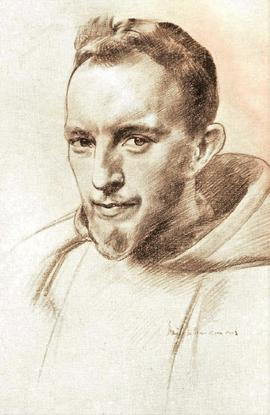
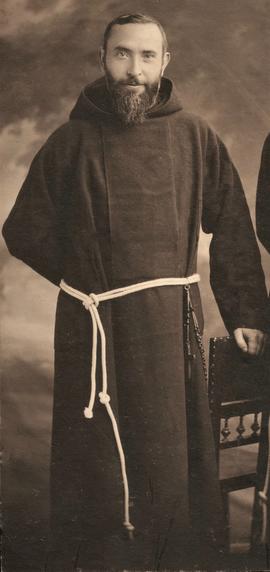
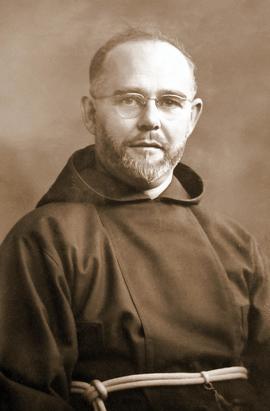
Joseph Anglin, the son of John and Julia Anglin, was born in Aherla, County Cork, on 29 April 1910. Andrew Anglin (b. 11 Feb. 1900), an elder half-brother of Joseph, joined the Capuchin Franciscans in 1918 and took Terence as his religious name. He later became a missionary friar, first in the United States (from 1929), and later in Africa (from 1943). He died on 12 September 1947 in Livingstone, Northern Rhodesia (later Zambia), where the Irish Capuchins had established a missionary custody. The Anglin family were devoutly Catholic, and Joseph followed in his elder half-brother’s footsteps by joining the Capuchins in Cork in October 1927, taking Henry as his religious name upon his reception into the Order. He took his final vows and was solemnly professed as a friar in October 1931. By this time, he had obtained a Bachelor of Arts degree from University College Cork. Following four additional years of clerical studies at Ard Mhuire Friary in County Donegal, he was ordained to the priesthood in St. Eunan’s Cathedral in Letterkenny on 23 June 1935. In the years following his ordination, Fr. Henry served as an assistant to Fr. Senan Moynihan OFM Cap., the founding-editor of ‘The Capuchin Annual’ periodical. Following the Provincial Chapter of 1955, Fr. Henry was appointed editor of the ‘Annual’ with Fr. Felix Guihen OFM Cap. (1898-1981) taking on the role as manager of the Capuchin Publications Office. The appointment of Fr. Henry as editor of the ‘Annual’ elicited no real change in the ethos of the publication which continued to include an eclectic mix of articles on a wide range of topical, political, historical, artistic, literary, and spiritual subjects. Although the work of collating and editing articles for the yearly publication was strenuous and occasioned frequent bouts of stress-related ill-health, Fr. Henry succeeded in maintaining the scholarly content of the publication. Crippling financial losses brought about the demise of ‘The Capuchin Annual’ in 1977. Fr. Henry died on 30 May 1977 just a few months after completing his work on the final edition of the ‘Annual’. He was buried in the Capuchin plot in Glasnevin Cemetery in Dublin.
IE CA DB/23 · Personne · 26 February 1875-20 August 1953

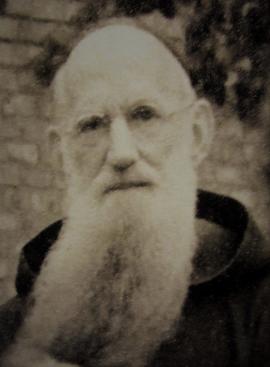
Patrick Healy was born on 26 February 1875 in Graiguenamanagh, a small town on the border between Counties Carlow and Kilkenny. He entered the Capuchin novitiate at Rochestown in County Cork on 7 July 1894 and took the religious name of Angelus. He took his solemn vows in December 1897 and was ordained a priest in February 1902. Fr. Angelus cultivated a life-long interest in the history of the Irish Capuchins. In 1904, he worked alongside Fr. Stanislaus Kavanagh OFM Cap. (1876-1965) in transcribing autograph copies of two seventeenth century histories of the Irish friars by Nicholas Archbold ‘The historie of the Irish Capucins’ (1643) and Robert O’Connell ‘Historia Missionis Hiberniae Fratrum Minorum Capucinorum’ (c.1654). The original texts had been brought from France to the National Library of Ireland in Dublin for copying. Fr. Angelus was considered an authority on the history of the Irish Capuchin Province, and in 1919 he was chosen as a witness in the beatification cause of two seventeenth-century Capuchin martyrs, Fr. Fiacre Tobin OSFC (c.1620-1656) and Fr. John Baptist Dowdall OSFC (c.1626-1710). He also held several important administrative positions in the Irish Province. Three times he was elected as definitor (or counsellor), from 1910-3 and from 1922-5. He also held the position of Vicar-Provincial and was elected Custos General in 1913 which enabled him to attend the General Chapter of the Order in Rome. He was appointed Guardian of the Church Street Friary and was, at various times, Master of Novices, editor of ‘The Father Mathew Record’ periodical, and director-general of the Total Abstinence Association. Fr. Angelus never considered himself an academic historian but throughout his life he worked assiduously to assemble a vast corpus of documentary records on the history of the friars in Ireland. His ‘Pages from the Story of the Irish Capuchins’, published in 1915 to mark the tercentenary of the arrival of the first friar in Ireland, offered a concise introduction to the subject. ‘The execution of a more scholarly work’, he claimed, demanded ‘more patient research than he could ever command’. Known as an able missionary and preacher, he was also acclaimed as the ‘Guardian of the Reek’ in honour of his long association with the annual Croagh Patrick pilgrimage in County Mayo. His association with Croagh Patrick (also called ‘St. Patrick’s Reek’) lasted from 1906 to 1949, during which he climbed the mountain forty-two times missing only two years, in 1919 due to a railway strike, and in 1922 due to the Civil War. He died at the Presbytery in Westport Parish at the foot of Croagh Patrick on 20 August 1953. He was buried in the Capuchin plot in Glasnevin Cemetery in Dublin.
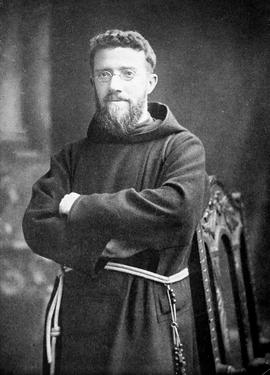
IE CA DB/LOD · Personne · 1851-4 November 1917

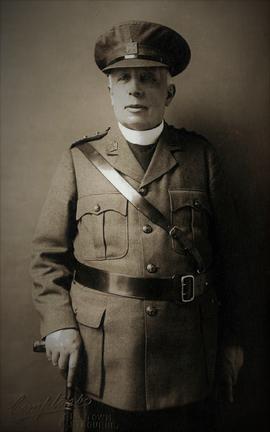
John O’Dea was born to Kieran and Mary O’Dea (née Doyle) of William Street in Kilkenny in 1851. He joined the Capuchin Order in England in 1868 and took Laurence as his religious name. He was ordained a priest by the Bishop of Southwark on 3 May 1874 at the Capuchin Friary in Pantasaph, Flintshire, in North Wales. He joined the Irish Capuchins shortly afterwards and from 1874 to 1881 was Novice Master in Le Mans, France, where the Irish friars studied. He travelled to India in 1881 and was later appointed a chaplain to the British forces stationed there. He assumed responsibility for the construction of the Cathedral of St. Michael and St. Joseph in Shimla in 1885. O’Dea returned to Britain in 1891. Having re-joined the British Capuchin Province, he served as guardian (local superior) in several English Capuchin Houses including Olton (Oxford), Erith (London) and Crawley (Sussex). Although advancing in age (he was at this point nearly sixty), he volunteered for further missionary work in Arabia from 1907 to 1909. At the outbreak of the First World War, he again put forward his name for military chaplaincy. His offer was accepted, and he was made chaplain to a large convalescent camp established at Eastbourne on the English Coast for wounded and shell-shocked soldiers of the conflict. At its peak, the main camp had room for 3,500 injured soldiers. Overburdened by the pressures of his work, O’Dea died in the Military Hospital at Palace Green in London on 4 November 1917. He was buried in the cemetery of the Friary Church of St Francis in Crawley, Sussex.

IE CA DB/10 · Personne · 12 September 1872-1 June 1939

John Edward Dowling, the son of Michael Dowling and Catherine Dowling (née Byrne), was born in Kilkenny on 12 September 1872. He was educated in the Christian Brothers’ Schools and regularly attended the Capuchin Friary Church in Kilkenny as an altar server. He subsequently enrolled in the Capuchin Seraphic School in Rochestown, County Cork. On completing his preliminary studies, he was received into the Capuchin Order in February 1888 taking Laurence as his religious name. He took his final vows and was solemnly professed as a Capuchin friar in September 1889. Having completed a course in philosophy and theology he was ordained a priest on 7 July 1895. Following his ordination, he ministered in Dublin, Cork, and Rochestown, and was appointed guardian (local superior) of these communities. He was also Master of Novices for several years, and President of Father Mathew Temperance Hall on Church Street in Dublin. He was also an active member of the committee of the Catholic Truth Society, for which he wrote several pamphlets primarily on social issues. Dowling was a well-known preacher of retreats and missions and was engaged in this ministry for many years. When his health began to fail in 1931, he travelled to Los Angeles in California, hoping that the better climate would improve his condition. His younger brother, Fr. Thomas Dowling OFM Cap. (1874-1951), was a missionary friar working in California and undoubtedly the presence of his sibling in the United States influenced his decision to leave Ireland. Fr. Laurence served at St. Lawrence of Brindisi Catholic Church in South Los Angeles until his death on 1 June 1939. He was sixty-six years old. He was buried in Calvary Cemetery in Los Angeles.

Baptismal name: John Edward Dowling
Religious name: Fr. Laurence Dowling OFM Cap.
Date of birth: 12 Sept. 1872
Place of birth: Kilkenny (Diocese of Ossory)
Name of father: Michael Dowling
Name of mother: Catherine Dowling (née Byrne)
Date of reception into the Capuchin Order: 5 Feb. 1888
Date of first profession: 3 Mar. 1889
Date of final profession: 8 Sept. 1889
Date of ordination (as priest): 7 July 1895
Missionary activity: Travelled to California, United States, in 1931
Date of death: 1 June 1939
Place of death: Los Angeles, California, United States
Place of burial: Calvary Cemetery, Los Angeles, United States
Note: Fr. Thomas Dowling OFM Cap. (1874-1951) was a younger brother of Fr. Laurence Dowling OFM Cap.

IE CA DB/22 · Personne · 12 March 1875-23 October 1950

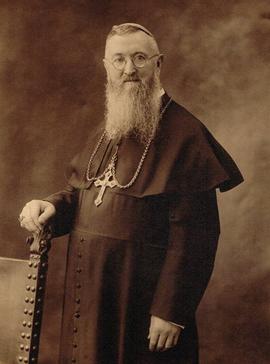
Patrick Mulligan, the son of John Mulligan and Brigid Mulligan (née Brennan), was born in County Monaghan on 12 March 1875. His family had a long association with the Capuchin Franciscan Order as five of his maternal uncles were among the first to join the Capuchins after the return of the friars to England in 1850. Following the completion of his preliminary studies at the Seraphic College in Rochestown, County Cork, Patrick Mulligan was received into the Capuchin Order on 30 March 1892. Upon joining the Order, he took Sylvester as his religious name. He was ordained a priest in Dublin on 21 September 1901. He was one of the first friars of the Irish Capuchin Province to pursue a course a higher course in theology in a continental university. Soon after his ordination, he enrolled in the Catholic University of Louvain in Belgium where he was awarded a degree of Doctor of Divinity (‘Doctor Divinitatis’). On his return to Ireland, he was appointed a lector in sacred theology in Rochestown. In 1913 he was appointed director of the Total Abstinence sodality on Church Street in Dublin and President of Father Mathew Hall. He also assumed the editorship of ‘The Father Mathew Record’ periodical. In 1919 he resumed his role as professor of theology in Rochestown. Fr. Sylvester held several senior administrative positions in the Irish Capuchin Province. He was first elected Definitor at the chapter held in 1907 and was re-elected to this position at subsequent chapters. In 1925 he was elected Provincial Minister. The following year he attended the General Chapter of the Capuchin Order in Rome and was elected Definitor General, the first member of the Irish Province to hold such office. He was re-elected at the next General Chapter held in 1932. On 13 April 1937 he was appointed Archbishop of Delhi and Simla in India, receiving his episcopal consecration (23 May 1937) from Cardinal Pietro Fumasoni Biondi, assisted by Patriarch Luca Ermenegildo Pasetto OFM Cap., and Bishop Giovanni Giuseppe Santini OFM Cap. At the time, there was only one Catholic priest in Delhi and the newly appointed Archbishop was forced to reside in a house attached to a school located on the grounds of the Cathedral of St. Michael and St. Joseph. Despite the disruption caused by the Second World War, Archbishop Mulligan worked assiduously in a challenging missionary environment. After being taken seriously ill during a Holy Year pilgrimage to Rome in June 1950, he returned to Ireland and underwent an operation in Dublin. Continuing ill-health forced his resignation as Archbishop on 12 August 1950. He died in Dublin on 23 October 1950. He was buried in Glasnevin Cemetery.

Baptismal name: Patrick Mulligan
Religious name: Fr. Sylvester Mulligan OFM Cap.
Date of birth: 12 Mar. 1875
Place of birth: Tasson, Clontibret, County Monaghan (Diocese of Clogher)
Name of father: John Mulligan
Name of mother: Brigid Mulligan (née Brennan)
Date of reception into the Capuchin Order: 30 Mar. 1892
Date of first profession: 2 Apr. 1893
Date of final profession: 25 Dec. 1897
Date of ordination (as priest): 21 Sept. 1901
Educational attainments: Licentiate of Sacred Theology (STL), Louvain; Doctor of Divinity (DD), Louvain
Missionary activities/Leadership positions: Provincial Definitor: 1907-10, 1916-9, 1922-5; Provincial Minister, 1925; Definitor General, 1926-9, 1932-7; Consecrated Archbishop of Delhi and Simla (India) on 23 May 1937. Resigned on 12 Aug. 1950.
Date of death: 23 Oct. 1950
Place of death: Dublin
Place of burial: Glasnevin Cemetery, Dublin

IE CA DB/178 · Personne · 2 February 1910-16 August 1958

Joseph McCann was born in Belfast on 2 February 1910. After a period of schooling in his native city he entered the Seraphic College in Rochestown in County Cork to prepare for his entry into the Capuchin Order. He was preceded by his elder brother, Robert McCann, who had joined the Capuchins in 1925. His brother took Cuthbert as his religious name and was later a missionary in Africa before returning to Ireland in 1946. Having completed a course in humanities, Joseph McCann entered the Capuchin novitiate in Kilkenny in 1929. He took Gerald as his religious name upon joining the Order. For the following three years he was a member of the community at St. Bonaventure’s Hostel and studied philosophy in University College Cork. In 1933 he was awarded a Bachelor of Arts degree. He subsequently studied theology in Ard Mhuire Friary in County Donegal and was ordained a priest by the Most Reverend William McNeely, Bishop of Raphoe, in Letterkenny on 27 June 1937. Soon after his ordination he was transferred to Dublin and was appointed assistant editor in the Irish Capuchin publications office. Here he found scope for his considerable literary and artistic talents. His greatly admired and often amusing illustrations of Franciscan life were a noteworthy feature of ‘The Capuchin Annual’. He also contributed many literary and scholarly articles to both the ‘Annual’ and its sister publication ‘The Father Mathew Record’. Afflicted by ill-health from an early age, he was subsequently forced to relinquish his work in Dublin and was transferred to Rochestown Friary in County Cork. In August 1958 he travelled to Dublin to preach a novena, but he took ill and was admitted to the Bon Secours Hospital in Glasnevin. He died in the hospital on 16 August 1958 and was buried in Glasnevin Cemetery in Dublin.

Baptismal name: Joseph McCann
Religious name: Fr. Gerald McCann OFM Cap.
Date of birth: 2 February 1910
Place of birth: North Queen Street, Belfast, County Antrim (Diocese of Down and Connor)
Name of father: John McCann (Cabinet Maker)
Name of mother: Mary Jane McCann (née Riddel)
Date of parents’ marriage: 10 July 1899
Date of reception into the Capuchin Order: 3 Oct. 1929
Date of first profession: 4 Oct. 1930
Date of final profession: 4 Oct. 1933
Date of ordination (as priest): 27 June 1937
Educational attainments: BA (1933)
Date of death: 16 Aug. 1958
Place of death: Bon Secours Hospital, Dublin
Place of burial: Glasnevin Cemetery, Dublin

IE CA DB/16 · Personne · 16 June 1874-19 July 1947

Nicholas Phelan was born in Graiguenamanagh, a small town on the border between Counties Carlow and Kilkenny, on 16 June 1874. He joined the Capuchins at the age of sixteen, took Benedict as his religious name, and was professed in 1891. He was ordained a priest in Holy Trinity church in Cork in January 1899. Following his ordination, he was appointed Master of Novices and spent five years ministering in Cork. In 1904 he was transferred to the Capuchin Friary on Church Street in Dublin. He worked in the capital for the next forty years and was the principal organiser of the choir in St. Mary of the Angels on Church Street for most of this time. He served as Provincial Secretary from 1910 to 1913. He was appointed vicar in 1919 and was guardian (local superior) of the Capuchin community on Church Street from 1922 to 1925. He acted as spiritual director of the Sacred Heart Sodality for many years and was also director of the local Third Order of St. Francis confraternity. He was well-known as a mission and retreat giver throughout Ireland but particularly in almost all the parishes in County Dublin. At the time of his death (on 19 July 1947) he was a member of the Capuchin community in Kilkenny. He died in a nursing home at 7 Mount Street Crescent in Dublin following a long period of illness and was buried in Glasnevin cemetery in the city.

Baptismal name: Nicholas Phelan
Name in religion: Benedict
Date of birth: 16 June 1874
Place of birth: Graiguenamanagh, County Kilkenny (Diocese of Kildare of Leighlin)
Name of father: John Phelan
Name of mother: Mary Phelan
Date of reception into the Capuchin Order: 23 June 1890
Date of first profession: 15 Aug. 1891
Date of final profession: 11 Oct. 1896
Date of ordination: 8 Jan. 1899
Date of death: 19 July 1947
Place of death: Dublin
Place of burial: Glasnevin Cemetery, Dublin

IE CA DB/63 · Personne · 27 February 1890-2 October 1969

Edward Bourke was born in Kilkenny city on 27 February 1890. He studied at the Seraphic College in Rochestown, County Cork, and joined the Capuchin Franciscan Order in 1906 taking Canice as his religious name. He was ordained to the priesthood in August 1906. He earned a BA degree from University College Cork in 1911. He was appointed guardian (local superior) of Holy Trinity Friary in Cork in 1933. He also served as superior of St. Bonaventure’s Hostel in Cork in 1946 and was instrumental in establishing the Capuchin House of Studies in Raheny in Dublin in the late 1940s. He was elected Provincial Definitor (Councillor) on several occasions. He returned to his native Kilkenny in 1959. Fr. Canice spent much of his ministry giving missions and retreats and was well known for his effective and energetic preaching. For many years, he served as Commissary Provincial of the Third Order of St. Francis confraternity. A fluent Irish speaker, he was also the author of several devotional texts including ‘Mary / A study of the Mother of God’ (1936), ‘Humility / the foundation of spiritual life’ (1951), and ‘Mary’s Rosary / Its devout recital’ (1960). He died in Dublin on 2 October 1969 and was buried on the Feast of St. Francis (4 October) in Glasnevin Cemetery.

Baptismal name: Edward Bourke
Religious name: Fr. Canice Bourke OFM Cap.
Date of birth: 27 Feb. 1890
Place of birth: High Street, Kilkenny (Diocese of Ossory)
Name of father: James Bourke (Draper)
Name of mother: Catherine Walsh
Date of reception into the Capuchin Order: 26 Aug. 1906
Date of first profession: 17 Sept. 1907
Date of final profession: 21 Jan. 1912
Date of ordination (as priest): 5 July 1914
Educational attainments: BA (NUI), 1911
Leadership positions: Provincial Definitor: 1928-31, 1937-41, 1943-6, 1946-9, 1949-51, 1952-5; Custos General: 1940-3, 1955-8.
Date of death: 2 Oct. 1969
Place of death: St. Michael’s Hospital, Dun Laoghaire, County Dublin
Place of burial: Glasnevin Cemetery, Dublin

IE CA DB/LB · Personne · 28 September 1869-8 December 1930

Michael Brophy was born near the village of Castlecomer in County Kilkenny on 28 September 1869. He joined the Capuchin Franciscans in September 1889 and was ordained to the priesthood in February 1892. He resided in the Church Street Friary in Dublin for several years and was later appointed guardian (local superior) of Holy Trinity Friary in Cork. In 1910 he was assigned to work in the new mission custody established in the United States and was appointed associate pastor of Our Lady of Angels Parish in Hermiston in Oregon. In August 1911 Fr. Leonard was appointed to the Church of the Immaculate Heart in Abbotstown, Pennsylvania. He returned to Ireland in the late 1920s and joined the community of friars residing in Holy Trinity Friary on Father Mathew Quay in Cork. In the public sphere, he held the position of civic chaplain to the Lord Mayor of Cork. He died on 8 December 1930 and was buried in the cemetery attached to the Capuchin Friary in Rochestown, County Cork.

Baptismal name: Michael Brophy
Religious name: Fr. Leonard Brophy OFM Cap.
Date of birth: 28 Sept. 1869
Place of birth: Castlecomer, County Kilkenny (Diocese of Ossory)
Name of father: John Brophy (Farmer)
Name of mother: Ellen Brophy (née Curran)
Date of reception into the Capuchin Order: 2 Oct. 1885
Date of first profession: 4 Oct. 1886
Date of final (solemn) profession: 8 Dec. 1890
Date of ordination as a priest: 25 Feb. 1892
Missionary activities: Travelled to Harrisburg, Pennsylvania, United States in 1910-11; Returned to Ireland in the 1920s.
Date of death: 8 Dec. 1930
Place of burial: Cemetery, Capuchin Friary, Rochestown, County Cork

IE CA DB/11 · Personne · 16 October 1871-5 October 1926

Baptismal name: Bartholomew Brophy
Religious name: Fr. Fiacre Brophy OFM Cap.
Date of birth: 16 Oct. 1871
Place of birth: Castlecomer, County Kilkenny (Diocese of Ossory)
Name of father: John Brophy (Farmer)
Name of mother: Ellen Brophy (née Curran)
Date of reception into the Capuchin Order: 5 Feb. 1888
Date of first profession: 3 Mar. 1889
Date of final profession: 8 Sept. 1892
Date of ordination (as priest): 18 Oct. 1894
Leadership positions: Provincial Definitor: 1919-21, 1922-5; Custos General: 1907-10; Guardian (local superior), Church Street Friary, Dublin, 1916-9.
Date of death: 5 Oct. 1926
Place of death: Belfast