
Instelling
·
1200-2020
IE/GLA
·
Persoon
·
1880-1975
IE CA DB/8
·
Persoon
·
20 March 1870-2 May 1957
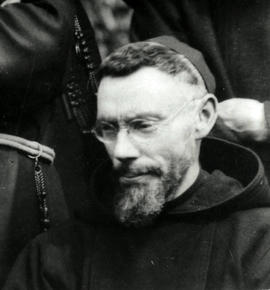
William Patrick Travers was born into a prominent Cork family on 20 March 1870. The family were devoutly Catholic. John, his elder brother, was also a Capuchin friar and took Anthony as his religious name. Another brother was an Augustinian friar while a sister became an Ursuline nun. William joined the Capuchin Franciscans in 1887, took the religious name of Aloysius, and was ordained to the priesthood in 1894. From his earliest years, Aloysius took a keen interest in promoting the work of the temperance movement. He was appointed President of the Father Mathew Hall in Dublin, and held this position from 1904-13. During his years as President, he used the Hall for the promotion of temperance and as a recreational venue for the members of the Sacred Heart Sodality. To further support the ideals of temperance and to revitalise interest in Irish culture, he founded 'The Father Mathew Record' which began publication in January 1908. The year before, he had inaugurated the Féis Maitiu which promoted Gaelic cultural revivalist activities such as storytelling and festivals of native song and dance. Fr. Aloysius also used the pages of the 'Record' to strongly promote a ‘Buy Irish Campaign’. About this time, he also established the League of Young Irish Crusaders. Like many of the Capuchin friars of the Dublin community, Fr. Aloysius was involved in ministering to the Rising leaders during their imprisonment and was present at the execution of James Connolly in Kilmainham Jail on 12 May 1916. He later championed the cause of various labour leaders in Dublin. It has also been speculated that Fr. Aloysius undertook a secret mission to Pope Benedict XV in connection with the Irish struggle. He was elected seven times to the office of Provincial Definitor (Councillor) and was Provincial Minister of the Irish Capuchins from 1913-6. In his later years, he became an enthusiastic member of the Legion of Mary and published numerous devotional tracts including a popular prayer book, 'The Voice of the Church', 'The Seraphic Standard' and 'ĺosa Mo Mhian'. He died on 2 May 1957 at the Capuchin Friary, Church Street, Dublin. He was 89 years old and was a Capuchin friar for almost 69 of these years. He was buried in Glasnevin Cemetery.
IE CA DB/14
·
Persoon
·
13 March 1874-7 January 1951
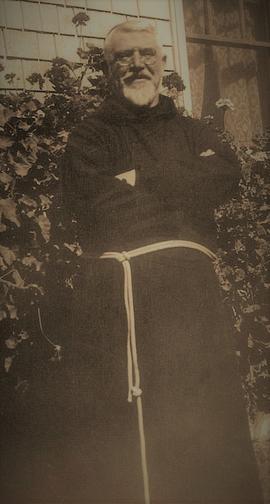
Michael Joseph Dowling, the son of Michael and Catherine Dowling (née Byrne), was born in Kilkenny on 13 March 1874. John Dowling, an older brother, joined the Capuchins in 1888 and took Laurence as his religious name. Michael followed in his brother’s footsteps and joined the Order in Kilkenny a year later in September 1889. He took Thomas as his religious name and he was solemnly professed as a friar in October 1894. He was ordained a priest in Kilkenny on 21 December 1896. Fr. Thomas was a professor at Rochestown Capuchin College in Cork, and later served as guardian (local superior) of the Capuchin Friary in Dublin. He visited Oregon in the United States in 1910 to select a suitable mission parish for the Irish Capuchins in Baker City. In this period, he held several senior administrative positions in the Order and served as definitor (councillor) from 1907-10 and was Provincial Minister of the Irish Capuchins from 1910-3. He was also guardian of Holy Trinity Friary in Cork in 1920.
He emerged as a prominent public figure in Cork because of his high-profile campaigning on social and political issues. He was active in the Anti-Conscription campaign in the city in 1918 and was elected Honorary President of the Cork and District Trades and Labour Council. During the First World War, there was widespread economic distress in Cork as wages failed to keep pace with rising prices. The result was numerous strikes and general worker unrest. Dowling had studied social reform and he threw himself wholeheartedly into the task of industrial dispute mediation. His interventions were accepted by employers and trades unions alike. He presided over negotiations between tramway workers and their employers in a crucial wage dispute and was instrumental in securing a settlement between the two sides in 1919. He was awarded the freedom of Cork in 1920 in recognition of his invaluable services in preserving the peace of the city and for his role in successfully resolving industrial disputes. He also received an honorary degree (an LL.D. or a Doctor of Laws) from Professor P.J. Merriman (1877-1943), President of University College Cork. The award was given on account of his ‘invaluable services’ in ensuring peaceful and harmonious social relations in the city. The Cork Trades’ Council later donated a stained-glass window to Holy Trinity Church to mark his contribution in securing workers’ rights.
His ministries as a Capuchin friar centred on preaching missions and retreats and he was also an enthusiastic promoter of the temperance cause (he was instrumental in organising the Father Theobald Mathew Pavilion at the Cork International Exhibition in 1902). In 1926 Fr. Thomas offered to travel to the United States to work as a missionary friar. The Irish Capuchins had established a mission custody on the American Pacific Coast in 1910. His first appointment was in Our Lady of the Angels Church and Capuchin Friary in Burlingame near San Francisco. He was appointed Pastor of St. Lawrence of Brindisi Church situated in Watts in South Los Angeles in 1937. In the following years he succeeded in paying off the considerable debt on both the church and the adjoining school. He served as Custos (Superior) of the Western American Capuchin Mission from 1940-6. He died on 7 January 1951 and was buried in Calvary Cemetery in Los Angeles.
IE CA DB/52
·
Persoon
·
10 August 1885-21 October 1961
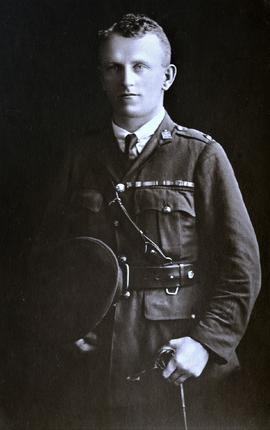
Patrick Joseph Collins was born on Cotter Street in Cork on 10 August 1885. He was the son of Captain Jeremiah Collins, an employee of the Cork Harbour Board, and his wife Honora Collins. He was educated at the Capuchin College in Rochestown, County Cork and he joined the Capuchin Order in 1902, taking Ignatius as his religious name. He graduated with a BA in Philosophy at the Royal University in Cork in 1908. He was ordained a priest in Kilkenny on 29 May 1910. By all accounts he was an outstanding scholar, and he was awarded a Doctorate in Theology and Philosophy from the Gregorian University in Rome in 1914. In May 1915, he responded to the call of Cardinal Francis Bourne, Archbishop of Westminster, seeking Catholic priests to act as chaplains in the British armed forces. He was sent to France in August 1915 and acted as a chaplain with the 69th Field Ambulance Corps. During the First World War his division served on the Western Front participating in many major offensives including the Battles of the Somme and Messines. In October 1917, the division was transferred to the Italian Front. In January 1918 Fr. Ignatius was awarded the Military Cross and was promoted to the rank of Major. Following the cessation of hostilities, he was demobilised (in 1919) and he initially returned to Rochestown Friary in Cork. In 1922 he was elected guardian (local superior) of the Capuchin Friary in Kilkenny. He ministered in Kilkenny for the next twenty-one years. In 1943 he was transferred to the Church Street Friary in Dublin and was appointed Vicar of the community. He remained a member of the Dublin fraternity until his death on 21 October 1961.
Baptismal name: Patrick Joseph Collins
Religious name: Fr. Ignatius Collins OFM Cap.
Date of birth: 10 Aug. 1885
Place of birth: Cork
Name of father: Jeremiah Collins
Name of mother: Honora Collins (née Cowhig)
Date of reception into the Capuchin Order: 24 Aug. 1902
Date of first profession: 17 Sept. 1903
Date of final profession: 31 July 1908
Date of ordination (as priest): 29 May 1910
Educational attainments: BA (RUI) 1909; PhD (Louvain), 1914; MA (RUI) 1915
Date of death: 21 Oct. 1961
Place of death: St. John of God’s Hospital, Stillorgan, Dublin
Place of burial: Glasnevin Cemetery, Dublin
IE CA DB/NM
·
Persoon
·
22 October 1849-1 November 1923
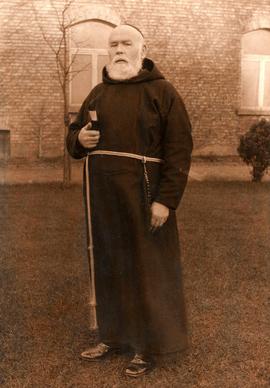
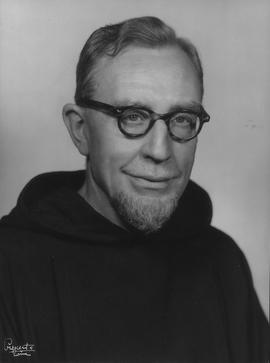
Maurice Murphy was born in Kinnagh, County Wexford, on 22 October 1849. He was received into the Capuchin Order in Le Mans, France, on 14 July 1874. He took Nicholas as his religious name upon joining the Order. He continued his studies on the continent and was ordained a priest in Lorient, France, on 13 June 1879. Following his ordination, he returned to Ireland and was attached to Holy Trinity Friary in Cork, where he was appointed guardian (local superior). After a period of three years, he was transferred to the Church Street Friary in Dublin and took up the position of Vicar. In 1890 he was appointed President of Father Mathew Hall, a position he would hold for six years. He was instrumental in the building of both the Third Order Chapel attached to the Church of St. Mary of the Angels and the addition of a new wing to the Church Street Friary. He served as spiritual director of the Third Order of St. Francis sodality in Dublin for many years. He was a vigorous campaigner for the tenement residents of Church Street and petitioned Dublin Corporation on their behalf seeking improvements in housing and social conditions. In the public sphere, Fr. Nicholas served as chaplain to the Lord Mayor of Dublin and was a well-known attendee at numerous civic and religious functions in the city. He died in the Church Street Friary in Dublin on 1 November 1923 and was buried in Glasnevin Cemetery.
Baptismal name: Maurice Murphy
Religious name: Fr. Nicholas Murphy OFM Cap.
Date of birth: 22 Oct. 1849
Place of birth: Kinnagh, County Wexford (Diocese of Ferns)
Name of father: Patrick Murphy
Name of mother: Anne Murphy (née Stafford)
Date of reception into the Capuchin Order: 14 July 1874
Date of first profession: 12 Nov. 1875
Date of final profession: 26 Nov. 1878
Date of ordination (as priest): 13 June 1879
Leadership positions: Provincial Definitor: 1893-1901; Custos General, 1904
Date of death: 1 Nov. 1923
Place of death: Church Street Friary, Dublin
Place of burial: Glasnevin Cemetery, Dublin
IE CA DB/140
·
Persoon
·
27 May 1905-3 December 1972
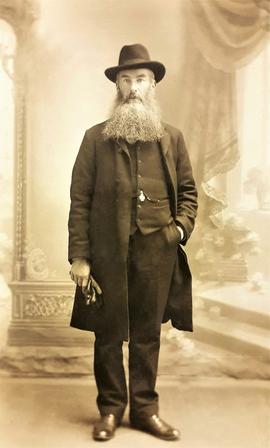
Vincent Flynn, the son of William Flynn and Mary Anne Flynn (née Collins), was born in County Donegal on 27 May 1905. He joined the Capuchin Order in October 1922 and took Killian as his religious name. He was ordained a priest in June 1930 and travelled as a missionary friar to Northern Rhodesia (later Zambia) in September 1931. He held the position of superior of the Irish Capuchin mission in Northern Rhodesia throughout most of the 1930s. He was appointed the first Prefect Apostolic of Victoria Falls (Livingstone) in 1936, a position he would hold for fifteen years. He became General Secretary for Education in Northern Rhodesia and established the Catholic Secretariat for the Bishops in 1951. He was awarded an MBE by the British monarchy for his services to African education in 1958. In 1961 bishops from Kenya, Tanzania, Malawi, and Zambia appointed Flynn the first Secretary General of the newly established Association of Members of the Episcopal Conference of Eastern Africa (AMECEA) in Nairobi, Kenya, a post he would hold until his death. He was the principal organizer for the historic visit of Pope Paul VI to Uganda in 1969 for which he received the ‘Pro Ecclesia et Pontifice’ award. Later, he acted as the principal contact for the AMECEA bishops at the Second Vatican Council (1962-5). Following a short illness, he died in Dublin on 3 December 1972. He was buried in Glasnevin Cemetery.
Baptismal name: Vincent Flynn
Religious name: Killian
Date of birth: 27 May 1905
Place of birth: Killybegs, County Donegal (Diocese of Raphoe)
Name of father: William Flynn
Name of mother: Mary Anne Flynn (née Collins)
Date of reception into the Capuchin Order: 15 Oct. 1922
Date of first profession: 19 Oct. 1923
Date of final profession: 19 Oct. 1926
Date of ordination (as priest): 29 June 1930
Educational attainments: BA (NUI), 1926
Missionary activity/leadership positions: Travelled to South Africa and later Northern Rhodesia in Sept. 1931; Appointed Prefect Apostolic of Victoria Falls in 1936; Superior of Capuchin Foreign Missions, Africa, 21 June 1935 and reappointed on 14 Oct. 1938 and from 1942-46; General Secretary for Education of the Hierarchy of Northern Rhodesia (later Zambia) in 1951; appointed General Secretary to the Hierarchy with the title of ‘Very Reverend’ with privilege of former Provincial Minister as understood in Mission Statue No. 134 granted by the Capuchin General Definitory on 20 July 1963.
Date of death: 3 Dec. 1972
Place of death: Bon Secours Hospital, Dublin
Place of burial: Glasnevin Cemetery, Dublin
IE CA DB/4
·
Persoon
·
12 April 1866-19 November 1946
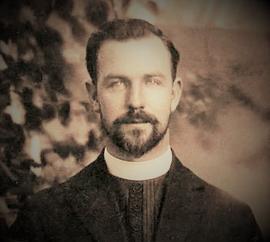
Thomas Hayes was born in Cork on 24 April 1866. He was the son of Patrick Hayes and Anna Hayes (née Treacy) of Chapel Street in the city. He was received into the Capuchin Order on 30 July 1882. He took Francis as his religious name upon joining the Capuchins. He was ordained a priest in Holy Trinity Church, Cork, on 30 July 1882. Soon after his ordination, he was called upon to assist in the administration of the Irish Capuchin Province. He was appointed guardian (local superior) of the Capuchin Friary on Church Street in Dublin and was twice elected Provincial Definitor (1893-6, 1904-7). He was appointed Provincial Archivist on 20 August 1907. He later became Rector of Rochestown Capuchin College, and for many years taught both philosophy and theology to novice-students of the Province. In 1919 he was chosen as a witness in the cause of the beatification of two seventeenth-century Irish Capuchin martyrs, Fr. Fiacre Tobin OSFC (d. 1656) and Fr. John Baptist Dowdall OSFC (d. 1710). Throughout his life he retained an interest in uncovering and transcribing documentary records relating to the history of the early Irish Capuchin. He died in Rochestown Friary, County Cork, on 19 November 1946 and was buried in the adjoining cemetery.
Baptismal name: Thomas Hayes
Religious name: Fr. Francis Hayes OFM Cap.
Date of birth: 24 Apr. 1866
Place of birth: 22 Chapel Street, Cork
Name of father: Patrick Hayes
Name of mother: Anna Hayes (née Treacy)
Date of reception into the Capuchin Order: 30 July 1882
Date of first profession: 5 Aug. 1883
Date of final profession: 4 Oct. 1887
Date of ordination (as priest): 1 May 1889
Leadership positions: Provincial Definitor: 1893-6, 1904-7
Date of death: 19 Nov. 1946
Place of death: Capuchin Friary, Rochestown, County Cork
Place of burial: Cemetery, Capuchin Friary, Rochestown, County Cork
IE CA DB/64
·
Persoon
·
3 December 1888-6 February 1940
Peter Quinn, the son of Thomas and Teresa Quinn, was born in Rhode, King’s County (Offaly), on 3 December 1888. He joined the Capuchin Order in the novitiate at Rochestown, County Cork, in August 1906, taking Raphael as his religious name. His degrees were taken at the National University of Ireland, and he also spent some time studying in the Gregorian University in Rome. Following the completion of his ecclesiastical studies in Rochestown, he was ordained to the priesthood in Holy Trinity Church, Cork, on 5 July 1914. After working for some years in Kilkenny, he travelled to the United States in 1919. He was appointed Pastor in Ukiah, California, in 1922. Here his energy was devoted to the building of St. Mary’s Church and supervising improvements to the adjoining presbytery. The church was opened and blessed by the Most Rev. Edward J. Hanna, Archbishop of San Francisco, on 25 March 1924. Fr. Quinn was also responsible for the building of St. Anthony’s Parish Church in Willits (just north of Ukiah) in Mendocino County, California. Aside from his parochial duties, he was also well known for his ministry to Native Americans (most notably the Pomo Indians of California). In 1925 he was elected Pastor and Superior of Sacred Heart Parish in Lincoln, Nebraska. He remained in Lincoln for nine years, building a new parish church and school. He was also responsible for bringing the Sisters of the Blessed Virgin Mary from Dubuque (Iowa) to teach in the local parochial school and served as chaplain in the state penitentiary. In 1932 a fire (caused by a faulty radio) engulfed the Lincoln parish rectory building. Adam Sassenberger, the parish caretaker who was staying at the house at the time, perished in the blaze. Raphael Quinn suffered serious injuries in the incident from which he never fully recovered. He returned to Ukiah in 1934 and remained there until his death (following a long illness) on 6 February 1940. He was buried in the Catholic Cemetery in Ukiah.
Baptismal name: Peter Quinn
Religious name: Fr. Raphael Quinn OFM Cap.
Date of birth: 3 Dec. 1888
Place of birth: Rhode, County Offaly (Diocese of Kildare & Leighlin)
Name of father: Thomas Quinn
Name of mother: Teresa Quinn (née Dunne)
Date of reception into the Capuchin Order: 26 Aug. 1906
Date of first profession: 17 Sept. 1907
Date of final profession: 21 Jan. 1912
Date of ordination (as priest): 5 July 1914
Educational attainments: BA, 1911
Missionary assignments: Travelled to the United States in Nov. 1919
Date of death: 6 Feb. 1940
Place of death: Ukiah, California

Persoon
·
1789-1864
Philip Dowley was the first Provincial of the Irish Vincentian Province 1848-1864.
Buried in Castleknock: https://www.findagrave.com/memorial/259986110/philip-dowley_cm