
Nigeria

Elements area

Taxonomy

Code

Scope note(s)

    Source note(s)

      Display note(s)

        Hierarchical terms

        Nigeria

        Equivalent terms

        Nigeria

          Associated terms

          Nigeria

            3 Archival description results for Nigeria

            2 results directly related Exclude narrower terms
            IE IE/GLA IE/GLA/2020-03-06/9/2020-03-12/20/2021-11-30/239 · Item · 01-06-1939
            Part of Glenstal Abbey Archive

            Brief document outlining the education of women in the tribe of Efik. Written by Maurice Archibong, Headmaster of the Sacred Heart primary school in Calabar.

            AI CLEANED TEXT:

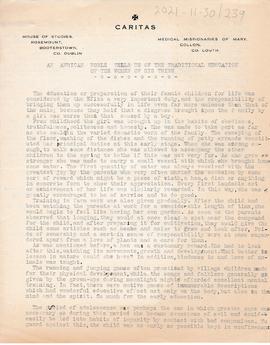
            AN AFRICAN NOBLE TELLS US OF THE TRADITIONAL EDUCATION OF THE WOMEN OF HIS TRIBE
            o - o - o - o - o - o -

            The education or preparation of their female children for life was considered by the Efiks a very important duty, and the responsibility of bringing them up successfully in life even far more onerous than that of the male, because they held that a disgrace brought upon the family by a girl was worse than that caused by a boy.

            From childhood the girl was brought up in the habits of obedience, truthfulness, politeness and honesty. She was made to take part as far as she could in the varied domestic work of the family. The sweeping of the floor, washing of the dishes and the running of petty errands constituted her principal duties at this early stage. When she was strong enough to walk some distance she was allowed to accompany the other children to the spring to bathe if this was not very far. As she grew stronger she was made to carry a small vessel with which she brought home some water. The first quantity of water was always received with the greatest joy by the parents who very often marked the occasion by some sort of reward which might be a piece of cloth, a hen, a dish or anything in concrete form to show their appreciation. Every first laudable act or achievement of her life was similarly rewarded. In this way, she was greatly encouraged to be of service and to do good.

            Training in farm work was also given gradually. After the child had been watching the parents at work for a considerable length of time, she would begin to feel like having her own garden. As soon as the parents observed that longing, they would at once clear a spot near the compound for the child, and after preparing it for cultivation, they would give the child some articles such as yams and maize to grow and look after. Pride of ownership and a certain sense of responsibility were at once engendered apart from a love of plants and a care for them.

            As was mentioned before, a hen was a customary reward. She had to look after this, watching its movements, growth and development. What better lesson in nature could she have? In addition, kindness to and love of animals was taught.

            The running and jumping games often practised by village children made for their physical development, while the songs and folklore generally given by the grown-ups during moonlight nights afforded excellent mental training. In fact, there were native games of innumerable descriptions which had wonderful educative effect not only on the body, but also in the mind and the spirit. So much for the early education.

            The period of adolescence was perhaps the one in which greater care was necessary as during this period she became conscious of evil and could easily be led into habits of impurity by contact with bad companions. To guard against this, the child was as early as possible kept in confinement.

            (that is about the age of twelve) and here the next stage of her education began.

            Before this time she was betrothed to a person whom the parents approved as being good and she had to look forward to him as her future husband. She was taught to look forward to him exclusively.

            While in confinement in what was known as the "fattening house" the maiden was, as it were, in a domestic training institution. She was given by her mother or by some other woman versed in the various native arts and crafts, a thorough training in the principles of sanitation, cookery, embroidery, knitting, calabash and woodcarving, beadwork, claymoulding, the writing of NSIBIDI (native hieroglyphics), the only form of literary education then in vogue. This period of training generally lasted from three to seven years.

            By the end of this period when the girl had become fat as a result of excessive feeding and lack of strenuous exercise, she was completely trained for life.

            What a striking contrast is there between this system of education and that of the present day when a girl concentrates more on acquiring the three Rs than on what really matters, the preparation of herself for home life. What a remarkable precaution was taken by the parents of old against impurity when in our days we negligently leave our girls open to very serious temptations against holy purity at a most critical and delicate part of their existence. Little wonder that most of the Efik women of old were such excellent and efficient wives and mothers.

            Maurice ARCHIBONG

            N.B. Mr. M. Archibong is a chief of the Efik tribe. He is a Catholic for many years and is headmaster of the Sacred Heart Primary School at Calabar.

            (Note of the Editor of "Africa" where that article was published June 1939)

            Mr. Archibong's children were the first to be baptized at their birth in Nigeria.

            (A Note from a report of Mother Mary of the Incarnation.)

            ORIGINAL OCR

            AN AFRICAN NOBLE TEELS US OF THE TRADICLONAI. EDUCAION
            OF TE WOMEN OF HIS TRIBE
            o - o - o- o - o - o -
            The dducation or preparation of their female children for Life was
            considered by the Efiks a very important duty, and the responsibility of
            bringing them up successfully in Life even far more ominous than that of
            the male, because they held that a disgrace broucht upon the f amily Dy
            a girl was worse that that caused by a boy.
            From childhood the girl was brought up in the habits of obedience,
            truthfulness, politeness and honesty. She was made to take part as far
            As she couldin the varied domestic work of the family. The sweeping of
            the floor,washing of the dishes and the running of petty errands constib
            uted her principal duties at this early stage. when she was strong en.
            ough, to walk some distance she was allowed to accompany the other
            children to the spring to bathe if this was not wery far. As she grew 21
            stronger she was made to carry a small vesscl with which she brought hom
            Some water. The first quantity of water was always received with the
            greatest joy by the parents who very often marked the occasion by some
            sort of reward which might be a picce of cloth,a hen,a dish or anything
            in concrete form to show their appreciation. Every first Laudable act
            or achievement of her life was similarly rewarded. In this way,she was,
            grcatly encouraged to be of service and to do good.
            Training in farm work was also given gradually. After the child had
            been watching the parents at work for a cansiderable length of time, she
            would begin to feel like having her own garden. As soon as the parents
            observed that Longing, they would at once clear a spot near the compound
            for the child,and after preparing it for cultivation, they would give the
            child some articles such as eahs and maize to Mrow and Loolkt after, Pri.
            de of ownership and a certain sense of responsibility were at once engen
            dered apart from a love of plants and a care for them.
            As was mentioned before,a hen was a customary reward.She had to Look
            After this, watching its movements,growth and developyment.What be tter 1e
            Lesson in nature could she heve7 in addition, kindness to and Love of an.
            imals was taught.
            The running and jumping games often practided by village children Madc
            for their physical develspoment, while the songs and folklore generally zE
            given by the grown-ups during moonlight nichta afforded excellent mental
            training. In fact, there were native games of immumaerable descriptions
            which had wonderful educative effect not only on the body,but also in the
            mind and the spitit. So much for the carly education.
            mhe b2iod of adolescence was perhaps the one in which grcater care wo.
            necessary as during this period she became conscious of ewil and could-E
            casily be led into habits of impurity y contact with bad companions. Qo
            Suard against this, the child was as carly as possible kept in confinemenl

            Lchat is about the ace of twelve) and here the hext stage of her educaticr
            Degan.
            Before this time she was betrothed to a peson whom the parents approv.
            ed as being good and she Had to 1ook forward to hin as her future husband.
            She was taught to Look forward to him exclusively.
            Mhile in confinement in what was known as the "fattening houset the
            maiden was,as it were,in a domestic training institution. She was given
            Dy her mother or by some other woman versed in the various native arts
            And crafts, a thorough training in the principles of sanitation, cookery,em.
            broidery,knitting, calabash and woodcarvind, beadwork, claymoulding, the writ,
            Hing oiSIBIDl (native hieroglyphics) the only form of literary education
            then in wogue. This period of training generally lasted from three to sev-
            en years,
            By the end of this period when the girl had beEthezds 2fEsult of exces.
            sive feedins and lack of strenuous exercise,she was completely trained for
            1ife. o
            Mhat a striking conlrast is there betweem this system of education and
            that of the present day when a girl concentrates more on acquiring the
            three Rs than on what really matters,the preparation of herself for home
            Life. What a remarkable precaution was taken by the parents of old against
            impurity when in our days we negligently leave our girls open to very
            Serious temptations against holy purity at amost critical and delicate
            part of their existence.Little wonder that most of the Efik women of old
            were such exccllent and efiicient wives and mothers.
            Haurice ARCHIBONG
            N.B. Mr M.Archibong is a chief of the Mfik tribe. He is a Cat
            Catholic for many years and is headmaster of the Sacred
            Heart Primary School at Calabar,
            .ote of the Editor ofAfricalt where that article was
            . published June 1939)
            M.Acchibongschildren were the first to be baptized at
            their birth in Migeriat
            AMote from a report of Mother Mary of the incarnat.
            Calabar house pamphlet
            IE IE/GLA IE/GLA/2020-03-06/9/2020-03-12/20/2021-11-30/236 · Item · 01-01-1938
            Part of Glenstal Abbey Archive

            Pamphlet about the Mission in Calabar, Nigeria. Title is "Catholic Medical Missionaries of Mary". No date given.

            AI CLEANED TEXT
            The care of the sick must always be one of the most important activities of the Church. Her Divine Founder, who "went about doing good, healing the sick," has given us an example in this regard. This activity is especially important on the foreign missions, where the pagan millions must learn to see the charity of Christ in the Church, which comes to teach them about God. On the missions, medical work is often the only way to get in touch with pagans who are wary of foreigners. But above all, it is probably the best way to prove to them that the missionary is working in their interest and out of love for them. Very often, natives may be suspicious of missionary activity as being just another way of exerting European influence. Work for the sick and suffering quickly convinces people that the Church has an interest in them that is not worldly but has its origin in the love of God. Catholic missionaries have always tried to do what they could to alleviate the suffering of the sick in the lands where they worked. Hospitals, orphanages, and leper settlements have been founded, and devoted priests and sisters have given their lives for God in this missionary work. Protestant missionaries have been by no means slow to take a prominent part in medical mission work. Indeed, their medical mission work is often much ahead of our Catholic work. They send to the missions not only trained nurses and dispensers but many trained doctors as well. The readiness with which their trained medical men respond to the call for help on the missions, and the zeal and self-sacrifice they display in their work, might often be emulated by Catholics. As our Catholic missions grow and expand, the need for more highly organized medical work becomes apparent. Catholic hospitals are necessary, and a hospital means that fully qualified doctors must be available. On the continent and in America, this need has been fully realized for some time, and measures have been taken to meet the need. Institutes have been founded to train medical men who will give a number of years to work on the foreign missions. Such is the Catholic Medical Mission Institute at Würzburg in Germany. But so great is the need for fully qualified doctors on the foreign mission that it is impossible to meet it adequately by depending altogether on lay voluntary workers. Besides, the expense of bringing lay workers on the missions is so great that most foreign missions could not bear the cost. Again, lay workers will always have home ties and duties that make it almost impossible, even for the most devoted workers, to give themselves wholly to God in this exacting work in missionary lands. Hence the instruction of the Sacred Congregation for the Propagation of the Faith, issued on 6th February 1956, is of supreme importance. That instruction expresses the wish of the Sacred Congregation that new institutes of sisters be formed with the special object of doing maternity and child welfare work. Moreover, the Sacred Congregation expresses the wish that existing congregations of sisters train some of their members for the same work. To fit themselves for this task, the Sacred Congregation desires that the sisters in these congregations should have full medical training. The Sacred Congregation proposes to meet the great need for medical help on the foreign missions by having sisters fully trained in every branch of medical work, dedicating their lives to that work. This instruction is of the greatest importance and is bound to have far-reaching results in Catholic medical missions. In 1937, the Medical Missionaries of Mary were founded in the Prefecture of Calabar, Southern Nigeria, with the aim of meeting the wishes of the Sacred Congregation in this matter. The foundress of the new institute, Sr. Mary of the Incarnation (Miss Mary Martin), has desired for many years to do such work for God. The instruction of February 1936 mentioned above now permits her to do so. In the Calabar Prefecture, the priests of the Society of St. Patrick (Kiltegan) are at work. The needs of the medical mission work there are very great. There is only one Catholic hospital in an area of more than 13,000 sq. miles (more than two-fifths of the area of Ireland). This hospital has been worked with the help of a number of lay volunteers from the continent and Ireland, among them being the late Dr. P. A. Dunlevy (native of Co. Mayo). In the same area, the Protestant missions have six hospitals with European doctors and nurses in attendance, while they have a much larger number of dispensary and welfare centers. Very often, the young Christians must attend the Protestant hospitals with danger to their faith. Even when the danger is not great, our Catholic people are faced with the strange spectacle of Churches that are not Catholic doing far more for the care of the sick and suffering than the Church founded by Him who was the special friend of the sick. And if the Catholic is not sent to a Protestant hospital in a time of sickness, he usually has to face a more terrible ordeal still. Very often, the young Christian lives in pagan surroundings. The parents and brothers and sisters may be pagan. In that case, the native doctor, who is also the Ju-ju man, is called in, and he proceeds to sacrifice to the spirit that is causing the sickness. Quite often the Father who attends a sick call finds the poor sufferer in the house of such a "native doctor" or in his own home surrounded by the "charms" and "preventatives" by which the pagan relatives try to ward off the attacks of evil spirits. What a danger this is to the faith of the many young Christians who have recently been won to Christ from such pagan practices! Many a heartache is caused to the priest who has brought these poor souls into the Church, and who, after administering the Sacraments, must go away and leave his children to fight the last fight for God against the evil enemy who seems to make a last effort to snatch these souls won by the precious blood. And how the Father often longs for a Catholic hospital where many a life could easily be saved and more souls won for God. But it is in the matter of maternity and infant welfare work that the greatest need for medical help exists. As is very evident to all, the hope of the Church in the mission lands is the Christian family. Very often, that family has been established with great care and suffering by the missionary in pagan surroundings and among polygamous people. Yet the young mother of this family, which is the foundation of the Church, is as a rule...

            .handed over to pagan relatives in her hour of peril. These pagan midwives are ignorant of almost every rule of health and hygiene. Many of the young Christian women die in childbirth, and sadly, many die without even the consolation of the Sacraments because these pagans who are present will not send for the priest. In the Calabar Prefecture, moreover, there is the inhuman practice of murdering twin children. When twins were born, the pagan practice was to leave these infants to die in the bush. The mother of twins was made an outcast and was not allowed to live in the village or enter the marketplace or farms of the villages. Thanks to the efforts of the government and the influence of Christianity, these hideous practices are being rapidly abolished, but in backward places, they are by no means destroyed. Even if the pagans will not now murder twin children, they often refuse to care for them, and twins are frequently brought to the mission station and left for the missionary. What can the Father in a mission station do for these infants if there is no one to care for them in an orphanage? We need orphanages and hospitals to care for the children and mothers in these pagan lands. We need devoted Sisters who will give their lives for the poor and forsaken of Jesus Christ. It is not enough merely to baptize young Christians and then expose them to all the dangers that Satan knows how to take advantage of in times of sickness. We need devoted women to care for the young Christian mothers and to help them in the work of making the names of our Christian people truly Christian names. For all that work, the Medical Missionaries of Mary is being formed, and the new institute looks to Catholic Ireland for the encouragement and help necessary to do big work for God. Then there is the crying need to help the poor lepers of the missions. All the leper settlements of Calabar are run by Protestant missions. From a humanitarian point of view, they do excellent work, but it is a hard thing for our Catholic priests to be compelled to enter these places on sufferance to administer the Sacraments to these poor outcasts who may be Catholic. If they could address the Catholic people, certainly they would cry out and ask that the Charity of Christ be extended to them. While our country has, thank God, entered enthusiastically into the work for God on the foreign missions, in Medical Mission work she is far behind the Continental countries. Because God will not be outdone in generosity, J. MOYNAGH, Prefect Apostolic, Calabar. For further particulars apply to: Sr. Mary Martin, Superioress.

            ORIGINAL OCR TEXT
            THE Care of the sick must always be one of the most important I Activitiesofthe Church. HerDivine Founderwvho wentabout doing goodhealing the sick" has given us an examplein this. Thisactivity ismostimportant on the Foreign Missionswherethe pagan mnilions must learn to sce the charity of Christ in theChurch which comes 1o teach them of God. On the Missions mnedical work is often the only way to getin touch with pagans who are shy of forcigners. But above all it is probably the best way to prove to them that the missionary is workingin theirinterestand forlove ofthemn. Very often nativesmay be suspicious of Inissionary activity as being justanotheriay ofexerting European inRuence. Morke for the sick, and suffering, quickiy convinces people that the Church has an interest in them which is not wordly but which has its origin in the Love ofGod. Catholic Missionaries Have always tried to dowhatthey could toalleviate the sufering of the sick in the iands where they worked. Hospitals and orphanages and leper settiemnents havebeen foundedand devoted priests and Sisters have given their (ives for God in thismissionary workc. Protestant Missionaries have been by no means siow to takccapromninent partin Medical Mission work. Indced their mnedical mission work is often mnuch ahead of our Catholic work. They send to the mnissions not only trained nurses and dispensers but many trained doctors as well. And the readiness with which their trained medical men respond to the cali for help on the Missions and the zeal and self-sacmhce they displayin their work, might often be copied by Catholcs. As our Catholc Missions grow and expand the need for more Highiy organised mnedical work becomes apparent. Catholic Hospitaisate necessary. And a Hospitalmcans that fully qualihed doctorsmnustbeavailable. On the Continent and in America this necd has been fully realized for some time and measureshave been taken to mneet the necd. Institutes have been founded to train medicalmen who will give a numnberof yearsto work on the Foreign Missions. Such is the Catholc Medical Mission iostitute at Wurzburg in Germany. Butso grcatis the need offullyqualked doctorson the Foregn Mission thatit is imnpossible to mncet it adequately by depending altogether on lay voluntary vorkers. Besides the axpense attached tobringing lay-workers on the Missionsis so great that most of the Foreign Missions could not bearthe cost. Again, lay-workers will always have home ties and duties which wil mnake it almostimpossible, even for the most devoted workers, to give themn. selves wholly to God in this exacting work in Missionary lands. Hence theinstruction of the Sacred Congregation of the Propagation of the Paith, issued on (ith February, 1956 is of supreme importance, That Instruction expresses thewishof theSacred Congregation that new institutes ofSisters be formed with the special obiect of doing Maternity and Child. Meifare work. Moreover, the Sacred Congregation exptesses the wish that existing Congregations of Sisters foriu some of their members for the same WOTk. Latholic Mission House, Calabar To At themselves for this task the Sacred Congregation desires that the Sistersin these Congregalions should have full medical training. calhelpof the Foreign Missions by having Sisters fully trained in every THe Sacred CongregaHODTHeD pTOpOsGStOMeGTTHG STGATDGed Of Medi. branch of Medical work, and giving their lives to that work. Thisinstruction 1s of the greatest importance and is bound to have far-reaching results in Catholc Medical Missions. 1n 1937 tHe MedicalMissionariesotMary werefoundedinthePrefecture ofCalabar, S. Nigeria, with the aimn of meetibg the wishes of the Saered Congregation in thismnatter. The Foundress of the New institute, Sr. Mary of the Incarnation (Miss Mary Martin) has desited for many ycars to do such work for God. The instruction of Kebruary, 1936mentioned above now permitsherto doso. In the Calabar Prefecture, the priests of the Society of St. Pattick, Kiltegan) are at worke. And the needs of the Medical Mission worke there Are very great. There is only one Catholc Hospitalin an area of mnore than 13,000sq. miles, (ormorethan two-hfthsotthe areaofireland ( Thishospi. talhas been worked with the hep of a member of (ay volunteers fromn the Continent and Ireland, amnong themn being the late Dr. P. A. Dunlevy (ative of Co. Mayo). in the samc arca the Mrotestant Missionshave six hospilals With European Doctors and Nurses in attendance, while they have amuch Larger number cf dispensary and weliare centres. Very okten the young Christians mnust attend the Brotestant Mospitals with daogerto their Faith And even when the dangerisnotgreat our Catholic people are faced with the Strange spectacle ofChurches that are not Catholic, doing farmorefor the care of the sick and sukering than the Church founded by Himn Wvho was the Special Friend ofthe SiCk. And if the Cathokc is not sent to a Protestant Hospital in tme of sickness he usually has to face a more tertible ordeal stil. Very oken the young Christian Livesin pagan surroundings. The parents and brothers and sisters may be pagan. in that case the native doctor whoisaiso theJu-ju man is called in and he proceeds to sacrihce' to the spirit that is the cause of the sickness. Quite often the Father who attends a sick.call Ands the poor sukererin the house ofsuch a native doctor', orin his own homne surrounded by the charmns' andpreventations' by whichthe paganrelatives try to ward off the attacks ofevilspirits. Whatadanger thisistothetaith of the many young Christians who have quite rccenby been won to Christ Iromn such pagan practices( Many aheartacheiscaused to the priest who has brought these poor soulsinto the Church and whoafteradmninistering the Sacraments mustgo away and leave his Chidren to Aght the last Aght for God against the evil cnemy who seemns to make a last ettort to snatch these Souis won by the prccious Biood. And how the father often iongs for a Catholic Mospital where many a Lfe could easily be saved and more souis won for God. Butit is in the matter of Maternity and infanteweifare work that the greatest need ofmedical help exists. Asis very evident to all the hope of the Church in the Mission lands is he Chtistian famnily. Very often that family has been establisbed with greatcare and sukemng by the missionary in pagan surroundings and among a polygamus people. Vet the young mother of this famy which is the foundauon of the Church is as a rule

            handed over to pagan relativesio her hour of peril. Thes pagan mid-wives Areignorantofalmostevery rule ofhealth and hygiene. Many of the young Christian women diein cHiId.biNthand sad to say many die without even the consolation of the Sacraments because these pagans who are present will not sendfor the priest. In the Calabar Prefecture moreover there is the inhuman pracliSe of murdering twinchildren. When twin-children wete born the pagan practise Hasbeen to throw these waits away to die in the (bush. The mother of twincchiidren was mnade an outcast and was not allowed to live in the village or to enterthemarket place orfartns of the villages. Thanks to the eforts ofGovernment and theinduence of Christianity these hideous praclises ate being rapidiy abolished but io backward places they are by no means destroyed. Even if the pagans wil not now murder bwwinchidren they often refuse to care for them and twins ace frequenly brought to the Mission Stahon. and got md of by leaving them to the missionary. What can the Fatherin a mission station do for these waits if there is no one to cate for them in an orphanage3 We necd orphanages and hospitals to care for the Children and Mothers in these pagan lands. We nced devoted Sisters who willgive their Lives for the poor and forsaken ones of Jesus Christ. 1t is not enough merely to baptize young Christians and then expose them to all the dangers that Satan Knows how to take advantage of in tme of sickness. We need devoted women to care forthe voung Christian Mothersand to hep them in the wore ofmaking the names of our Christian people truly Christian names. For all that worke the Medical Missionaries of Mary is being formed and the new Institute looks to Catholic Ircland for the encouragement and help necessary to do big work for God. Then thereis the cying necd of helping the poor lepers ofthe Missions. All the Leper Settiements of Calabar are run by Protestant Missions. From the humanitarian point of view they do excelent work. butit isa hard thing for our Catholic priests to be compelled to enter these places on sufferance to Administer the Sactaments to these poor outcasts who may be Catholic. 1f they could address the Catholic people certainly they wouid cry out and aske that the Chanty of Ch ist be extended to them. Mhle ourcountry has, thank God. entered enthusiastically into the work for God on the Forcign Missions yet in Medical Mission Work sheis far bebind the Continental Countrcs. Bcase God Mat wil notbe sadot lcekdin the near tomG. J. MOYNAGH. Drelert Mposfokie, CaMBIE. For further particuilars apply :- SR. MARY MARTIN, SUPEMORESS,

            St. Patrick's (Kiltegan)
            IE CP 2025-10-17/2294/PO Missions/4631 · Item · 1948-08-23 - 1948-08-28
            Part of Passionists Congregation, St. Patricks Province

            This record is part of the list of all the missions preached by the Passionist Fathers in St. Patricks Province (Ireland and Scotland), from 1927 up until 1965. It is just an electronic list with no physical counterpart. It has been made available to aid research into the Passionists.