


Zone d'identification
Cote
Titre
Date(s)
- 1912-1963 (Création/Production)
Niveau de description
Étendue matérielle et support
33 items; manuscript, typescript, and printed
Zone du contexte
Nom du producteur
Histoire archivistique
Source immédiate d'acquisition ou de transfert
Zone du contenu et de la structure
Portée et contenu
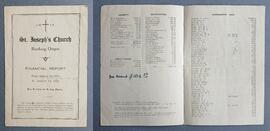
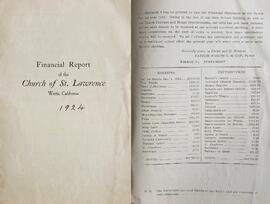
The subseries comprises a collection of records focusing on the financial and sacramental administration of Irish Capuchin missions in the United States between from 1912 onward.
The records track the expansion and daily operations of Capuchin missions across several states.
Western United States: Oregon (Roseburg, Hermiston/Baker City), California (Watts/Los Angeles, Ukiah, Fort Bragg, Mendocino, Elk).
Central/Eastern United States: Nebraska (Lincoln) and Pennsylvania (Abbottstown).
The series is organized around three primary types of documentation:
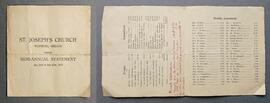
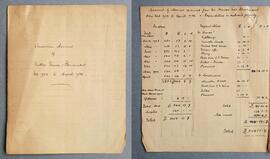
Parish Financial Statements: These detail the transition from mission outposts to established parishes. They include records of Sunday collections, ‘Monthly Assessments’, and large-scale fundraising like Bazaars. Significant portions of expenses were dedicated to infrastructure (schools and rectory construction) and servicing high-interest mortgage debts.
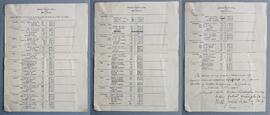
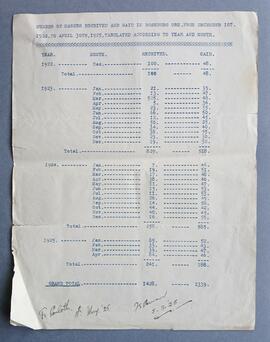
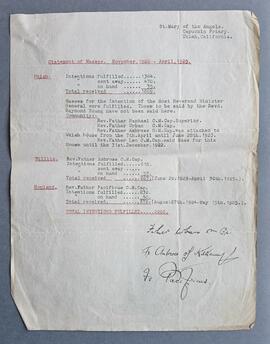
Mass Obligations (Stipend Accounting): A large number of documents (CA WA/2/8-15) track ‘Masses Received’ versus ‘Masses Said’. These ledgers ensured that spiritual requests from the public were fulfilled, either locally by the friars or ‘Sent Away’ to other priests when the backlog became too large.
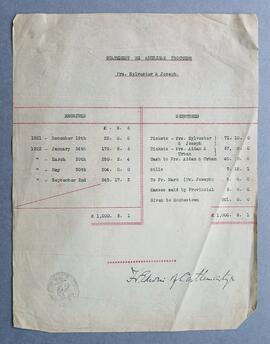
Missionary Logistics: Several records (CA WA/2/2-3) account for the specific costs of sending friars from Ireland to America, including passport fees and steamship tickets.
Context
The documents capture the friars’ resilience during the Great Depression, specifically in the 1931 report for the Church of St. Francis of Assisi in Los Angeles, where the pastor notes the ‘general depression’ but praises the parishioners’ continued ‘sacrifices’.