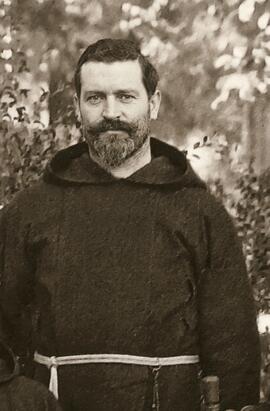
Showing 222 results

Authority record
IE CA DB/73 · Person · 10 December 1889-2 October 1959

Early Life and Early Ministry
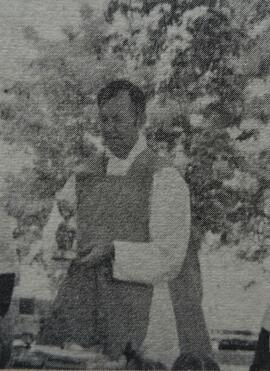
Leo Sheehan was born Denis Sheehan on 10 December 1889 in Macroom in County Cork. He entered the Capuchin Franciscan Order and, following his ordination to the priesthood, was transferred to the United States to serve the American missions. By 1922, Father Sheehan was assigned to St. Mary’s Parish in Ukiah, California, ministering alongside the Father Urban Riordan. In early 1924, he was stationed at St. Anthony’s in Mendocino, California, while concurrently providing pastoral assistance to the coastal parish in Greenwood.

Educational Leadership at Mendocino City
In 1924, following the Capuchin friars’ acquisition of a large estate built in 1902 in Mendocino City, Father Sheehan proposed converting the property into a preparatory seminary for aspirants to the Order.

• Authorization: Approved by the Provincial Definitory in Ireland on October 7, 1924.
• Rectorship: Following remodelling, the facility accommodated 40 students, with Father Sheehan appointed as the first and only Rector of St. Anthony’s School.
• Decline and Destruction: Student enrolment declined sharply in 1929 at the onset of the Great Depression. In 1930, an electrical wiring short caused a catastrophic fire that destroyed the building; the school was never rebuilt.

Subsequent Pastoral Assignments
Following the closure of the school, Father Sheehan returned to full-time parochial ministry across the United States:

• 1932: Stationed at Our Lady of Good Counsel Parish in Fort Bragg, California, alongside the Reverend Finbarr O’Callaghan.
• Pre-1935: Assigned to St. Francis Parish in Bend, Oregon.
• 1935: Transferred to St. Joseph’s Parish in Roseburg, Oregon, following a formal canonical visitation of the American houses conducted by the Reverend James O’Mahoney on behalf of the Irish Provincial Definitory.
• Later Years: Transferred to St. Patrick’s Friary in Wilmington, Delaware, where he spent the remainder of his active ministry.

Father Leo Sheehan passed away on 2 October 1959. He is buried in Wilmington, Delaware.
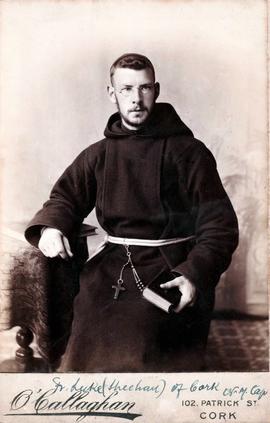
IE CA DB/12 · Person · 31 March 1873-11 February 1937

Francis Bernard Sheehan was born in Cork on 31 March 1873. His early studies were in Saints Peter and Paul school, the Christian Brothers’ school, the Presentations Brothers’ school, and finally at the Seraphic College in Rochestown in County Cork. He was received into the Capuchin Order on 2 February 1889. After the usual philosophical and theological studies, he was ordained in Holy Trinity Church, Cork, in July 1896. Shortly afterwards, he was transferred to the Kilkenny Friary where acted as a lector in philosophy. In November 1902 Fr. Luke volunteered for missionary work as a chaplain in Arabia where the Capuchin friars had established a Vicariate. He was soon appointed Pro-vicar Apostolic. He was charged with chaplaincy duties at British military and naval stations in Aden and did much visitation work in the interior of the country. While stationed in Aden he was taken ill with fever and was forced to return to Ireland to recuperate. Before he had fully recovered the priest who replaced him succumbed to the harsh climatic conditions prevailing in that part of the world. Fr. Luke immediately offered to return to Arabia, and he remained there until 1908. As Aden was then governed as part of British India, Fr. Luke also frequently visited India to conduct missions for troops, chiefly around Bombay (now Mumbai). He returned to Ireland in 1908. In 1910 he accompanied Fr. Thomas Dowling OFM Cap. on a journey to eastern Oregon to establish a new Capuchin mission in this territory. Fr. Dowling was appointed a Provincial Definitor (councillor) later in 1910 leaving Fr. Luke to work alone in Oregon until the arrival of Fr. Casimir Butler OFM Cap. He worked diligently in establishing parish communities in Hermiston and later in Bend on the Deschutes River in Oregon.

The first church Bend was an old schoolhouse purchased in 1912 for $75. Fr. Luke later invited a group of nuns of the Order of St. Joseph to establish a hospital in the locality. With a growing population, a larger church was needed in Bend, and the foundation stone for the present-day St. Francis of Assisi Church was laid on 25 January 1920. It was built by E. P. Brosterhous at the cost of $55,000 and was officially opened and dedicated in the same year. St. Francis Catholic School in Bend (with an initial enrolment of 140) was opened in 1936. Fr. Luke served as a priest in Bend for twenty-seven years. He died in Hood River, Oregon, on 11 February 1937. His obituary in the ‘Bend Bulletin’ noted that ‘women cried and men who had known Father Sheehan since he came here in the early days were unable to control their sobs as the requiem mass was celebrated. Every available bit of space in the huge church, erected years ago through the efforts of Father Sheehan, was occupied as parishioners, churchmen and close friends of other faiths came to pay their respects to the priest who played such an important part in the religious and civic life of Bend. Occupying a pew in the crowded church were six members of the Protestant clergy of Bend’. Father Luke was buried beneath a Celtic Cross gravestone in Bend’s Pilot Butte Cemetery. For images of his memorial in Pilot Pilot Butte Cemetery in Bend, Oregon, see https://www.findagrave.com/memorial/12540403/luke-sheehan

Baptismal name: Francis Bernard Sheehan
Religious name: Fr. Luke Sheehan OFM Cap.
Date of birth: 31 Mar. 1873
Place of birth: Cork
Name of father: John Sheehan
Name of mother: Catherine Sheehan (née Sullivan)
Date of reception into the Capuchin Order: 2 Feb. 1889
Date of first profession: 4 Feb. 1890
Date of final profession: 18 Oct. 1894
Date of ordination (as priest): 2 July 1896
Missionary assignments: Ministered in Aden from 1902-08; Travelled to Oregan, United States, in 1910
Leadership positions: Custos, 1913-6; 1919-22
Date of death: 11 Feb. 1937
Place of death: Hood River, Oregon (while on supply from Bend, Oregon)
Place of burial: Bend, Oregon

IE CA DB/DS · Person · 6 September 1931-6 July 1975

Early Life and Religious Formation
Donal Sullivan was born on 6 September 1931 in Cork. Raised and educated in Cork, he was an active youth who excelled in sports and developed a lifelong passion for hiking and the outdoors. He entered the Capuchin Franciscan Order at the novitiate in Rochestown, County Cork, on 3 October 1953. Following his philosophical and theological curriculum, he was ordained to the priesthood on 1 June 1961 at St. Eunan’s Cathedral in Letterkenny, County Donegal.

Missionary Transfer and Parochial Ministry
In 1962, shortly after his ordination, Father Sullivan travelled to the United States to join the order's regional jurisdiction (then designated as the Vice-Province). Over the next thirteen years, his ministerial path spanned multiple parochial and healthcare assignments across California and Oregon:

• St. Francis Parish (Los Angeles, California): Served as Assistant Pastor from 1962 to 1965.
• St. Francis Parish (Bend, Oregon): Served as Assistant Pastor from 1965 to 1966.
• St. Lawrence Parish (Los Angeles, California): Served as Assistant Pastor from 1969 to 1970.
• Our Lady of Angels Parish (Hermiston, Oregon): Elevated to parochial governance, serving as Pastor from 1971 to 1974.

Healthcare Chaplaincy Apostolates
In tandem with his parish work, Father Sullivan committed significant periods of his priesthood to institutional healthcare chaplaincy, providing pastoral care to the sick and hospitalized:

• St. Charles Hospital (Bend, Oregon): Served his first chaplaincy tenure from 1966 to 1967.
• Mendocino State Hospital (Mendocino, California): Served as chaplain from 1967 to 1969.
• Fresno Community Hospital (Fresno, California): Served as chaplain from 1970 to 1971.
• St. Charles Hospital (Bend, Oregon): Returned for a second chaplaincy assignment in 1974 until the onset of his final illness.

In late 1974, his active ministry was cut short when he suffered a debilitating stroke. He was subsequently transferred to an archdiocesan care facility in San Francisco, California, to undergo intensive physical rehabilitation and therapy. His health steadily declined, and following a secondary stroke, he passed away on 6 July 1975, at the age of 43.

IE CA DB/39 · Person · 5 November 1876-11 November 1918

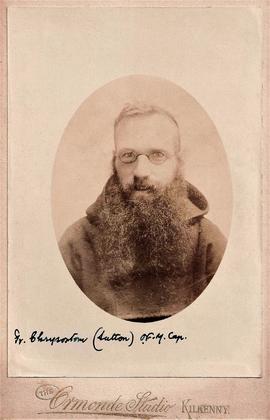
Edward Abraham Sutton was born in Monkstown in County Cork on 5 November 1876. His early education was with the Christian Brothers. He joined the Capuchin Franciscans in June 1898 and took Chrysostom as his religious name. He was solemnly professed as a friar in August 1902. He was ordained to the priesthood on 28 September 1902. He served as master of novices in Kilkenny from 1910 until his death on 11 November 1918. It was noted that ‘his death … came about from a severe attack of influenza contracted whilst ministering to those afflicted with the disease in Kilkenny city’. A local newspaper, ‘The Kilkenny People’ (16 November 1918), referred to the death from influenza of Fr. Chrysostom and noted the remarks of the city’s mayor in saying that the priest ‘was a most charitable man, and he would say he lost his life in trying to relieve the sufferings of the poor of Walkin Street and the neighbourhood during the epidemic’. Fr. Chrysostom was buried in the Capuchin plot in Foulkstown Cemetery in Kilkenny.

Baptismal name: Edward Abraham Sutton
Religious name: Fr. Chrysostom Sutton OFM Cap.
Date of birth: 5 Nov. 1876
Place of birth: Bellevue Place, Monkstown, County Cork
Name of father: George Abraham Sutton (Merchant)
Name of mother: Lydia Sutton (née Harding)
Date of reception into the Capuchin Order: 9 June 1898
Date of first profession: 2 Aug. 1899
Date of final profession: 2 Aug. 1902
Date of ordination (as priest): 28 Sept. 1902
Educational attainments: BA, RUI (1901)
Date of death: 11 Nov. 1918
Place of death: Kilkenny
Place of burial: Foulkstown Cemetery, County Kilkenny

IE CA DB/JET · Person · c.29 March 1812-29 July 1889

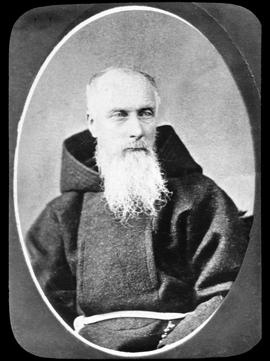
James Tommins was born in Dublin on 29 March 1812. Often, when recounting the difficult conditions in pre-emancipation Ireland, he would tell his younger fellow-friars: ‘You were born free. I was born a slave’. As a youth he was apprenticed to a haberdasher, or, more specifically, a button-manufacturer. He frequently attended religious services at the Capuchin chapel on Church Street. In his late thirties, Tommins expressed a desire to become a Capuchin friar. He went to night school to gain the necessary knowledge of the classics, and, by assiduous study, he soon reached the standard required for the novitiate. Then, in 1849, at the age of 42, he was sent to Bruges, in Belgium, for his novitiate and studies. Having taken Edward as his religious name, he was noted for his strict obedience and generous self-sacrifice, which, together with his profound humility, won him the esteem of the Capuchin community in Belgium, and secured his admission to profession. With the successful completion of his studies and having been ordained priest in 1856 by Jean-Baptiste Malou (1809-1864), Bishop of Bruges, he returned to Ireland. The following year Fr. Theobald Matthew OSFC, then Commissary-General, assigned him to Kilkenny. Except for a short period during which he was guardian (local superior) in Cork in 1861, Fr. Tommins spent his entire priestly life in Kilkenny, most of the time as guardian of a small fraternity of two or three friars. He prepared the way for the establishment of a Capuchin novitiate in Ireland; and, at a later period was appointed Commissary-General. On 23 January 1861, Fr. Edward called a meeting of the people of Kilkenny to arrange for the furnishing of the friary church. The meeting was presided over by the Mayor, Thomas Power, and it was agreed to engage Mr. McCarthy, architect, to oversee the improvements to the church, including the installation of the high altar. Once the church was completed, Fr. Tommins was also responsible for the purchase of the garden as far as Pennyfeather Lane. He also gave occasional missions and retreats notably in Castlecomer, Clough and Urlingford. With a shortage of Capuchin priests in the Irish Province, he sometimes said one Mass in Dublin on a Sunday morning; and then took the train to Kilkenny to say a second Mass there. He was also responsible for the inauguration of the Third Order of St. Francis lay confraternity in Cork in about 1866. Of the first six men he recruited as tertiaries, two joined the Capuchins: Br. Joseph O Mahony OSFC (d. 1902) and Br. Felix Harte OSFC (d. 1935). Fr. Tommins was also one of the first to take the pledge when Bishop (later Cardinal) Francis Moran, founded the Total Abstinence Sodality in Kilkenny. He died at the Capuchin Friary on Walkin Street in Kilkenny on 29 July 1889 and was afforded an elaborate public funeral. He was laid to rest in a tomb adjoining the northern aisle of St. Francis Capuchin Church in Kilkenny.

Baptismal name: James Tommins
Religious name: Fr. James Edward Tommins OSFC
Date of birth: c.29 Mar. 1812
Place of birth: Dublin
Name of father: Nicholas Tommins
Name of mother: Mary Tommins (née Casey)
Date of reception into the Capuchin Order: c.1830
Date of ordination (as priest): 1856
Date of death: 29 July 1889
Place of death: Capuchin Friary, Walkin Street, Kilkenny

IE CA DB/8 · Person · 20 March 1870-2 May 1957

William Patrick Travers was born into a prominent Cork family on 20 March 1870. The family were devoutly Catholic. John, his elder brother, was also a Capuchin friar and took Anthony as his religious name. Another brother was an Augustinian friar while a sister became an Ursuline nun. William joined the Capuchin Franciscans in 1887, took the religious name of Aloysius, and was ordained to the priesthood in 1894. From his earliest years, Aloysius took a keen interest in promoting the work of the temperance movement. He was appointed President of the Father Mathew Hall in Dublin, and held this position from 1904-13. During his years as President, he used the Hall for the promotion of temperance and as a recreational venue for the members of the Sacred Heart Sodality. To further support the ideals of temperance and to revitalise interest in Irish culture, he founded 'The Father Mathew Record' which began publication in January 1908. The year before, he had inaugurated the Féis Maitiu which promoted Gaelic cultural revivalist activities such as storytelling and festivals of native song and dance. Fr. Aloysius also used the pages of the 'Record' to strongly promote a ‘Buy Irish Campaign’. About this time, he also established the League of Young Irish Crusaders. Like many of the Capuchin friars of the Dublin community, Fr. Aloysius was involved in ministering to the Rising leaders during their imprisonment and was present at the execution of James Connolly in Kilmainham Jail on 12 May 1916. He later championed the cause of various labour leaders in Dublin. It has also been speculated that Fr. Aloysius undertook a secret mission to Pope Benedict XV in connection with the Irish struggle. He was elected seven times to the office of Provincial Definitor (Councillor) and was Provincial Minister of the Irish Capuchins from 1913-6. In his later years, he became an enthusiastic member of the Legion of Mary and published numerous devotional tracts including a popular prayer book, 'The Voice of the Church', 'The Seraphic Standard' and 'ĺosa Mo Mhian'. He died on 2 May 1957 at the Capuchin Friary, Church Street, Dublin. He was 89 years old and was a Capuchin friar for almost 69 of these years. He was buried in Glasnevin Cemetery.

IE CA DB/AT · Person · 1 February 1866-11 March 1943

Baptismal name: John Travers
Religious name: Fr. Anthony Travers OFM Cap.
Date of birth: 1 Feb. 1866
Place of birth: 420 Blarney Lane, Cork
Name of father: Thomas Travers (Engineer)
Name of mother: Mary Travers (née Keane)
Date of reception into the Capuchin Order: 15 Aug. 1885
Date of first profession: 15 Aug. 1886
Date of final profession: 8 Feb. 1890
Date of ordination (as priest): 24 May 1891
Ministries: Guardian, Church Street Friary, Dublin, from 1895-8. He may have left the Order in 1900 and resided in Australia as a diocesan priest for some years. He was a parish priest in St. Helens, the largest town on the north-east coast of Tasmania, Australia, in 1913. Fr. Anthony re-joined the Irish Capuchins in Feb. 1920.
Date of death: 11 Mar. 1943
Place of death: Bons Secours Hospital, Cork
Place of burial: Cemetery, Rochestown Capuchin Friary, County Cork

IE CA DB/31 · Person · 16 May 1877-8 July 1947

Baptismal name: Cornelius Treacy
Religious name: Br. Francis Treacy OFM Cap.
Date of birth: 16 May 1877
Place of birth: Ashbury, Roscrea, County Tipperary (Diocese of Killaloe)
Name of father: Thomas Treacy (Royal Irish Constabulary Policeman)
Name of mother: Catherine (Kate) Treacy (née O’Regan)
Date of reception into the Capuchin Order: 29 June 1896
Date of first profession: 29 June 1897
Date of final profession: 17 Sept. 1900
Date of death: 8 July 1947
Place of death: Church Street Friary, Dublin
Place of burial: Glasnevin Cemetery, Dublin

IE CA DB/SVD · Person · 1820-15 August 1887

Baptismal name: John Van Damme
Religious name: Fr. Seraphin Van Damme OFM Cap.
Date of birth: 1820
Place of birth: Bruges, Belgium
Date of reception into the Capuchin Order: 1840
Leadership positions: Appointed Commissary General of the Irish Capuchins on 20 May 1882. He held this position until 1885; Provincial Minister, 1885-6.
Date of death: 15 Aug. 1887
Place of death: Cork
Place of burial: Cemetery, Rochestown Capuchin Friary, County Cork

IE CA DB/41 · Person · 29 July 1881-23 May 1961

Michael Walsh was born in County Kilkenny on 29 July 1881. He joined the Capuchin Franciscan Order in September 1898 and took Edward as his religious name. Following the completion of his philosophy and theological studies, he was ordained a priest in March 1907. He was assigned to the new Capuchin mission in the Western United States in late 1911. His initial appointment was assistant pastor to St. Joseph’s Parish in Roseburg in Oregon. He served as assistant pastor from January 1912 to February 1913 and was thereafter pastor in the same location until 1919. During this time the friars actively sought an additional foundation which came to the fruition when they were assigned the Sacred Heart Parish in the Diocese of Lincoln in Nebraska. Fr. Edward served as pastor (with Fr. Ferdinand Glenny OFM Cap. acting as his assistant) in Lincoln from 1919 to 1923. He remained active in parish ministry and missionary work until he returned to the Irish Capuchin Province in 1923. In 1928 he was elected Provincial Definitor (Councillor) and served as Custos General from 1934 to 1937. He served as guardian (local superior) of Holy Trinity Friary in Cork and served two terms in the same position in the Church Street Capuchin Friary in Dublin. He died in Dublin on 23 May 1961 and was buried in Glasnevin Cemetery.

Baptismal name: Michael Walsh
Religious name: Fr. Edward Walsh OFM Cap.
Date of birth: 29 July 1881
Place of birth: Garryduff, Tullaroan, County Kilkenny (Diocese of Ossory)
Name of father: Edward Walsh (Farmer)
Name of mother: Mary Walsh (née Grace)
Date of parents’ marriage: 3 Aug. 1870
Date of reception into the Capuchin Order: 17 Sept. 1898
Date of first profession: 17 Sept. 1899
Date of final profession: 25 Sept. 1904
Date of ordination (as priest): 16 Mar. 1907
Educational attainments: BA (RUI) 1904
Missionary activity: Travelled to the Western American Capuchin Mission (Roseburg, Oregon) on 10 Nov. 1911; Returned to Ireland in 1923.
Provincial Leadership Positions: Definitor (Councillor): 1928-31; Custos General: 1934-7.
Date of death: 23 May 1961
Place of death: Bon Secours Hospital, Glasnevin, Dublin
Place of burial: Glasnevin Cemetery, Dublin