Showing 330 results

Geauthoriseerde beschrijving
IE CA DB/113 · Persoon · 13 October 1895-13 May 1976

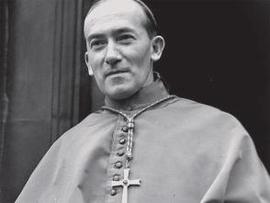
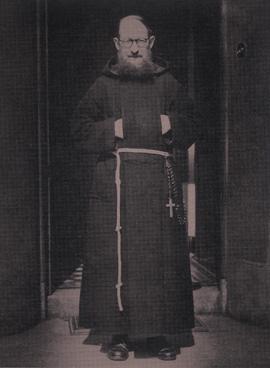
Nicholas Brophy was born in Sandymount in Dublin on 13 October 1895. He entered the Capuchin novitiate in Kilkenny in 1917 and took Charles as his religious name. He later attended the Capuchin College in Rochestown in County Cork and obtained a Bachelor of Arts degree from University College Cork in 1921. He was ordained to the priesthood in June 1925. The entirety of his priestly ministry was spent in Dublin. He was President of Father Mathew Temperance Hall in the capital from 1928 to 1934 and was guardian (local superior) of the Church Street Capuchin community from 1934 to 1940 and from 1946 to 1949. He also served as Provincial Definitor from 1937-40 and from 1946-9. He founded the Retreat House in Raheny in Dublin and became its first director in 1957. He was well-known for his enclosed retreats in Raheny and for his missionary and preaching work particularly in his native Dublin which continued until his health deteriorated in his later years. He died in Jervis Street Hospital on 13 May 1976 and was buried in Glasnevin Cemetery in Dublin.

Baptismal name: Nicholas Brophy
Religious name: Fr. Charles Brophy OFM Cap.
Date of birth: 13 Oct. 1895
Place of birth: Sandymount, Dublin
Name of father: Peter Brophy
Name of mother: Catherine Byrne (née Byrne)
Date of parents’ marriage: 15 Nov. 1894
Date of reception into the Capuchin Order: 17 Sept. 1917
Date of first profession: 29 Sept. 1918
Date of final profession: 29 Sept. 1921
Date of ordination (as priest): 29 June 1925
Educational attainments: BA, 1921
Leadership positions: Provincial Definitor (Councillor), 1937-40, 1946-9; Custos General, 1940-3, 1943-6
Date of death: 13 May 1976
Place of death: Jervis Street Hospital, Dublin
Place of burial: Glasnevin Cemetery, Dublin

Ignatius Spencer
AR 2 · Persoon · 21-12-1799

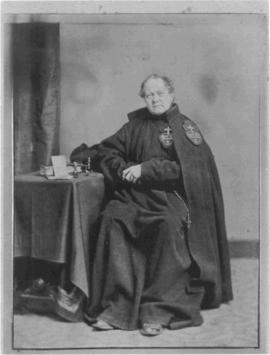
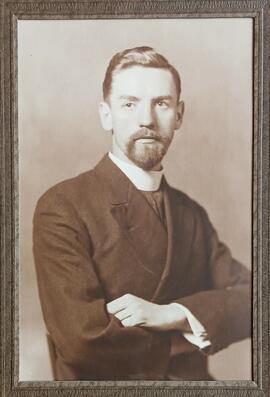
Fr. Ignatius is dead! Our Congregation has lost an excellent subject on earth, but has gained, as we trust, a saint in heaven. It is very difficult to do justice in a short space to the life of such a great servant of God; it would take volumes. Still, something must be said if only to render to the memory of the deceased the tribute of our veneration.

 Fr. Ignatius of St. Paul, born the Hon. George Spencer, was the link, so to say, between the death and resurrection of the Catholic Church in England. It was he who threw the first stone that made Protestantism begin to crumble, and it was he who was to be the corner-stone of the Catholic Church which is now rising from its ruins.

As a youth he received the sort of education that is usually given to the English aristocracy. He went first to Eton, and from there to Cambridge, where, at the age of 22, he received the Orders which the English call "sacred" and became a minister in the Anglican church. A brilliant career lay before the young minister. Noble birth, influential friends, his own personal gifts and virtues - all pointed to a high position in the Anglican hierarchy.

The Truth, however, which had already begun to enlighten his mind, was to bring to naught all such expectations. With the help of God's grace he began to see the life of a minister and a preacher of the Gospel in a very different light from that of his countrymen. The sacredness of his vocation, he felt, was not compatible with pomp or wealth or the bonds of matrimony. And so he resolved to lead a celibate life and to adopt a life-style which seemed to him more in conformity with the demands of the Gospel, even though at this time he still considered the Catholic Church to be wrong on these very issues.

There were a number of other things, too, which made him feel ill at ease in his present position. To clear his mind once for all of the many doubts that plagued him, he decided to make an earnest study of other religious systems - a study to which he gave himself with a methodical thoroughness all his own. It was all to no avail. But in the end a ray of that "light which enlightens every man" dispelled all doubts from his mind and made him clearly understand that the true Church of Christ was the catholic Church, and that outside her there is no salvation. For a heart as generous and honest as his, that was enough, and he decided to become a Catholic there and then. He was received into the Church in February, 1830. Far from ever regretting the step he had so courageously taken, he never ceased to thank God for the great grace he had received, and it was his constant endeavour to ensure that all his countrymen should share the same favour.

Shortly after becoming a Catholic he went, on the advice of his bishop, to the English College in Rome to study for the priesthood. It was surely by a special dispensation of Divine Providence that he was ordained on 28th May, 1832, the feast of St. Augustine, the Apostle of England, in the church of St. Gregory - the very place where that Pope had commissioned St. Augustine to preach the Gospel in England. He said his first Mass on the feast of St. Bede according to the Benedictine calendar. Fr. Ignatius never tired of telling that story to his brethren, and he had already written to Fr. Dominic about it, full of gratitude to the Lord for such a privilege.

After his ordination he returned to England where he generously gave himself and all he possessed to whatever work was given him to do. For 15 years he was a model priest in the Birmingham diocese, undertaking whatever duty was assigned to him by his Bishop. He built churches, founded missions and generously contributed to the re-establishment of the Catholic Church in that diocese. Because of his outstanding merits, a special "office" was created for him in Oscott College. It had to be abandoned later on for want of anybody capable of following in the footsteps of Fr. Ignatius.

In 1846 he made a retreat at a house of the Jesuit Fathers. After it, to the surprise of everyone, including himself, he discovered he had a vocation to the Passionist Congregation. He wrote immediately to Fr. Dominic, who was then Superior of the Order in England, and he received the holy habit at his hands on 5th June, 1847. He was professed the following year, taking the name Ignatius as a gesture of gratitude to the Author of the Spiritual Exercises, through which, under God, he had received his vocation.

His profession marked the beginning of a new life - not in the sense that his former life, especially since he had became a Catholic, needed any kind of reform, but in the sense that, whereas his work until then had been limited to a comparatively small number of people and places, from now on the whole of England as well as Scotland, Ireland, France, Germany and Italy would become his mission field.

In speaking of the virtues of Fr. Ignatius it is hard to know where to begin. The love of God and zeal for His glory had so taken possession of his heart that he could scarcely think of anything else. The constant subject of his conversation was how to overcome heresy and combat sin. Any other subject left him uninterested, to the point that he would often drop off to sleep in the midst of such conversations. He would gladly have travelled the whole world over to set all men's hearts on fire with the love of God that burned so brightly in his own. His prudence and the obedience which he had vowed put a brake on his zeal, but his fervour, far from growing less, only increased the more because, as he used to say, what one does under obedience is not only more pleasing to God, but more efficacious for saving souls.

Because of the poverty of the Congregation and the special needs of the Province, the Superiors were often obliged to ask Fr. Ignatius to travel to many places all over the country to raise money. Not only did he always undertake such a difficult task with prompt obedience, but he would take advantage of it to give greater scope to his zeal in the way we shall now describe.

We have already said how he had set his mind on bringing back his own people to the Catholic Church. He in no way disapproved of the ordinary means of making converts such as preaching, etc., but he held that the most efficacious way was to pray, and to pray through the intercession of her of whom the Church sings: "Rejoice, O Virgin Mary, for thou alone hast overcome all heresies in the whole world." So it was that Fr. Ignatius took advantage of the travels he undertook under obedience in many countries of Europe to ask of all prayers for the conversion of England. In order to encourage people to pray for this intention, he asked and obtained the blessing of the Pope, who went so far as to grant indulgences to the recitation of three Hail Marys together with the invocation "Our Lady, Help of Christians, pray for us." He took this as the sign of approval of his unique mission. There is no telling how much this devotion spread, and is still spreading, throughout a great part of Europe, or what benefits may be hoped for as a result. It is a fact that from the time when Fr. Ignatius started this devotion, initiated what we may call a campaign of prayer, so many converts have been received in England, so many churches and schools have been built, so many convents and monasteries founded, that it would seem that England is no longer what it was 30 years ago. All this is surely the fruit of the prayers said and the prayers asked for by Fr. Ignatius.

To zeal for the glory of God and the conversion of his country, Fr. Ignatius added a great love of the Regular Observance. So great was his zeal for the Observance that his Superiors often had to moderate it. It often happened that, coming home at night tired and weary after a whole day's work in the confessional or in conducting spiritual exercises, he would have got up for Matins at all costs if his Superiors or his confessor had not forbidden him to do so. Generous as he was himself, he could not understand how a religious, or even a Catholic in the world, could commit even one deliberate fault however small. He used to say that he did not like to hear people say - a thing you hear even from the lips of religious occasionally - "I should be quite happy if I get to Purgatory." His maxim was that we must not be content with mediocrity when it is so easy to reach perfection.

His trust in Divine Providence and his acceptance of God's Will were boundless. Whatever happened to anyone, he wanted it to be seen as a gift from God's hand and as such something to be grateful for. "Thank God for everything" was a phrase that was constantly on his lips. One day he was walking along a dark and lonely road and fell to thinking how easy it would be for an enemy to kill him with just one shot. When asked what he would do in such a case, his answer was: "I should hope to have at least one moment to thank our Lord for the bullet that hit me."

So profound was his humility that he seemed to have forgotten his noble origins altogether and the esteem in which he was held by people of all walks of life. Kind and affable towards everybody, he took special pleasure in dealing with the poor and the ignorant and with little children. He was never heard to complain. For him everything was good. Even the worst prepared food, the oldest and most patched clothing were to him like the finest gifts.

He held successively a number of offices in the Congregation. First he was Master of Novices. Then Fr. Dominic, before he died, appointed him his successor as Superior in England. Then for three years he was Rector of our house in London, after which he was elected Provincial Consultor - an office he held for nine years, i.e. until 1863 when in the chapter held that year he was elected Rector of St. Anne's Retreat, Sutton, near Liverpool.

He had often expressed the wish to die like St. Francis Xavier or like Fr. Dominic, alone and abandoned by all. Through an extraordinary combination of circumstances, or rather by a special dispensation of Divine Providence, his wish was granted. He was preaching in Scotland one of his "Little Missions" - not so "little" judged by the results they produced. These lasted for three days, with two sermons a day and confessions which he heard during all the time that remained between saying Mass and taking his brief rest. (He had already given 245 such missions since 1857 in England, Ireland and Scotland.)

On Friday, 30th September, he had finished one of these missions in a place called Coatbridge, and had been hearing confessions until midnight. At 6 o'clock on the Saturday morning he went back into the confessional until 7.30, when he said Mass. He then got ready to go to Leith where he intended to start another mission that same day. When he got to Carstairs he found the train was not leaving for two hours. Not to waste time, he decided to pay a visit to an old friend of his, named Mr. Monteith, who lived in the vicinity. But it was here that death awaited him. He had a sudden heart attack and dropped dead about 100 yards from his friend's house, without anybody seeing him or being able to help him. His whole life, however, had been one long preparation for death, and so we have every ground for hope that the Lord has already crowned him with the glory that was waiting for him.

Fr. Ignatius of the Child Jesus, the Provincial, received word of the death by telegram. With some of the religious he went at once to the place where the servant of God had died. When the necessary arrangements had been made, the remains were taken on the following Monday to our monastery at Sutton where the Solemn Requiem was celebrated on 6th October. The funeral was attended by a large number of people, clerical and lay, as well as by the community of Sutton and religious from other houses of the Province. The Solemn Requiem was celebrated by the Provincial, and after it the Bishop of Birmingham, Dr. Ullathorne, preached the panegyric to the large and very attentive congregation that had assembled for the occasion. After the Mass, the Bishop together will all the priests present and a large concourse of people accompanied the body to its final resting place. Inside the tomb the following inscription was placed:

  "The mortal remains of Father Ignatius of St. Paul, of the Congregation of the Passion and of the noble family of Spencer. He was at first an Anglican minister; then, having been converted to the Catholic Church, was ordained to the priesthood in Rome in the year 1832. With admirable constancy of mind he laboured for more than 30 years for the conversion of his country. He was numbered among the sons of the Passion in the year 1847, and throughout his life gave an example of all the virtues to his brethren. He journeyed throughout England, Ireland and Scotland, and even in Italy, Germany and France, exhorting the people to their own sanctification and forming them, as it were, into a sacred army to pour forth prayers for the conversion of England. He was engaged in this most gratifying work in Scotland when, on 1st. October, 1864, having offered the Sacrifice of the Mass, he was on his way to visit a friend he had long been acquainted with (Mr. Robert Monteith). He died suddenly at his friend's door, being assisted by God whose glory he had ever sought, and by the angels whose purity he had imitated. His life came to an end in the 65th year of his age. May he rest in peace."

(translated from the Italian)

[ The Italian version of the above obituary notice was discovered recently in the library of Scala Sancta Retreat, Rome. A photostat copy was sent to us (December, 1976) by Fr. Frederico, Postulator General. Signed: Ignatius C.P. (St. Joseph's Province.)]

John Mary Harty
IE CEM 1 · Persoon · 1867-1946

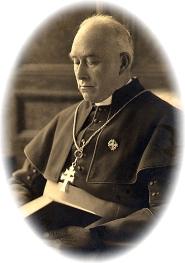
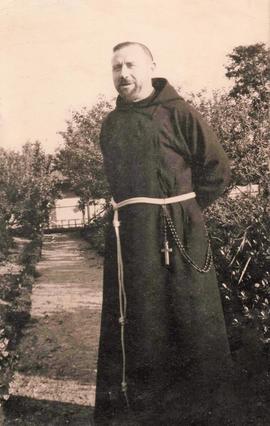
John Mary Harty was born in Murroe, County Limerick in 1867. He received his education at Jesuit College, Limerick, Saint Patrick's College, Thurles, and Maynooth. He entered First Philosophy on 1 September 1887 and was ordained priest on 20 May 1894 in Clonliffe College, Dublin, by Dr. William Walsh of Dublin. The next year, after a competitive examination, he was appointed to the Chair of Dogmatic Theology in Maynooth, the year after ordination being spent in postgraduate study in Dunboyne.

He published treatises on Grace and on the Sacraments. Later he was appointed Senior Professor of Moral Theology and held this chair till his appointment as Archbishop on the resignation of Dr. Fennell. The voting of P.P.'s for new Bishop was Dr. Harty, Maynooth College - 20; Dr. John Slattery, Thurles College - 10; Rev. Tom F. Power P.P. V.F. Galbally - 8; Mgr. Riordan, Rector, Irish College, Rome - 2; Canon Arthur Ryan P.P. V.G. - 6. Tipperary - 1; Dr. Kelly, Bishop of Ross - 1.

Dr. Harty was appointed in November 1913 and consecrated in Thurles on 8 January 1914 by Archbishop Fennelly. After consecration the priests of the Archdiocese presented him with a motor car costing Ł500. His gentle manners and kindly disposition endeared him to all - both clergy and laity. For a number of years before his death, ill-health restricted his activities. He requested a Coadjutor from the Holy See, indicating that his wish was Dr. Jeremiah Kinnane, Bishop of Waterford since 1932, and a priest of the Archdiocese. In 1942, the Holy See acceded to his wish and Dr. Kinnane resigned his see of Waterford and became Coadjutor Archbishop of Cashel and titular Archbishop of Dercos and Dean of Cashel Diocesan Chapter, with Cashel as his parish.

Totally confined to the Archbishop's Palace by progressive debility from this period till his death on 1 September 1946, Archbishop Harty died aged 79 years. He was for many years President of the Catholic Truth Society of Ireland (from 14 October1914) and Patron of G.A.A. from 1928.

Dr. Harty received letter of appointment as Archbishop on 2 December 1913, and Bulls of appointment on 8 December 1913. The Bulls stated that perpetual administration of the see of Emly is attached to the see of Cashel. Dr. Harty had Pallasgreen and Solohead as mensal parishes - latter permitted by Rome (January 1915) while Dr. Fennelly lived.

From: http://homepage.eircom.net/~cashelemly/jmharty.htm

IE CA DB/12 · Persoon · 31 March 1873-11 February 1937

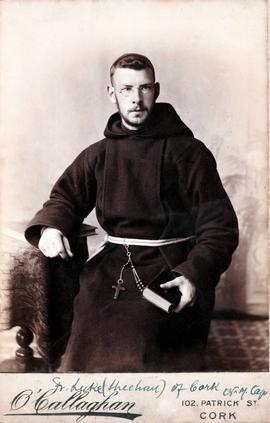
Francis Bernard Sheehan was born in Cork on 31 March 1873. His early studies were in Saints Peter and Paul school, the Christian Brothers’ school, the Presentations Brothers’ school, and finally at the Seraphic College in Rochestown in County Cork. He was received into the Capuchin Order on 2 February 1889. After the usual philosophical and theological studies, he was ordained in Holy Trinity Church, Cork, in July 1896. Shortly afterwards, he was transferred to the Kilkenny Friary where acted as a lector in philosophy. In November 1902 Fr. Luke volunteered for missionary work as a chaplain in Arabia where the Capuchin friars had established a Vicariate. He was soon appointed Pro-vicar Apostolic. He was charged with chaplaincy duties at British military and naval stations in Aden and did much visitation work in the interior of the country. While stationed in Aden he was taken ill with fever and was forced to return to Ireland to recuperate. Before he had fully recovered the priest who replaced him succumbed to the harsh climatic conditions prevailing in that part of the world. Fr. Luke immediately offered to return to Arabia, and he remained there until 1908. As Aden was then governed as part of British India, Fr. Luke also frequently visited India to conduct missions for troops, chiefly around Bombay (now Mumbai). He returned to Ireland in 1908. In 1910 he accompanied Fr. Thomas Dowling OFM Cap. on a journey to eastern Oregon to establish a new Capuchin mission in this territory. Fr. Dowling was appointed a Provincial Definitor (councillor) later in 1910 leaving Fr. Luke to work alone in Oregon until the arrival of Fr. Casimir Butler OFM Cap. He worked diligently in establishing parish communities in Hermiston and later in Bend on the Deschutes River in Oregon.

The first church Bend was an old schoolhouse purchased in 1912 for $75. Fr. Luke later invited a group of nuns of the Order of St. Joseph to establish a hospital in the locality. With a growing population, a larger church was needed in Bend, and the foundation stone for the present-day St. Francis of Assisi Church was laid on 25 January 1920. It was built by E. P. Brosterhous at the cost of $55,000 and was officially opened and dedicated in the same year. St. Francis Catholic School in Bend (with an initial enrolment of 140) was opened in 1936. Fr. Luke served as a priest in Bend for twenty-seven years. He died in Hood River, Oregon, on 11 February 1937. His obituary in the ‘Bend Bulletin’ noted that ‘women cried and men who had known Father Sheehan since he came here in the early days were unable to control their sobs as the requiem mass was celebrated. Every available bit of space in the huge church, erected years ago through the efforts of Father Sheehan, was occupied as parishioners, churchmen and close friends of other faiths came to pay their respects to the priest who played such an important part in the religious and civic life of Bend. Occupying a pew in the crowded church were six members of the Protestant clergy of Bend’. Father Luke was buried beneath a Celtic Cross gravestone in Bend’s Pilot Butte Cemetery. For images of his memorial in Pilot Pilot Butte Cemetery in Bend, Oregon, see https://www.findagrave.com/memorial/12540403/luke-sheehan

Baptismal name: Francis Bernard Sheehan
Religious name: Fr. Luke Sheehan OFM Cap.
Date of birth: 31 Mar. 1873
Place of birth: Cork
Name of father: John Sheehan
Name of mother: Catherine Sheehan (née Sullivan)
Date of reception into the Capuchin Order: 2 Feb. 1889
Date of first profession: 4 Feb. 1890
Date of final profession: 18 Oct. 1894
Date of ordination (as priest): 2 July 1896
Missionary assignments: Ministered in Aden from 1902-08; Travelled to Oregan, United States, in 1910
Leadership positions: Custos, 1913-6; 1919-22
Date of death: 11 Feb. 1937
Place of death: Hood River, Oregon (while on supply from Bend, Oregon)
Place of burial: Bend, Oregon

IE CA DB/44 · Persoon · 20 June 1880-12 March 1942

Francis Cantillon was born near the village of Glounthaune in County Cork on 20 June 1880. He attended the local diocesan seminary for several years, but after some discernment entered the Capuchin novitiate in September 1899. Having completed his philosophical and theological studies, he was ordained on 16 March 1907. In 1910 he was appointed guardian (local superior) of the Capuchin friary in Kilkenny. Following the completion of his term as guardian, he engaged in the ministry of preaching missions and retreats throughout Ireland. He was transferred to the United States in 1926 and took up residence in Mendocino County in California. Later that year he assisted Fr. Thomas Dowling OFM Cap. in ministering in Visitation Valley near San Francisco. This assignment was a temporary one as within a few months the Irish friars were given the administration of the new parish of Our Lady of Angels in Burlingame, California. They resided there in a small house on Cortez Avenue. In 1931 Fr. Berchmans was appointed Pastor of Our Lady of Angels parish in Ukiah, a position he filled until 1937 when he took up the position of pastor of the church of St. Francis of Assisi in Bend, Oregon. His health began to decline in subsequent years, and he retired from active ministry in 1940. He moved to Los Angeles and died there on 12 March 1942. He was laid to rest in the Capuchin plot in Calvary Cemetery in Los Angeles.

Baptismal name: Francis Cantillon
Religious name: Fr. Berchmans Cantillon OFM Cap.
Date of birth: 20 June 1880
Place of birth: Rockfarm, Glounthaune, County Cork
Name of father: Denis Cantillon
Name of mother: Mary Ellen Cantillon (née Mahony)
Date of reception into the Capuchin Order: 8 Sept. 1899
Date of first profession: 8 Sept. 1900
Date of final profession: 25 Sept. 1904
Date of ordination (as priest): 16 Mar. 1907
Educational attainments: BA (RUI)
Missionary assignments: Travelled to Los Angeles, California, in 1926
Date of Death: 12 March 1942
Place of death: Queen of Angels Hospital, Los Angeles, California, United States
Place of burial: Calvary Cemetery, Los Angeles, California, United States

IE CA DB/MOC · Persoon · 16 July 1859-27 April 1930

A native of Tarbert in County Kerry, Thomas O’Connor was born on 16 July 1859. At the age of seventeen, he joined the Capuchin Franciscans and took Matthew as his religious name. He was ordained a priest on 27 August 1882. He held several senior leadership positions in the Order in Ireland and was twice elected Provincial Minister (1893-6 and 1898-1901). He served as President of Father Mathew Memorial Hall on Church Street in Dublin from 1894 to 1895. Much of his later life in ministry was spent in Kilkenny and he died in the Capuchin Friary in the city on Sunday, 27 April 1930. He was buried in Foulkstown Cemetery just outside Kilkenny city.

Baptismal name: Thomas O’Connor
Religious name: Fr. Matthew O’Connor OFM Cap.
Date of birth: 16 July 1859
Place of birth: Tarbert, County Kerry
Name of father: John O’Connor
Name of mother: Ellen O’Connor (née Heagerty)
Date of reception into the Capuchin Order: 16 July 1876
Date of first profession: July 1877
Date of final profession: 4 Oct. 1880
Date of ordination (as priest): 27 Aug. 1882
Leadership positions: Provincial Minister: 1893-6, 1898-1901; Provincial Definitor (Councillor): 1885-8, 1887-90, 1890-3, 1905-8, 1910-3; Custos: 1887, 1890, 1895, 1901, 1907.
Date of death: 27 Apr. 1930
Place of death: Capuchin Friary, Kilkenny
Place of burial: Foulkstown Cemetery, County Kilkenny

IE CA DB/JK · Persoon · 15 June 1930-6 June 1967

Francis Kennedy was born on Fingal Street in Dublin on 15 June 1904. He joined the Capuchin Franciscan Order in September 1935 and took James as his religious name. He spent the greater part of his apostolate working the land on the farm attached to the Capuchin Friary in Rochestown, County Cork. After several years in Rochestown, Brother James took up residence with the community of friars in Holy Trinity in Cork city. He was transferred to the Kilkenny Friary in July 1960 in which year he celebrated his silver jubilee. He died in Kilkenny on 6 June 1967 and was buried in Foulkstown Cemetery.

Baptismal name: Francis Kennedy
Religious name: Br. James Kennedy OFM Cap.
Date of birth: 15 June 1904
Place of birth: Dublin
Name of father: John Kennedy (Builders’ Labourer)
Name of mother: Ellen (Dora) Kennedy (née Purcell)
Date of reception into the Capuchin Order: 18 Sept. 1935
Date of first profession: 19 Sept. 1936
Date of final profession: 19 Sept. 1939
Date of death: 6 June 1967
Place of death: Capuchin Friary, Kilkenny
Place of burial: Foulkstown Cemetery, County Kilkenny

IE CA DB/81 · Persoon · 15 September 1891-1 November 1973

Louis Riordan was born in Leeds in England on 15 September 1891. He joined the Irish Province of the Capuchin Franciscans in September 1911 and took Urban as his religious name. Soon after his ordination he was sent to the mission custody established by the Irish Capuchins on the west coast of the United States. He was assigned to St. Mary’s parish in Ukiah, Mendocino County, California. During his time in Ukiah, he wrote a short account on the ministry of the Irish friars in the United States. In 1929 he was transferred to the Blessed Sacrament mission in Elk, California, where he ministered until 1936. From 1941 to 1945 he was an associate pastor at Our Lady of Angels parish in Hermiston in Oregon. He returned to Ireland in 1951 and was appointed to communities in Church Street, Dublin, Holy Trinity, Cork, and the Church of St. Francis in Kilkenny. His final years were spent in the Capuchin house in Raheny in Dublin. He died on 1 November 1973 and was buried in Glasnevin Cemetery, Dublin.

Baptismal name: Louis Riordan
Religious name: Fr. Urban Riordan OFM Cap.
Date of birth: 15 Sept. 1891
Place of birth: Leeds, England
Name of father: William Riordan
Name of mother: Johanna Riordan (née Ryan)
Date of reception into the Capuchin Order: 17 Sept. 1911
Date of first profession: 17 Sept. 1912
Date of final profession: 8 July 1916
Date of ordination (as priest): 3 May 1918
Missionary assignments: Travelled to the United States in November 1919; Returned to Ireland in 1951.
Date of death: 1 Nov. 1973
Place of death: Church Street, Dublin
Place of burial: Glasnevin Cemetery, Dublin

IE CA DB/DOM · Persoon · 2 August 1936-14 August 2010

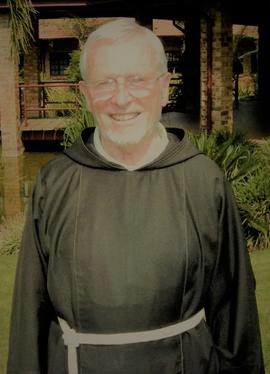
Donal O’Mahony was born on 2 August 1936 in Blackrock, Cork, the son of Jeremiah O’Mahony and his wife Ellen (née Walsh). He was educated at Rochestown College, and then trained as a sports journalist with the ‘Irish Independent’ for three years. Finding he had a vocation for the priesthood, he was received into the Capuchin Franciscan Order on 8 November 1958, and trained at Ard Mhuire Capuchin Friary at Cashelmore, Creeslough, in County Donegal. He took Augustine as his religious name and was ordained on 1 June 1966 at St. Eunan’s Cathedral in Letterkenny, County Donegal.

Based at the Capuchin Friary on Church Street in Dublin, he was from the beginning prepared to confront sensitive topics, arguing in the 1967 edition of ‘The Capuchin Annual’ that contemporary Marian devotional practices were not undermined by the promotion of ecumenism and an emphasis on liturgical worship emanating from the Second Vatican Council. As editor from January 1967 of the monthly ‘Father Mathew Record’, he modernised the magazine’s design and layout (undertaken by illustrator Richard King), included his own photography, commissioned articles on contemporary secular culture (including from Micheál MacLiammóir), and highlighted the issues of poverty and deprivation in Ireland and abroad. From January 1968, he renamed the publication ‘Eirigh: A Magazine of Christian Optimism’, and co-opted lay editorial and managerial staff. Its editorial policy sought to ‘communicate the Christian message to a modern family readership in the light of our inherited spiritual, national, and cultural traditions’, urged the promotion of breastfeeding in the developing world, and stressed how social improvements based on economic development were resulting in resource depletion and ecological debasement. Within a year circulation had increased by 11,600; however, the magazine was distributed principally via mail and rising postal rates caused it to cease publication in December 1973. The last issue was devoted to unequal distribution of wealth within and between countries.

O’Mahony also wrote as a columnist with the weekly ‘Women’s View’ (December 1967 to September 1970), drawing on the teachings of St. Francis of Assisi when expounding on the role of women in the church, and on other issues such as student protest, just war and animal rights. Based at the Capuchin Friary in Kilkenny in the early to mid-1970s, he became involved with the local branch of Pax Christi (an international Catholic peace and reconciliation organisation based in the Netherlands), and organised peace concerts, talks and walks. He was active in European peace forums, religious and secular, seeking to defuse cold war tensions and mitigate religious repression in various Warsaw Pact states. In January 1975 he was appointed national chaplain of Pax Christi in Ireland and later joined the international board.

When Dr Tiede Herrema, the Dutch managing director of the Ferenka plant in Limerick, was kidnapped on 3 October 1975 by Eddie Gallagher and Marion Coyle of the Provisional IRA, Cardinal Bernard Alfrink, Archbishop of Utrecht and international president of Pax Christi, suggested O’Mahony as a suitable intermediary to negotiate with Herrema’s captors. On 9 October, O’Mahony, under Garda special branch surveillance, secretly received a tape from the kidnappers. Believing his moral responsibility allowed him to maintain confidentiality in contacts with the kidnappers, he offered to switch places with the married Herrema, visited the family of Gallagher in Ballybofey, and consulted a psychologist to better understand his interlocutors. Perceived as unwilling to criticise the government by the kidnappers, O’Mahony was replaced as intermediary by Philip Flynn – deputy secretary general of the Local Government and Public Services Union and a member of Provisional Sinn Féin – although he remained involved in the background. Herrema, released unharmed on 7 November, remained grateful for O’Mahony’s efforts on his behalf, and led a Pax Christi Ireland fundraising campaign in 1977.

In 1974 O’Mahony was entrusted with the ‘flat-dwellers apostolate’ by the Dublin Archdiocese; this involved administering the eucharist to flat-dwellers who had difficulties in going to church. Harrowed by the urban poverty he witnessed, he established an exploratory working group in 1976 to address housing deprivation, which evolved into the organisation Threshold, founded on 3 April 1978. A research-driven advocacy group lobbying for improved public and private housing conditions, on 19 August 1979 Threshold became a limited company with professional administration, providing training to volunteer advisors in conjunction with the Irish Management Institute, and advocating enhanced legislation and regulation to address the chronic shortage of quality accommodation. O’Mahony, as Threshold’s executive director, publicised the abject housing conditions endured by many and urged improved legislative and regulatory protection. The organisation concentrated on assisting private tenants to secure their legal rights and ameliorating the effects of homelessness, poverty, and deprivation, helping almost 3,000 people in its first two years. O’Mahony drew on his extensive international contacts as principal organiser of the Pax Christi International Council (Dublin) and the attendant peace conference (Derry) in April 1977. From the late 1970s, he regularly participated in seminars at the Glencree Centre for Peace and Reconciliation, in County Wicklow, and contributed to ecumenical reconciliation forums that facilitated the establishment of what became the New Ireland Movement. Urging the recognition of the humanity of all those in any conflict, O’Mahony frequently participated in ecumenical and secular protests promoting peace and sustainable living in Ireland and around the world.

In March 1983 Archbishop Dermot Ryan invited the Capuchins to administer the parish of St. Michan’s and St Paul’s in the Halston Street and Arran Quay areas. O’Mahony was formally appointed as parish priest at a service in the Capuchin Friary Church of St. Mary of the Angels, Church Street, on 10 April 1983, and ministered in the parish until 1987. An internationally respected mediator and negotiator, he was called upon, both publicly and privately, to defuse hostage-takings in Honduras, Italy and elsewhere throughout the 1980s, as well as facilitating inter-faith cross-community workshops in Lebanon. Posted to the General Curia of the Capuchin Franciscan Order in Rome (1987-9), in 1990 he was briefly chaplain to Coolmine Community School in Blanchardstown in County Dublin, before returning to Rome to take charge of the Order’s justice, peace and ecology office (1991-4). Visiting ninety-four countries over seven years, he participated in several UN summits on issues such as environmental protection and development (Rio de Janeiro, 1992), a UN habitat conference (Istanbul, 1996), and a UN forum on sustainable development (Johannesburg, 2002). He was also a visiting scholar at the University of California, Berkeley. The ‘American Franciscan Journal’ awarded him their Franciscan person of the year. From the late 1990s, he ministered at Holy Trinity Friary on Father Mathew Quay in Cork, and was instrumental in establishing Integrate Cork, an anti-racism group (2000).

He travelled to Pretoria in South Africa in 2001 and was appointed guardian (local superior) of the Capuchin Friary there. He served as justice, peace, and ecology coordinator for the East African Capuchin Conference. With the justice and peace department of the Southern African Catholic Bishops’ Conference, he established the Damietta Peace Initiative in 2004 to promote peace and non-violence throughout Africa. Inspired by St. Francis of Assisi’s mediation between Christians and Muslims in the Egyptian port city of Damietta (c.1219), this multi-ethnic, multi-faith community development and mediation initiative sought to engage grassroots activists across the continent. For his work in expanding the initiative throughout Africa, in 2008 O’Mahony received the peace award of the Interfaith Foundation of South Africa. Early in 2009 O’Mahony was diagnosed with cancer and returned to Ireland for treatment. He died on 14 August 2010 at Marymount Hospice in Cork. He was buried in the cemetery attached to the Capuchin Friary in Rochestown, County Cork.

Baptismal name: Donal O’Mahony
Religious name: Fr. Donal O’Mahony OFM Cap. (previously Fr. Augustine O’Mahony OFM Cap., he reverted to his baptismal name after the Second Vatican Council)
Date of birth: 2 Aug. 1936
Place of birth: Blackrock, Cork
Name of father: Jeremiah O’Mahony
Name of mother: Ellen Walsh
Date of reception into the Capuchin Order: 8 Nov. 1958
Date of first profession: 16 Nov. 1959
Date of final profession: 16 Nov. 1962
Date of ordination (as priest): 1 June 1966 (St. Eunan’s Cathedral, Letterkenny, County Donegal)
Missionary activity: Travelled to South Africa in 2001; returned in 2010
Date of death: 14 Aug. 2010
Place of death: Marymount Hospice, Cork
Place of burial: Cemetery, Capuchin Friary, Rochestown, County Cork