Affichage de 330 résultats

Notice d'autorité
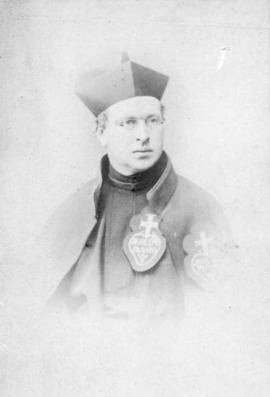
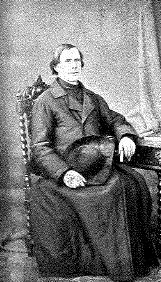
Alphonsus O' Neill
AR 3 · Personne · 11-10-1830 - 06-10-1899

Scarcely ever in the History of the Anglo-Hibernian Province has an event had to be chronicled which called forth such sentiments of universal regret as the death of Father Alphonsus O'Neill. Though some days have passed since he was laid to rest, it yet seems hardly possible to realize that he is no longer with us. So conspicuous and so prominent was his personality in the Province for over forty years, so intimately was he identified with every good work and undertaking of the Congregation during those years, and so successful in carrying them to a happy issue, that to be all at once bereft of his wise counsel, his eloquent voice, and his strong influence, amounts to little less than a calamity. We can console ourselves however with the reflection that our loss is his gain.

Fr. Alphonsus was born in Stewartstown, Co. Tyrone, on the 11th of October 1830. His early life was spent in commercial pursuits, but never to the exclusion of works of charity and benevolence, in the fulfilment of which he recognised the Christian precept: "Do good, one to another". In those early days he associated himself with the S. Vincent de Paul Society in Belfast, and though years have elapsed since then there are still living some who can testify to the fidelity and devotedness with which he served God in the person of his poor.

It cannot therefore be a matter of surprise that such a start in life would eventually lead to the cloister, and consequently, his fellow-workers in the cause of charity, though they expressed their regret, yet could not withhold their approbation, when in the June of 1852, he made known to them that he had decided on becoming a Passionist. In that year he went to our Novitiate in Broadway, and after his profession, which he made on 13th July 1853, he was sent to Rome to begin his studies for the priesthood. He remained in Rome over four years, and had the happiness of being raised to the priesthood towards the end of 1856 by a Passionist Bishop, Mgr. Joseph Malajoni, who had been for a number of years Bishop in Bulgaria, but who at this time was living retired in our Retreat of Monte Argentaro.

Shortly after his return to these countries, Fr. Alphonsus was appointed Vice Master of novices, but the evidences he gave of successful missionary work, left him very little time to fulfil his duties as Vice Master. From this time till the close of his earthly career, it might be said that the history of his life was identical with the history of the Province. He threw himself heart and soul into every good work which had for its object the wellbeing of the Congregation, and in doing so he knew no fatigue, no personal inconvenience: enough for him that souls were longing for the bread of life, or that their surroundings were such as to place in jeopardy their eternal welfare. It may be truly said that his missionary career was a most successful one. His style was marked with great earnestness and sincerity. He frequently took the part of principal preacher on Missions, but the part in which he was most at home was the Meditations on the Passion of our Lord. The moving and winning words in which he told the sufferings of his Divine Master never failed to draw souls to a greater love of the Crucified, and to a more lively compassion with Him in his sorrows. The Passion was his favourite subject - indeed it might be said to be the theme of his life's preaching.

Though he was frequently employed in preaching charity sermons, whilst he never failed to address himself directly to the cause which he was called upon to advocate, invariably did he embody in his discourse some reference which showed the character of the Passionist.

During his life he filled with care and diligence every office of trust in the Province. He was successively Rector of St. Joseph's, Highgate, S. Paul's, Dublin and S. Ann's, Sutton, and in the Chapter of 1878, he was chosen Provincial, the duties of which he discharged till ‘81. Subsequently when the higher Superiors accepted a new foundation in the far distant Australia, he was appointed Superior of the little band of missionaries who volunteered to preach the Passion under the Southern Cross. For six years he laboured with his usual zeal and energy in those colonies, giving Missions and Retreats and otherwise attending to the various duties with which he was entrusted. After his return to Ireland, he took up his residence in Mt. Argus, where notwithstanding the inroad that years of unbroken labour had made on his constitution, he shared with his younger brethren the several duties peculiar to the Retreat. Indeed it was little more than a week before his lamented death when he occupied the pulpit in St. Paul's, and though it could easily be seen that he was in failing health, there was also evidence that much of the old fire of by-gone days still lived within him.

Apart from his work for the Congregation, of which he was a faithful member, his time and talents were always at the disposal of anyone outside the order who required his service. This was particularly remarkable in the interest which he took in the Sisters of the Most Holy Cross and Passion. They began life as Sisters of the Holy Family, whose object was to afford instruction and shelter to homeless girls in the large manufacturing towns in England. Later on they took the name of Sisters of the Cross and Passion. Fr. Alphonsus arranged their Rule, got first a pro tem. approval from Rome, and eventually got the Holy See to sanction them in perpetuum.

His last illness was little more than a few hours. A few days before the end came he accompanied an invalid to the North and seemed even then to be in his ordinary good health. After his return to Dublin, on Wednesday the 4th, he complained of weakness and overwork, and on the morning of the 5th, he was attacked with violent haemorrhage. The doctor was called in immediately and at once pronounced his case serious. There were frequent returns of the haemorrhage during the day, and after receiving all the last rites of the church, being perfectly conscious to the end, he calmly slept away at two o'clock on the morning of the sixth of October.

The funeral obsequies took place on Monday the 9th in the presence of a large gathering of clergy and laity, after which the remains were consigned to their last resting place in the little cemetery attached to the Retreat.

It seemed providential that notwithstanding his sojourn in many lands, his mortal remains should repose in the Mount Argus he loved so well and served so long. Green as the grassy sward which each succeeding Spring will renew on his quiet grave be the remembrance of his many virtues and his bright example in the hearts of those who knew and loved him. R.I.P.

Fr. ALPHONSUS of the Blessed Virgin Mary (O'Neill) 6th October, 1899.

The ‘Irish News' (Belfast) on the 20th May 1960 carried an article: "TWO DISTINGUISHED PASSIONISTS OF YESTER-YEAR", the story of two brothers from Co. Tyrone who became Passionists: Frs. DOMINIC and ALPHONSUS O'Neill.

They were the sons of a mixed marriage. When their son Edward was born, the mother met the priest with a torrent of abuse and threats of violence, so the child was baptised secretly. That was Fr. Dominic. (Ironically, he was to be clothed a Passionist on July 12th 1852, 22 years later). The Dad compromised, and it was agreed sons would be baptised Catholics, the daughters Protestants. There was only one daughter Mary Ann. She refused to go to church with her mother, and went off to Mass with her brothers. Later, she was to become a Sister of Mercy, in Birmingham, as Sister Alphonsus of the Passion.

The early years were stirring ones. Daniel O'Connell won a lawsuit preventing his fellow Catholics from being evicted from a quarry, where the church in which the young O'Neills were altar boys was situated in Stewartstown.

It was also the period when the Oxford Movement was having its effects on the Hon. George Spencer and the Hon. Charles Pakenham among many others. The future Fr. Alphonsus was to meet up with both in Broadway. A fellow novice was Cfr. (later Brother) LAWRENCE Carr, who later would be the 1st Passionist Brother in Australia, while Alphonsus was Superior of the founding and pioneer party of CPs.

When he said he wanted to be a priest, his mother told a friend that it was the greatest cross of her life: his first Mass was offered for, and brought about, the conversion of his mother.

One page cannot cover his work as a Passionist. He was known as ‘the Silver-tongued Orator' (another Chrysologus!). He did his studies in John and Paul's, was ordained at Monte Argentaro by a Passionist Bishop, Mgr. Mulajoni.

Fr. Alphonsus was later to be a Vice-Master of novices, a Rector, a Consultor, a Provincial, ... and a great Missioner. He was the Founder of the present Australian Province, in that he led the first band of priests and a brother from St. Joseph's Province there; he returned later to the home Province. So (to quote the I.N. article) ‘afar from the townland of St. Patrick's Bell this great Passionist of yesteryear sleeps his last sleep in the peaceful cemetery beside Mount Argus'.

Sources: Fr. Salvian Nardocci's ‘Register'
Fr. Salvian Nardocci's ‘Annals' Vol. 1, pp. 161, 287,361.
‘Irish News' (Belfast) 1960.05.20 (In our archives).
https://passionistarchives.ie/index.php/alphonsus-o-neill/

Pius Devine
AR 4 · Personne · 06-01-1838 - 28-04-1912

In the retreat of our Province dedicated to him, the festival of St Paul of the Cross has been, in two successive years, marked by a death of a son who had served his Congregation through many and devoted years. Last year Father Gregory of St Joseph, this year Father Pius of the Holy Ghost was called to his reward, at Mount Argus, on the Saints Festival.

Father Pius of the Holy Ghost - in the world James Devine - was at Aclare, Co. Sligo, on the festival of the Epiphany, 1838. He made his classical studies at the seminary of his native diocese, Achonry, and then went to Maynooth where, after four years study, he received Minor Orders. But it pleased Almighty God to bestow upon him the grace of a vocation to the religious life; and soon two things turned his thoughts to the Congregation of the Passion, one was a retreat given at Maynooth by Father Vincent Grotti, the founder of Mount Argus, and the other the chance perusal of the life of Father Paul Mary Packenham, its first Rector, who had died soon after the arduous labours of a mission given by us in Rathmines Parish Church. Father Pius entered the Novitiate in the autumn of 1858 and was professed on September 29th of the following year. In 1861 he was ordained priest at St Joseph's, Highgate; and immediately commenced that career of Professor of Theology which he was to pursue so successfully through many years. When, in November, 1867 all the students of the Province were gathered in Dublin, under the presidency of Father Ignatius Paoli, afterwards Archbishop of Bucharest, Father Pius was truly his "right hand," and a guiding spirit in raising our ecclesiastical studies to a very high level. This purpose he was able still more to further by his directorship of the Retreat from 1869 to 1872. During his term of office he was sent as the Visitor - General to our houses in the United States, a high responsibility, successfully discharged. As Rector of Mount Argus, he had felt keenly the inadequacy of the brick chapel first erected, though the old family mansion had been adapted to form one structure with it, and now he generously volunteered to cross again the Atlantic to raise funds for the erection of a suitable church. For this he lectured in many cities of the United States, and afterwards begged in Chile, and, crossing the Andes on a mule by the old Pioneer Road to lessen expense, also in the Argentine Republic. On his return home, he was elected, in 1875, Rector of Holy Cross, Belfast, where he commenced the building of the present monastery. At the close of this term of office, he returned to the work most congenial to him, teaching, which, interspersed with missions, and retreats to religious communities, engaged his gifted and active spirit as long as health remained. For it pleased Divine Providence to lay upon him during the last 10 years of his life a trial most heavy, because the crucifixion of his strongest characteristic, the cross of inactivity. Stealthily but surely gout seized upon his strong frame with relentless grip, crippling him so that he could no longer say Mass, and painfully affecting his memory. To his nature, inactivity and helplessness were bitter indeed, and through these years many hours silent and lonely shrunk but did not quell his cheerful spirit. These were the crown of his work, and the purifying of his love for God; in him "patients" had "it's perfect work." The end came without pain, and was in perfect peace. He had received the last sacraments on April 26th, festival of Our Lady of Good Counsel, and on the 29th, comforted by the presence of his brother, Father Arthur, and in full possession of his senses, he calmly resigned his soul to his Maker.

Father Pius's gifts were great and many, and had received from earliest years effective training. His knowledge of the classics was that of the old school, delighting to fit occasion with apt quotation. He spoke several modern languages: in Gaelic he was a foremost scholar and authority, it was the tongue of his childhood and that in which his last earthly prayers were breathed to God. In the sacred sciences he had the large and accurate knowledge that comes with years of teaching. His outlook on all things was broad; on all men was kindly. To his ready pen we owe several works of great interest, notably the "Life of Father Ignatius Spencer," "Eutropia," or instructions for converts, and the "Life of St Paul of the Cross." He had been present in the great basilica at the canonisation of St Paul not as a spectator, but with the assistant clergy as a torch - bearer, and his description not only is of a thing seen in the glow of faith, but rises to a high order of literary excellence.

 His early years in the Congregation were spent with the first fathers of our Province, men who had much and hard work to do and who, as true leaders, did it thoughtless of themselves, and reliant upon God: he had their spirit: his going is the breaking of a link with the past: a past that cannot altogether fade from our vision, for their memories are happily with us, while themselves and their reward are with God.

(CROSS, Vol. III, p.77f.)

https://passionistarchives.ie/index.php/fr-pius-devine/

Personne · 1809-1892

Thomas McNamara was Provincial of the Irish Vincentian Province 1864-1867. He was President of Castleknock College for the same three years.
Here is an article which was published by Gary Culliton in the Irish Medical Times about Father McNamara's being 'solely or partly responsible for the founding of a large number of Dublin medical institutions': https://www.knockunion.ie/news/thomas-mcnamara-cm-svc-president-1864-67-9763

Buried in Castleknock: https://www.findagrave.com/memorial/259983682/thomas-mcnamara_cm

IE CA DB/53 · Personne · 2 April 1887-9 December 1921

James O’Sullivan was born in Cork on 2 April 1887. He was the only son of James and Mary O’Sullivan of Deane Street and later of Lower George’s Street in the city. His early education was with the Christian Brothers and at the Seraphic College in Rochestown in County Cork. He entered the Capuchin novitiate in August 1902 and took Cyril as his religious name. Following a course in philosophy and theology, he was ordained on 29 May 1910. Shortly after his ordination he undertook a postgraduate course in the Catholic University of Louvain in Belgium obtaining a Doctorate in Philosophy from the Philosophical Institute of Leo XIII. Returning to his native city, he completed a Master of Arts and was appointed a lecturer in philosophy (Mental and Moral Science) in University College Cork. He was instrumental in the opening of St. Bonaventure’s Capuchin Hostel in Cork and was appointed its first guardian (local superior) in 1919. An enthusiastic supporter of Gaelic games and a fluent Irish speaker, he was involved in the promotion of hurling in various schools and colleges in Cork. He died (following a brief illness) in Cork on 9 December 1921. He was buried in the cemetery attached to the Capuchin Friary in Rochestown in County Cork.

Baptismal name: James O’Sullivan
Religious name: Fr. Cyril O’Sullivan OFM Cap.
Date of birth: 2 Apr. 1887
Place of birth: 14 Deane Street, Cork
Name of father: James O’Sullivan
Name of mother: Mary O’Sullivan (née O’Brien)
Date of reception into the Capuchin Order: 24 Aug. 1902
Date of first profession: 17 Sept. 1903
Date of final profession: 31 July 1908
Date of ordination (as priest): 29 May 1910
Educational attainments: BA (RUI), 1909; MA (RUI), 1915; Doctorate in Philosophy (Louvain)
Date of death: 9 Dec. 1921
Place of death: Cork
Place of burial: Cemetery, Rochestown Capuchin Friary, Cork

IE CA DB/SB · Personne · 9 December 1861-29 January 1937

Thomas Brennan was born (to Irish parents) in the town of Tow Law in County Durham in England on 9 December 1861. He joined the English Province of the Capuchin Franciscan Order at Pantasaph Friary in North Wales in May 1879, taking Sebastian as his religious name. He was ordained to the priesthood in September 1886. In the following years he was appointed to several pastoral positions in England. He was engaged in mission work in Peckham in London and held the position of vice-master of novices. At the Provincial Chapter of 1890 he was appointed spiritual director to the students and chaplain at a nearby convent, orphanage, and boarding school in Pantasaph. In June 1892 he was appointed Lector of Philosophy and Vicar of the House of Studies at Olton in Birmingham. In December 1897 he resigned from his position as guardian (local superior) of Olton to take up missionary work in the United States but was recalled and asked to finish out his term as guardian. Finally, in October 1901, he travelled to America and laboured there in ministry for the rest of his life. He ministered for some time in the Diocese of Lincoln in Nebraska. In September 1903 he and several other friars made their way to Mendocino County in California. Fr. Sebastian initially took charge of Fort Bragg and the area north to the county line. In December 1912 he moved to St. Mary’s Parish in Ukiah. He was appointed superior of the California mission in December 1910 and held this position until June 1920. In 1920 the English Capuchins were given a choice by the Minister General as to whether to remain in California or undertake missionary work in India. Fr. Sebastian opted to remain in the United States while the Irish Capuchins accepted a request from Archbishop Edward Joseph Hanna to take over pastoral work in Mendocino County. Fr. Luke Sheehan OFM Cap. arrived in June 1920 to take charge and Fr. Sebastian moved to Mendocino City. Fr. Sebastian was formally affiliated with the Irish Capuchin Province in 1924. In January 1923 he assumed parochial duties in Greenwood, Elk, and was posted to Willits in October 1928. His final assignment (from 1934) was at Mission Santa Inez near Solvang in California. He died in Santa Inez on 29 January 1937 and was buried in the adjoining mission cemetery.

Baptismal name: Thomas Brennan
Religious name: Fr. Sebastian Brennan OFM Cap.
Date of birth: 9 Dec. 1861
Place of birth: Tow Law, Durham, England
Name of father: Thomas Brennan
Name of mother: Mary Brennan (née Waters)
Date of reception into the Capuchin Order: 18 May 1879
Date of first profession: 23 May 1880
Date of final profession: 23 May 1883
Date of ordination (as priest): 18 Sept. 1886
Missionary assignments: Travelled to California, United States, in 1901 and remained there until his death.
Date of death: 29 January 1937
Place of death: California, United States
Place of burial, Cemetery, Mission Santa Inez, California

IE CA DB/101 · Personne · 21 September 1897-14 December 1980

Baptismal name: Thomas Nesdale
Religious name: Fr. Seraphin Nesdale OFM Cap.
Date of birth: 21 Sept. 1897
Date of baptism: 26 Sept. 1897
Place of birth: Adrigole, County Cork
Name of father: Thomas Nesdale
Name of mother: Margaret Nesdale (née Regan)
Occupation of parents: National School Teachers
Primary school education: Trafrask National School, Adrigole, County Cork
Secondary school education: Seraphic (Capuchin) College, Rochestown, County Cork
Date of reception into the Capuchin Order: 8 Sept. 1915
Date of first profession: 17 Sept. 1916
Date of final profession: 12 Oct. 1919
Date of ordination (as priest): 29 June 1925
Education attainments: BA (1921)
Missionary activity: United States Mission (1925); African Mission (Sept. 1931). He returned to Ireland in Mar. 1946.
Date of death: 14 Dec. 1980
Place of death: Kilkenny
Place of burial: Foulkstown Cemetery, County Kilkenny

IE CA DB/162 · Personne · 15 June 1906-12 July 1944

Thomas Joyce was born near Urlingford in County Kilkenny on 15 June 1906. He joined the Capuchin Franciscans in October 1926 and took Gerard his religious name. He enjoyed a brilliant academic career in Rome (gaining a Licentiate in Canon Law) and in Ireland (a Higher Diploma in Education from University College Cork). He was ordained to the priesthood at Ard Mhuire Capuchin Friary in County Donegal in June 1933. In 1937 he travelled to the Prefecture of Victoria Falls in Northern Rhodesia (later Zambia) and ministered in the region around Sihole for seven years. He died of blackwater fever at the mission outpost of Kalabo on 12 July 1944 at the age of just thirty-five. Fr. Capistran Singleton OFM Cap., a fellow missionary friar, ministered to him in his final hours while Br. Alexius Paolucci OFM Cap. made his coffin with some wooden planks intended for the new church.

Baptismal name: Thomas Joyce
Religious name: Fr. Gerard Joyce OFM Cap.
Place of birth: The Islands, Urlingford, County Kilkenny (Diocese of Ossory)
Date of birth: 15 June 1906
Name of father: Patrick Joyce (Farmer)
Name of mother: Mary Joyce (née Hennessy)
Date of reception into Capuchin Order: 4 Oct. 1926
Date of first profession: 5 Oct. 1927
Date of final profession: 5 Oct. 1930
Date of ordination (as priest): 29 June 1933
Educational attainments: BA (1930); LIC (Rome, 1933-6); returned from Rome in 1936 to prepare for missionary work in Africa
Missionary activities: Travelled to the Prefecture of Victoria Falls, Northern Rhodesia (later Zambia), in 1937
Date of death: 12 July 1944
Place of death: Kalabo, Northern Rhodesia (died of Blackwater Fever). Fr. Capistran Singleton OFM Cap. was with him.

IE CA DB/SQ · Personne · 21 February 1918-15 August 2000

Baptismal name: Hugh Quinn
Religious name: Fr. Salvator Quinn OFM Cap.
Date of birth: 21 Feb. 1918
Place of birth: Ardkeen, Portaferry, County Down (Diocese of Down and Connor)
Name of father: Patrick Quinn (Farmer)
Name of mother: Elizabeth Quinn (née Dynes)
Date of reception into the Capuchin Order: 3 Oct. 1938
Date of first profession: 4 Oct. 1939
Date of final profession: 4 Oct. 1942
Date of ordination (as priest): 20 June 1946
Educational attainments: BA, 2nd class hons, University College Cork (1942)
Missionary activities: Travelled to the Prefecture of Victoria Falls, Northern Rhodesia (later Zambia) on 29 Nov. 1946; Guardian, Christ the King Mission, Maramba, Zambia; Vicar General of the Diocese of Livingstone, 1950-72; Secretary to Bishop Timothy Phelim O’Shea, Bishop Adrian Mung'andu and Bishop Raymond Mpezele in Livingstone.
Date of death: 15 Aug. 2000
Place of death: Raheny, Dublin
Place of burial: Dardistown Cemetery, County Dublin

IE CA DB/COR · Personne · 6 January 1920-6 October 2003

Baptismal name: John O’Riordan
Religious name: Fr. Colga O’Riordan OFM Cap.
Date of birth: 6 Jan. 1920
Place of birth: Cork
Name of father: Matthew O’Riordan
Name of mother: Hannah O’Riordan (née Kidney)
Date of reception into the Capuchin Order: 3 Oct. 1939
Date of first profession: 4 Oct. 1940
Date of final profession: 4 Oct. 1943
Date of ordination (as priest): 5 June 1947
Educational attainments: BA, 2nd class hons. (1943)
Missionary activities: Transferred to the Prefecture of Victoria Falls, Northern Rhodesia (later Zambia), on 24 Dec. 1947. Transferred to the newly established Australian Capuchin Mission on 8 Aug. 1956. Returned to Ireland in 1967.
Date of death: 6 Oct. 2003
Place of burial: Cemetery, Rochestown Capuchin Friary, County Cork
Observations: Fr. Colga O’Riordan OFM Cap. was Novice Master in Australia in the 1950s and in the 1960s. He was also twice elected to the position of assistant to the Custos General of the Australian Capuchin friars. He had been invited to Australia for the formal establishment of the Australian Assumption Capuchin Province in 1956. He was later appointed the first parish priest in Priorswood in Dublin (1974-81). He was appointed guardian (local superior) of Raheny Capuchin Friary in Dublin in April 1981.
Note: An image of Fr. Colga O’Riordan OFM Cap. with novices at the newly built seminary in Plumpton, New South Wales, Australia, in January 1966 is extant at https://blacktownmemories.recollect.net.au/nodes/view/7582