Personne
·
1877-1957
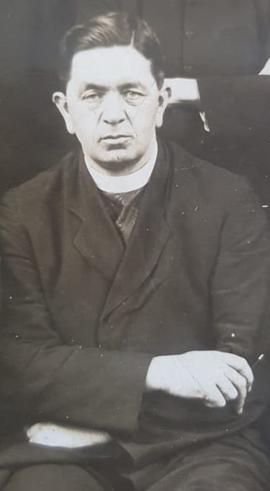
James Bennett was Provincial of the Irish Vincentian Province 1921-1932.

James Bennett was Provincial of the Irish Vincentian Province 1921-1932.
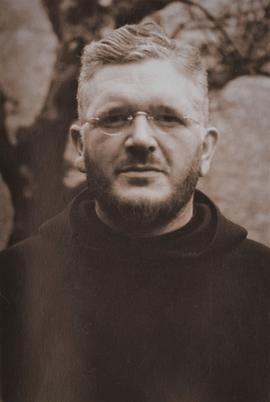
Andrew Anglin, the son of John and Nora Anglin, was born in Aherla, County Cork, on 11 February 1900. The Anglin family were devoutly Catholic (Joseph, a younger half-brother of Andrew, also joined the Capuchins and took Henry as his religious name in 1927). Andrew joined the Order in September 1918. He took Terence as his religious name upon entering the Order. Shortly after his ordination in 1927 he volunteered for missionary work in the United States. In 1928 he was an assistant pastor at Our Lady of Good Counsel Parish in Fort Bragg in California and was later appointed to the Sacred Heart parish in Lincoln, Nebraska. He returned to Ireland in 1937. In 1943 he travelled to Northern Rhodesia (later Zambia) where the Irish Capuchins had established a mission custody. He ministered there until his death in Livingstone on 12 September 1947.
Baptismal name: Andrew Anglin
Religious name: Fr. Terence Anglin OFM Cap.
Date of birth: 11 Feb. 1900
Place of birth: Aherla, County Cork
Name of father: John Anglin
Name of mother: Nora Anglin (née Mahony)
Date of parents’ marriage: 24 Feb. 1884
Date of reception into the Capuchin Order: 29 Sept. 1918
Date of first profession: 4 Oct. 1919
Date of final profession: 4 Oct. 1922
Date of ordination (as priest): 29 July 1927
Educational attainments: BA, 1st class honours (1923)
Missionary assignments: Travelled to the United States in 1928 and returned to Ireland in 1937; Travelled to Northern Rhodesia (now Zambia) on 12 Nov. 1943
Date of death: 12 Sept. 1947
Place of death: Livingstone, Northern Rhodesia
Place of burial: Livingstone, Zambia
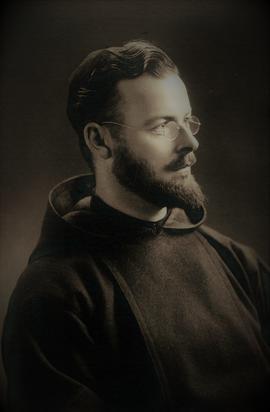
Edward O’Mahony was born in Mitchelstown in County Cork on 4 April 1897. He attended the Seraphic College in Rochestown in County Cork and joined the Capuchin Order in October 1913 taking James as his religious name. He graduated with a first-class honours BA from University College Cork and was awarded the Pierce Malone scholarship in 1918. He later obtained an MA and was awarded a travelling scholarship in 1920. He attended the Catholic University of Louvain (Leuven) in Belgium and was awarded a highly acclaimed Licentiate in Philosophy in 1925 and a Doctorate in the following year. In 1928 he was awarded the title of Professor Agrégé from Louvain, the first Irishman to achieve such a distinction. On his return to Ireland, he was appointed superior of St. Bonaventure’s Hostel in Cork and was reappointed on several occasions thereafter. In 1931 the National University of Ireland conferred on him a Doctorate of Letters (D.Litt.) for his thesis ‘The Desire of God in the Philosophy of St. Thomas’. In the same year he was appointed a lecturer in religion in UCC. In 1933 he was appointed Assistant Professor of Philosophy, eventually succeeding Fr. Edwin Fitzgibbon OFM Cap. as Professor and head of the university’s philosophy department in 1937. He was first elected Provincial Definitor (Councillor) in 1934 and was elected Provincial Minister of the Irish Capuchins in at the Chapter held in 1943. He was re-elected for a further three years from 1946 to 1949 and held the position again from 1955 to 1961. He was appointed a member of the senate of the National University of Ireland in 1946 and was briefly Acting-President of UCC in 1954. An accomplished lecturer, preacher, and writer, he published over twenty books and contributed numerous articles to various journals on a variety of philosophical and religious subjects. His published works included ‘The Franciscans’ (1930), ‘Where dwellest thou? / An essay on the inner life’ (1936), ‘The Person of Jesus’ (1942), and ‘The Music of Life’ (1944). He died in Cork on 31 July 1962 and was buried in the cemetery attached to Rochestown Capuchin Friary.
Baptismal name: Edward O’Mahony
Religious name: Fr. James O’Mahony OFM Cap.
Date of birth: 6 Apr. 1897
Place of birth: Mitchelstown, County Cork
Name of father: James O’Mahony
Name of mother: Ellen O’Mahony (née O’Callaghan)
Date of reception into the Capuchin Order: 23 Oct. 1913
Date of first profession: 29 Oct. 1914
Date of final profession: 22 Dec. 1917
Date of ordination (as priest): 15 Mar. 1924 (at the Archbasilica of St. John Lateran, Rome)
Education attainments: BA (1918); MA (1919); Studentship (1920); PhD (Louvain) 1926; D. Litt (NUI) 1931; Agrégé en Philosophie de l’Universite Catholique de Louvain (1928); Appointed Professor of Philosophy in UCC (1937).
Leadership roles: Provincial Definitor: 1934-7; 1937-40; 1940-3; 1952-5; Provincial Minister (Superior): 1943-6; 1946-9; 1955-8; 1958-61.
Date of death: 31 July 1962
Place of death: Cork
Place of burial: Cemetery, Capuchin Friary, Rochestown, County Cork
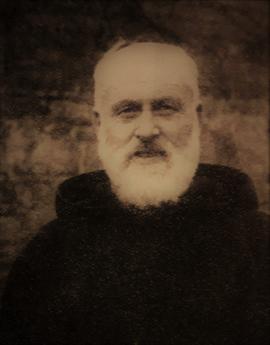
John Duggan was born in the village of Ballydehob in County Cork on 7 September 1879. He joined the Capuchin Franciscans in October 1899, took Pius as his religious name, and was ordained to the priesthood in 1907. Most of his priestly life was spent in preaching missions and retreats (in both Irish and English). In his early years, he also took part in the temperance campaign and gave missions in both Ireland and England promoting this cause. For several years he acted as a spiritual director for theology and philosophy students and was guardian (local superior) at the friaries in Rochestown and in Kilkenny (from 1913-6 and from 1931-4). During his years as member of the Church Street community in Dublin, he was director of the sisters of the Third Order of St. Francis and acted as Commissary Provincial of the confraternity. He died on 29 January 1963 and was buried in the cemetery attached to Rochestown Capuchin Friary in County Cork.
Baptismal name: John Duggan
Religious name: Fr. Pius Duggan OFM Cap.
Date of birth: 7 Sept. 1879
Place of birth: Ballydehob, County Cork
Name of father: Timothy Duggan
Name of mother: Sarah Duggan (née Connell)
Date of reception into the Capuchin Order: 1 Oct. 1899
Date of first profession: 4 Oct. 1900
Date of final profession: 25 Sept. 1904
Date of ordination (as priest): 16 Mar. 1907
Date of death: 29 Jan. 1963
Place of burial: Cemetery, Rochestown Capuchin Friary, County Cork
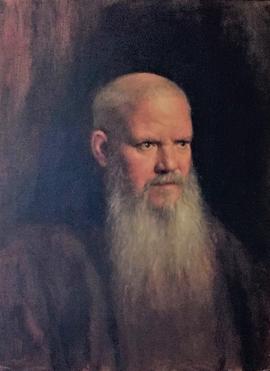
Edouard Christian was born in Andermatt, a mountain village in the canton of Uri in Switzerland, in 1837. He was the fourth child (from a family of thirteen) of Joseph Maria ‘Sebastian’ Christen and Karolina Danioth. He spent his early years helping his parents on their cattle farm. On 5 October 1855, he entered the Capuchin novitiate at Lucerne and took Bernard as his religious name. He made his solemn profession on 8 October 1856. He then undertook his clerical studies and was ordained to the priesthood on 29 July 1860. In 1876 Fr. Bernard was elected a General Definitor (Councillor), in which role he successfully renewed and updated the philosophical and theological studies of Capuchin clerical candidates. He also worked tirelessly to tighten up regular observance among the friars of the Capuchin Order. At the General Chapter of 1884, Fr. Bernard was elected as Minister General. Under his leadership, Capuchin missions were once more placed under the direction of the General Minister. He was also instrumental in the revision of the original 1530 Constitution of the Capuchin Order. Under his administration the number of friars began to grow, studies were reorganised, missions were given a new lease of life and the number of Capuchin jurisdictions increased. Fr. Bernard was also the first Capuchin General Minister to visit North America. He served as General Minister of the Capuchin friars from 1884 to 1908. His ceaseless work for the renewal of the Order was recognised by both Popes Leo XIII and Pius X, with the latter naming him Titular Archbishop of Stauropolis in 1908. He died the following year (11 March 1909) in the Institute of the Sisters of the Holy Cross in Ingenbohl, Switzerland. He was buried in Lucerne.
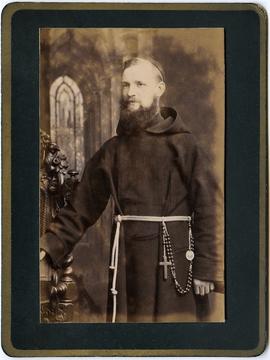
Baptismal name: James Guy
Religious name: Fr. Benvenutus Guy OFM Cap.
Date of birth: 4 May 1860
Place of birth: Trim, County Meath
Name of father: Patrick Guy
Name of mother: Bridget Guy (née McMahon)
Ministries: Founded the Church Street Catholic Boys’ Brigade in Dublin March 1894. He also acted as the organisation’s first president. He left the Capuchin Order, moved to England, and was incardinated into the Diocese of Middlesbrough in 1899. He served as a Chaplain to the Forces during the First World War.
Date of death: 9 November 1927
Place of death: Halifax, England
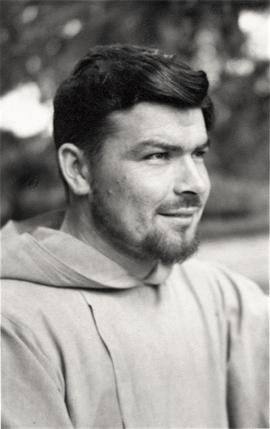
Baptismal name: James Ruth
Religious name: Fr. Carthage Ruth OFM Cap.
Date of birth: 6 Mar. 1923
Place of birth: Enniscorthy, County Wexford (Diocese of Ferns)
Name of father: William Ruth
Name of mother: Margaret Ruth (née Dobbs)
Date of reception into the Capuchin Order: 3 Oct. 1941
Date of first profession: 4 Oct. 1942
Date of final profession: 4 Oct. 1945
Date of ordination (as priest): 16 June 1949
Educational attainments: BA (1945)
Missionary activities: Travelled to the Prefecture of Victoria Falls, Northern Rhodesia (later Zambia), in February 1950. Later, he undertook missionary work in the Archdiocese of Cape Town in South Africa. Returned to Ireland in 1971.
Date of death: 26 Dec. 2010
Place of death: Bon Secours convalescence home, Mount Desert, Cork
Place of burial: Cemetery, Rochestown Capuchin Friary, County Cork
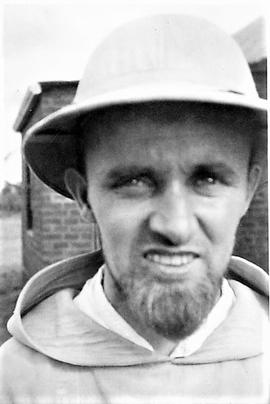
Baptismal name: Hugh Quinn
Religious name: Fr. Salvator Quinn OFM Cap.
Date of birth: 21 Feb. 1918
Place of birth: Ardkeen, Portaferry, County Down (Diocese of Down and Connor)
Name of father: Patrick Quinn (Farmer)
Name of mother: Elizabeth Quinn (née Dynes)
Date of reception into the Capuchin Order: 3 Oct. 1938
Date of first profession: 4 Oct. 1939
Date of final profession: 4 Oct. 1942
Date of ordination (as priest): 20 June 1946
Educational attainments: BA, 2nd class hons, University College Cork (1942)
Missionary activities: Travelled to the Prefecture of Victoria Falls, Northern Rhodesia (later Zambia) on 29 Nov. 1946; Guardian, Christ the King Mission, Maramba, Zambia; Vicar General of the Diocese of Livingstone, 1950-72; Secretary to Bishop Timothy Phelim O’Shea, Bishop Adrian Mung'andu and Bishop Raymond Mpezele in Livingstone.
Date of death: 15 Aug. 2000
Place of death: Raheny, Dublin
Place of burial: Dardistown Cemetery, County Dublin
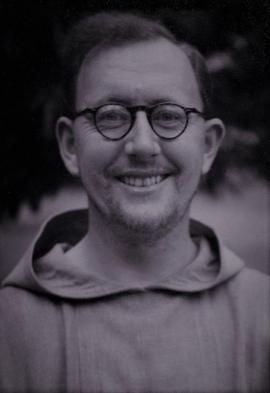
Baptismal name: Daniel Hayes
Religious name: Fr. Albert Hayes OFM Cap.
Date of birth: 18 Oct. 1915
Place of birth: Moycarkey, County Tipperary (Diocese of Cashel)
Name of father: James Hayes (Farmer)
Name of mother: Margaret Hayes (née O’Brien)
Date of parents’ marriage: 23 Feb. 1914
Date of reception into the Capuchin Order: 26 Oct. 1934
Date of first profession: 27 Oct. 1935
Date of final profession: 27 Oct. 1938
Date of ordination (as a priest): 29 June 1943
Educational attainments: BA (1939)
Missionary activities: Travelled to Barotseland, Northern Rhodesia (later Zambia), on 10 Feb. 1945. Returned to Ireland in 1973.
Date of death: 13 Aug. 2005
Place of death: Kilkenny
Place of burial: Foulkstown Cemetery, County Kilkenny
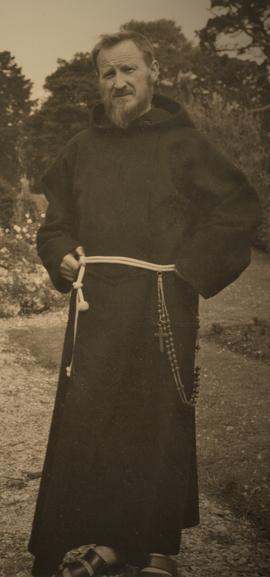
Patrick Kelleher was born in Coolea near Ballyvourney in County Cork on 28 February 1912. His early schooling was in Coolea National School and in the Capuchin College in Rochestown in County Cork. He was received into the novitiate in Kilkenny in October 1929 and took David as his religious name. He undertook a formidable course of academic studies obtaining a Bachelor of Arts (1933) and later a Master of Arts (1934) from University College Cork. He was solemnly professed as a Capuchin friar in St. Bonaventure’s in Cork in October 1933. Following three years of theological studies in Ard Mhuire Friary in County Donegal, he was ordained to the priesthood in October 1937. He was sent to Rome after his ordination and spent six years at the International Capuchin College from 1937 to 1943, taking a Doctorate in Theology and a Licentiate in Scripture from the Pontifical Gregorian University. He also obtained a Diploma in Library Science from the Vatican Library. His time in Rome coincided with the difficult years of conflict in Italy during the Second World War. He returned to Ireland in 1943 and he resided in Ard Mhuire Friary for the remainder of his life, teaching dogmatic theology and liturgical and spiritual theology (1943-72). Aside from his pastoral work, he served as guardian (local superior) of the Ard Mhuire community for two terms and was the local vicar for eleven years. He also served on the Provincial Definitory (Council) from 1955 to 1958. He also retained a life-long interest in promoting the temperance cause. He died on 21 November 1995 and was buried in the cemetery attached to Ard Mhuire Friary in County Donegal.
Baptismal name: Patrick Kelleher
Religious name: Fr. David Kelleher OFM Cap.
Date of birth: 28 Feb. 1912
Place of birth: Coolea, Ballyvourney, County Cork (Diocese of Cloyne)
Name of father: Daniel Kelleher (Farmer)
Name of mother: Johanna Kelleher (née Mullane)
Date of reception into Capuchin Order: 3 Oct. 1929 (at Kilkenny)
Date of first profession: 4 Oct. 1930
Date of solemn profession: 4 Oct. 1933
Date of ordination (as priest): 10 Oct. 1937 (Ard Mhuire Capuchin Friary, County Donegal)
Educational attainments: BA (1st class hons.) and scholarship, UCC, (1933); MA, UCC, (1934); Doctor of Sacred Theology, (1940); Licentiate of Sacred Scripture, (1942).
Leadership positions: Provincial Definitor (Councillor), 1955-8; Custos General, 1958-61
Date of death: 21 Nov. 1995
Place of death: Ard Mhuire Capuchin Friary, County Donegal
Place of burial: Cemetery, Ard Mhuire Capuchin Friary, County Donegal