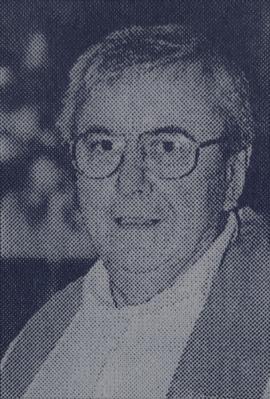
Baptismal name: Thomas Hyland
Religious name: Fr. Macartan Hyland OFM Cap.
Date of birth: 31 May 1939
Place of birth: Dublin
Name of father: Richard Hyland
Name of mother: Mary Hyland (née Ní Shoinnion)
Date of reception into the Capuchin Order: 3 Oct. 1956
Date of first profession: 4 Oct. 1957
Date of final profession: 4 Oct. 1960
Date of ordination (as priest): 28 May 1964
Educational attainments: BA (1960)
Missionary activities: Travelled to Livingstone, Zambia, on 3 Sept. 1964. He went to the South African mission in July 1982.
Date of death: 27 Dec. 2000
Place of death: Parow, Cape Town, South Africa
Place of burial: Maitland Cemetery, Cape Town, South Africa
Baptismal name: David Matthew Carew
Religious name: Fr. Andrew Carew OFM Cap.
Date of birth: 20 Oct. 1902
Place of birth: Ballydavid, Templeneiry, Bansha, County Tipperary
Name of father: William Carew (Farmer)
Name of mother: Mary Carew
Date of reception into the Capuchin Order: 18 Sept. 1921
Date of first profession: 15 Oct. 1922
Date of final profession: 29 Dec. 1925
Date of ordination (as priest): 29 July 1928 (Rome)
Educational attainments: BA, 1st class hons. (1925); Doctor of Divinity (Rome), (1929)
Leadership positions: Guardian, Ard Mhuire Friary, County Donegal, 1943-52; Guardian, Rochestown Friary, County Cork, 1964-7; Mission Secretary for nine years
Date of death: 2 Dec. 1987
Place of death: Kilkenny
Place of burial: Foulkstown Cemetery, County Kilkenny
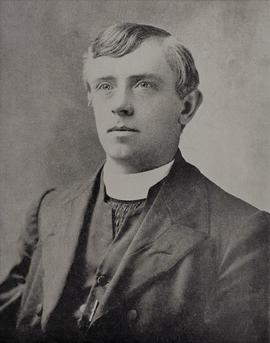
Richard Henebry (Risteard de Hindeberg) was born on 18 September 1863 in Portlaw, County Waterford, the fourth of six children of Pierce Henebry, a farmer, and Ellen Henebry (née Cashen) of Clogheen in County Tipperary. At the age of twenty-one, Richard Henebry entered St. John’s College in Waterford to study for the priesthood, where Canon Patrick Power (1862-1951) was among his contemporaries. He subsequently won a scholarship to finish his studies in St. Patrick’s College, Maynooth. He graduated from All Hallows College in Dublin in 1892. Henebry briefly served on the English mission before he was offered the inaugural Chair of Celtic Studies at the Catholic University in Washington in 1895. The Ancient Order of Hibernians, an Irish American Catholic organization, had funded the chair and Henebry was proposed by classmates Canon Patrick Augustine Sheehan and Fr. Michael Hickey for the appointment. To fully prepare for his role Henebry was given special leave to go to Germany to study, again with effective lobbying on his behalf by Hickey and Sheehan. He studied for his doctoral degree in Celtic philology in Freiburg and Greifswald with the acclaimed celticists Rudolf Thurneysen and Heinrich Zimmer.
Henebry took up his appointment at the Catholic University in Washington in 1898 only to be relieved of his duties within two years. Though he was suffering from ill-health, Henebry had also seemingly fallen out with his colleagues and superiors in Washington. A diagnosis of tuberculosis forced him to spend a year recuperating in a sanatorium in Denver, Colorado. While in America, he edited and translated a large part of the life of Colum Cille by Manus Ó Donnell which he published in ‘Zeitschrift für celtische Philologie’ (1901-05). Following his return to Ireland, Henebry taught Irish in a variety of places in the Waterford area, notably during the summers from 1906 at Ring College (Coláiste na Rinne), which he had helped establish in 1905. Various diocesan appointments followed within Waterford and Lismore, before he put his name forward for the Chair of Irish Language and Literature at University College Cork (UCC) in 1909, again an inaugural position.
Henebry remained at UCC until his death in 1916, but it was not a wholly successful appointment. His efforts to embed his model of Irish language teaching in the university were met with resistance, from students and others. His efforts to establish an archive of Irish traditional music were also thwarted, and his continuing ill-health compromised his own ability to achieve these objectives. During his lifetime, Henebry was recognized as a leading linguist, and his works on the Déise dialect of Irish were widely acclaimed in academic circles. Pedagogically (and perhaps culturally) an enduring part of his legacy was his role as a teacher at, and supporter of, Coláiste na Rinne, in the Waterford Gaeltacht. In addition to his language instruction, Henebry also taught Irish traditional music to any students who were interested. He also relished his role as a contributor to various papers and periodicals, however the longest of his musical works published during his lifetime was a booklet, ‘Irish Music: Being an Examination of the Matter of Scales, Modes and Keys with Practical Instructions and Examples for Players’ (1903). Henebry died on 17 March 1916 in Portlaw, County Waterford, and was buried in Carrickbeg near Carrick-on-Suir. Henebry’s analytical monograph, ‘A Handbook of Irish Music’ (1928), published by University College Cork, appeared posthumously, and was edited by Professor Tadhg Ó Donnchadha (1874-1949), his successor in the Department of Irish in UCC.
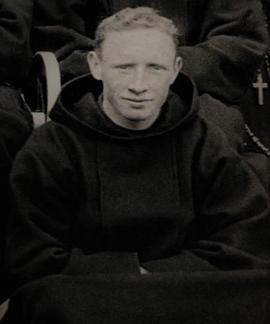
Baptismal name: Edmond (var. Edward) Connery
Religious name: Fr. Timothy Connery OFM Cap.
Date of birth: 4 July 1908
Place of birth: Ballylanders, County Limerick (Archdiocese of Cashel & Emly)
Name of father: Edmond Connery
Name of mother: Catherine Connery (née Barry)
Date of reception into the Capuchin Order: 4 Oct. 1926
Date of first profession: 5 Oct. 1927
Date of final profession: 5 Oct. 1930
Date of ordination (as priest): 17 June 1934 (Letterkenny, County Donegal)
Missionary activities: Travelled to Northern Rhodesia (now Zambia) in 1935. He returned to Ireland in 1938.
Date of death: 20 Jan. 1996
Place of death: Kilkenny
Place of burial: Foulkstown Cemetery, Kilkenny
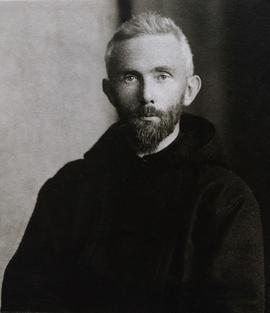
Baptismal name: Patrick King
Religious name: Fr. Philip King OFM Cap.
Date of birth: 16 Mar. 1885
Place of birth: Glin, County Limerick
Name of father: Thomas King
Name of mother: Johanna King (née Ahern)
Date of reception into the Capuchin Order: 17 Mar. 1903
Date of first profession: 17 Sept. 1904
Date of final profession: 31 July 1908
Date of ordination (as priest): 24 Sept. 1921
Educational attainments: BA (RUI)
Date of death: 22 Aug. 1952
Place of burial: Cemetery, Capuchin Friary, Rochestown, County Cork
Early Life and Ministry
Cornelius Hyland was born John Hyland on 13 July 1901, in County Offaly. He entered the Capuchin Franciscan Order in Kilkenny, where he completed his ecclesiastical studies and was subsequently ordained to the priesthood. During the 1930s, Father Hyland served as the Director of Students at St. Bonaventure’s Friary in Cork. Concurrently, he served the Irish Province as the editor of the Liturgical Calendar.
Missionary Assignment to the United States
Around 1938, Father Hyland was assigned to the Capuchin Custody in America. From 1943 to 1946, he served as Pastor of Our Lady of Angels Parish in Hermiston, Oregon, succeeding the Reverend Alban Cullen. During his tenure in Oregon, he was elected as one of two assistants to the Custos Provincial, the Very Reverend Stephen Murtagh.
Pastorate at Burlingame, California
In 1946, Father Hyland succeeded the Reverend Sylvan Murphy as Pastor of Our Lady of Angels Parish in Burlingame, California, initiating a period of significant parish expansion during the post-World War II population boom.
Under his administration, the parish undertook extensive capital campaigns and construction projects:
• Chancery Approval & Land Acquisition: Secured permission from the archdiocesan chancery, raised necessary capital, and acquired property on Hillside Drive.
• Our Lady of Angels Church: Initiated construction on a new, larger parish church, which opened in 1950.
• Parochial Rectory: Completed construction on a larger friary rectory in 1952.
• Educational Expansion: Built new classrooms to accommodate the growing student body.
• Parochial Convent: Undertook the construction of a convent in 1958 for the teaching staff, the Sisters of Mercy.
Community Life and Final Years
Within the friary, Father Hyland maintained strict adherence to religious life, emphasizing communal meals paired with Scripture readings and the shared recitation of the Divine Office.
By 1960, failing health limited his active ministry. His final public act of devotion was the installation of a Statue of Our Lady of Fatima at the parish, which he had personally acquired during a pilgrimage to Fatima, Portugal, with Father Finnian Carroll. Father Hyland suffered a fatal heart attack the following year, dying on 18 October 1961. He was buried in San Francisco.

Early Life and Domestic Ministry
Enda Delaney was born on 8 July 1899 in Castleknock, County Dublin. Following his admission into the Capuchin Franciscan Order and subsequent ordination to the priesthood, he spent his foundational years of clerical ministry serving the Irish Province.
Missionary Transfer and Southern California Foundation
In 1926, Father Delaney travelled from Ireland to join the Capuchin mission field in the United States. He initially ministered in Abbottstown, Pennsylvania. In 1930, his assignment shifted to Southern California when the Archdiocese of Los Angeles entrusted St. Francis of Assisi Parish to the Order. Father Delaney was appointed to the parish’s inaugural Capuchin community near Sunset Boulevard, working alongside the newly appointed pastor, Father Joseph Fenelon, and fellow assistant, Father Ambrose Brunton. Concurrently, he became a prominent regional missioner, traveling extensively to conduct parish missions and public novena devotions.
Parochial Administration in Northern California
In 1937, Father Delaney was transferred north to assume administrative leadership within the Archdiocese of San Francisco:
• Appointment: Commissioned as Pastor of Our Lady of Angels Parish in Burlingame, California.
• Tenure: Directed parish operations and pastoral care for a two-year period, concluding his administration in 1939.
Final Years and Decease
Following his pastorate in Burlingame, Father Delaney eventually returned to the regional houses in Southern California. He died on 7 August 1946. He was buried in Los Angeles, California.
William Patrick Travers was born into a prominent Cork family on 20 March 1870. The family were devoutly Catholic. John, his elder brother, was also a Capuchin friar and took Anthony as his religious name. Another brother was an Augustinian friar while a sister became an Ursuline nun. William joined the Capuchin Franciscans in 1887, took the religious name of Aloysius, and was ordained to the priesthood in 1894. From his earliest years, Aloysius took a keen interest in promoting the work of the temperance movement. He was appointed President of the Father Mathew Hall in Dublin, and held this position from 1904-13. During his years as President, he used the Hall for the promotion of temperance and as a recreational venue for the members of the Sacred Heart Sodality. To further support the ideals of temperance and to revitalise interest in Irish culture, he founded 'The Father Mathew Record' which began publication in January 1908. The year before, he had inaugurated the Féis Maitiu which promoted Gaelic cultural revivalist activities such as storytelling and festivals of native song and dance. Fr. Aloysius also used the pages of the 'Record' to strongly promote a ‘Buy Irish Campaign’. About this time, he also established the League of Young Irish Crusaders. Like many of the Capuchin friars of the Dublin community, Fr. Aloysius was involved in ministering to the Rising leaders during their imprisonment and was present at the execution of James Connolly in Kilmainham Jail on 12 May 1916. He later championed the cause of various labour leaders in Dublin. It has also been speculated that Fr. Aloysius undertook a secret mission to Pope Benedict XV in connection with the Irish struggle. He was elected seven times to the office of Provincial Definitor (Councillor) and was Provincial Minister of the Irish Capuchins from 1913-6. In his later years, he became an enthusiastic member of the Legion of Mary and published numerous devotional tracts including a popular prayer book, 'The Voice of the Church', 'The Seraphic Standard' and 'ĺosa Mo Mhian'. He died on 2 May 1957 at the Capuchin Friary, Church Street, Dublin. He was 89 years old and was a Capuchin friar for almost 69 of these years. He was buried in Glasnevin Cemetery.
Michael Joseph Dowling, the son of Michael and Catherine Dowling (née Byrne), was born in Kilkenny on 13 March 1874. John Dowling, an older brother, joined the Capuchins in 1888 and took Laurence as his religious name. Michael followed in his brother’s footsteps and joined the Order in Kilkenny a year later in September 1889. He took Thomas as his religious name and he was solemnly professed as a friar in October 1894. He was ordained a priest in Kilkenny on 21 December 1896. Fr. Thomas was a professor at Rochestown Capuchin College in Cork, and later served as guardian (local superior) of the Capuchin Friary in Dublin. He visited Oregon in the United States in 1910 to select a suitable mission parish for the Irish Capuchins in Baker City. In this period, he held several senior administrative positions in the Order and served as definitor (councillor) from 1907-10 and was Provincial Minister of the Irish Capuchins from 1910-3. He was also guardian of Holy Trinity Friary in Cork in 1920.
He emerged as a prominent public figure in Cork because of his high-profile campaigning on social and political issues. He was active in the Anti-Conscription campaign in the city in 1918 and was elected Honorary President of the Cork and District Trades and Labour Council. During the First World War, there was widespread economic distress in Cork as wages failed to keep pace with rising prices. The result was numerous strikes and general worker unrest. Dowling had studied social reform and he threw himself wholeheartedly into the task of industrial dispute mediation. His interventions were accepted by employers and trades unions alike. He presided over negotiations between tramway workers and their employers in a crucial wage dispute and was instrumental in securing a settlement between the two sides in 1919. He was awarded the freedom of Cork in 1920 in recognition of his invaluable services in preserving the peace of the city and for his role in successfully resolving industrial disputes. He also received an honorary degree (an LL.D. or a Doctor of Laws) from Professor P.J. Merriman (1877-1943), President of University College Cork. The award was given on account of his ‘invaluable services’ in ensuring peaceful and harmonious social relations in the city. The Cork Trades’ Council later donated a stained-glass window to Holy Trinity Church to mark his contribution in securing workers’ rights.
His ministries as a Capuchin friar centred on preaching missions and retreats and he was also an enthusiastic promoter of the temperance cause (he was instrumental in organising the Father Theobald Mathew Pavilion at the Cork International Exhibition in 1902). In 1926 Fr. Thomas offered to travel to the United States to work as a missionary friar. The Irish Capuchins had established a mission custody on the American Pacific Coast in 1910. His first appointment was in Our Lady of the Angels Church and Capuchin Friary in Burlingame near San Francisco. He was appointed Pastor of St. Lawrence of Brindisi Church situated in Watts in South Los Angeles in 1937. In the following years he succeeded in paying off the considerable debt on both the church and the adjoining school. He served as Custos (Superior) of the Western American Capuchin Mission from 1940-6. He died on 7 January 1951 and was buried in Calvary Cemetery in Los Angeles.
Patrick Joseph Collins was born on Cotter Street in Cork on 10 August 1885. He was the son of Captain Jeremiah Collins, an employee of the Cork Harbour Board, and his wife Honora Collins. He was educated at the Capuchin College in Rochestown, County Cork and he joined the Capuchin Order in 1902, taking Ignatius as his religious name. He graduated with a BA in Philosophy at the Royal University in Cork in 1908. He was ordained a priest in Kilkenny on 29 May 1910. By all accounts he was an outstanding scholar, and he was awarded a Doctorate in Theology and Philosophy from the Gregorian University in Rome in 1914. In May 1915, he responded to the call of Cardinal Francis Bourne, Archbishop of Westminster, seeking Catholic priests to act as chaplains in the British armed forces. He was sent to France in August 1915 and acted as a chaplain with the 69th Field Ambulance Corps. During the First World War his division served on the Western Front participating in many major offensives including the Battles of the Somme and Messines. In October 1917, the division was transferred to the Italian Front. In January 1918 Fr. Ignatius was awarded the Military Cross and was promoted to the rank of Major. Following the cessation of hostilities, he was demobilised (in 1919) and he initially returned to Rochestown Friary in Cork. In 1922 he was elected guardian (local superior) of the Capuchin Friary in Kilkenny. He ministered in Kilkenny for the next twenty-one years. In 1943 he was transferred to the Church Street Friary in Dublin and was appointed Vicar of the community. He remained a member of the Dublin fraternity until his death on 21 October 1961.
Baptismal name: Patrick Joseph Collins
Religious name: Fr. Ignatius Collins OFM Cap.
Date of birth: 10 Aug. 1885
Place of birth: Cork
Name of father: Jeremiah Collins
Name of mother: Honora Collins (née Cowhig)
Date of reception into the Capuchin Order: 24 Aug. 1902
Date of first profession: 17 Sept. 1903
Date of final profession: 31 July 1908
Date of ordination (as priest): 29 May 1910
Educational attainments: BA (RUI) 1909; PhD (Louvain), 1914; MA (RUI) 1915
Date of death: 21 Oct. 1961
Place of death: St. John of God’s Hospital, Stillorgan, Dublin
Place of burial: Glasnevin Cemetery, Dublin