Mostrar 306 resultados

Registo de autoridade
Kelleher, Cyril, 1919-2002, Capuchin priest
IE CA DB/CK · Pessoa singular · 3 June 1919-17 January 2002

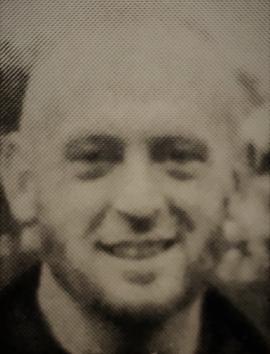
Michael Kelleher was born in Ballyvourney in County Cork on 3 June 1919. He was educated in Rochestown Seraphic College (County Cork), University College Cork and at the theological house in Ard Mhuire Capuchin Friary in County Donegal. He joined the Capuchin Franciscan Order in 1937 (taking Cyril as his religious name) and was ordained to the priesthood in 1946. From 1947, he was involved in various ministries with the Capuchins in what is now the Province of Our Lady of Angels in the Western United States, as director of clerics at Old Mission Santa Inés in Solvang (California) and later as Associate Pastor and Pastor. He was the director of clerics at St. Patrick’s Novitiate in Wilmington, Delaware, and served as both teacher and principal at St. Francis High School in La Cañada-Flintridge, California. He also served as guardian (local superior) of San Lorenzo Seminary in Santa Inés. For a time, he was also guardian and director of clerics at San Buenaventura Friary in San Francisco. He was also Vice Provincial of what is now the Province of Our Lady of Angels and was mission director while residing at Old Mission Santa Inés in Solvang. He died on 17 January 2002 in St. Francis Hospital in Santa Barbara and was buried in the cemetery adjoining San Lorenzo Seminary in California.

Baptismal name: Michael Kelleher
Religious name: Fr. Cyril Kelleher OFM Cap.
Date of birth: 3 June 1919
Place of birth: Ballyvourney, County Cork (Diocese of Cloyne)
Name of father: John Kelleher
Name of mother: Abby (Abigail) Kelleher (née Forde)
Date of reception into the Capuchin Order: 3 Oct. 1937
Date of first profession: 4 Oct. 1938
Date of final profession: 4 Oct. 1941
Date of ordination (as priest): 20 June 1946
Educational attainments: BA 1st class hons. (1941); MA, 1st class hons. (1942)
Missionary activities: Travelled to the Western United States Mission on 29 July 1947
Leadership positions: Principal, St. Francis High School, La Cañada, California, 1956-71; Assistant Custos, 1959-61, 1962-5; Vice-Provincial Minister, 1973-6.
Date of death: 17 Jan. 2002
Place of death: St. Francis Hospital, Santa Barbara, California
Place of burial: Cemetery, San Lorenzo Seminary, Santa Inés, California

Buckley, Maurice, 1920-2003, Capuchin brother
IE CA DB/MB · Pessoa singular · 25 January 1920-24 November 2003

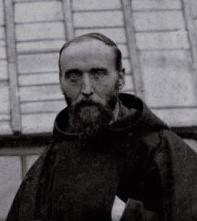
Maurice Buckley was born in Kilnamartyra, County Cork, on 25 January 1920. He joined the Capuchin Franciscans in January 1940. He was a postulant and novice in Kilkenny and took his solemn vows on 8 April 1944. He was part of the community in Rochestown Friary in County Cork until 1952. He then spent three years in Raheny in Dublin and a further eighteen months in Holy Trinity Friary in Cork. In 1956 he volunteered for missionary work in Northern Rhodesia (now Zambia). He spent twenty years in Africa as a missionary. He laboured in construction work in many of the mission stations established by the Irish Capuchins in Zambia including Kalabo, Sichili, Mongu and Lukulu. He returned to Ireland in 1978 and was initially stationed in Kilkenny before moving to Rochestown in County Cork. He died on 24 November 2003 and was buried in the cemetery attached to Rochestown Friary.

Baptismal name: Maurice Buckley
Religious name: Br. Maruice Buckley OFM Cap.
Date of birth: 25 January 1920
Place of birth: Kilnamartyra, County Cork (Diocese of Cloyne)
Name of father: Patrick Buckley
Name of mother: Mary Buckley (née Healy)
Date of reception into the Capuchin Order: 25 January 1940
Date of first profession: 16 Jan. 1941
Date of final profession: 8 Apr. 1944
Missionary activities: Travelled to Livingstone, Northern Rhodesia (later Zambia) on 19 Apr. 1956. He returned to Ireland on 10 Aug. 1978.
Date of death: 24 Nov. 2003
Place of burial: Cemetery, Rochestown Capuchin Friary, County Cork

O’Neill, Honorius, 1925-1973, Capuchin priest
IE CA DB/HON · Pessoa singular · 7 February 1925-16 September 1973

Baptismal name: Francis O’Neill
Religious name: Fr. Honorius O’Neill OFM Cap.
Date of birth: 7 February 1925
Place of birth: Dublin
Name of father: Andrew O’Neill
Name of mother: Margaret O’Neill (née O’Connell)
Date of reception into the Capuchin Order: 24 Oct. 1944
Date of first profession: 25 Oct. 1945
Date of final profession: 25 Oct. 1948
Date of ordination (as priest): 12 June 1952
Educational attainments: BA (1948)
Missionary activities: Travelled to Cape Town, South Africa, on 11 Sept. 1957
Date of death: 16 Sept. 1973
Place of death: St. Mary of the Angels Friary, Athlone, Cape Town, South Africa
Place of burial: Maitland Cemetery, Cape Town, South Africa

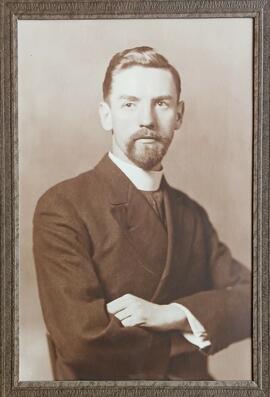
Harvey, Bernardine, 1874-1953, Capuchin priest
IE CA DB/27 · Pessoa singular · 8 October 1874-1 Sept. 1953

Baptismal name: John Harvey
Religious name: Fr. Bernardine Harvey OFM Cap.
Date of birth: 8 Oct. 1874
Place of birth: Cloontuskert, Lanesboro, County Roscommon (Diocese of Elphin)
Name of father: James Harvey (Farmer)
Name of mother: Brigid Harvey (née Cooney)
Date of reception into the Capuchin Order: 2 July 1894
Date of first profession: 21 July 1895
Date of final profession: 8 May 1902
Date of ordination (as priest): 23 Feb. 1902
Date of death: 1 Sept. 1953
Place of death: Dublin
Place of burial: Glasnevin Cemetery, Dublin

Sacred Congregation of Religious
CongR · Pessoa coletiva · 1587-2023

https://www.newadvent.org/cathen/13136a.htm

Sixtus V first erected by a Brief of 17 May, 1586, and afterwards, by the Constitution "Immensa", confirmed, a congregation "super consultationibus regularium" distinct from the congregation "super consultationibus episcoporum et aliorum prælatorum" mentioned in the same Constitution. In 1601 these two congregations were already combined in the Congregation of Bishops and Regulars, to which, in course of time, were united three other congregations whose functions were closely related. These three were: the Congregation on the State of Religious (super statu regularium), created by Innocent X on 15 August, 1652, for the reformation of regulars in Italy, and suppressed by Innocent XII on 4 August, 1698; the Congregation on Regular Discipline (super disciplina regulari), instituted by Innocent XII on 18 July, 1695, for the reformation of regulars not only in Italy but throughout the whole world; the Congregation on the State of the Regular Orders (super statu regularium ordinum), created by Pius IX on 17 June, 1847. The last-named and the one on regular discipline were suppressed by Pius X, by the Motu Proprio of 26 May, 1906, which united these congregations with that of Bishops and Regulars. The new Constitution of Pius X abolishes the Congregation of Regulars and Bishops and transfers that part of its business which concerns bishops to the Congregation of the Council, and that part of it which concerns regulars to a congregation (oongregatio negotiis religiosorum sodalium præposita) created by the new Constitution, and which by common usage sanctioned by the legend on the official seal of the congregation, has received the name of Congregatio of Religious.

This body has the usual organization of the Roman Congregations. It is formed of several cardinals, who are chosen by the pope, and one of whom is the prefect of the congregation; these cardinals are assisted by a secretary and a sub-secretary, who are the major officials of the congregation, and by several minor officials. In regard to the latter it is to be noted that, as the amount of its business necessitates a division of the congregation into three parts (as in the case of the Congregation of the Sacraments), the highest dignitaries among the minor officials are the three assistants who are placed over the three sections. One of these sections has to deal with matters relating to religious orders; another, with the business of religious congregations or associations of men, of whatever nature those associations may be; the third, with business relating to congregations of women. This congregation also has a college of consultors.

The Constitution of Pius X clearly defines the competency of this congregation, which is to pass judgment upon all matters relating to religious persons of either sex, whether bound by solemn or by simple vows, or to those persons who, although they be not religious in the canonical sense of the word, live as religious — such as the oblates of certain communities of men or of women, who, without being bound by vows, live a common life under an approved rule. The third orders, consisting of seculars, are also under this congregation. It decides in litigations between members of religious orders, or between religious and bishops, and it is the competent tribunal in eases which have to be dealt with in the way of discipline (in via disciplinari) where a religious appears either as plaintiff or as defendant. Hence it is to be inferred, and indeed is expressly stated in the Constitution, that causes which have to be dealt with in the judicial way must be referred to the Rota, the rights of the Holy Office being always safeguarded. Finally, all common law dispensations to regulars pertain to this congregation, excepting dispensation from the Eucharistic fast, which, as said above, pertains to the Congregation of the Sacraments. The Congregatio of Religious is alone competent to approve new religions institutes and their constitutions, as well as to modify institutes already approved, and these being matters of grave importance, the full congregation deals with them.

HI · Pessoa coletiva · 1542-2023

https://www.newadvent.org/cathen/08026a.htm

The great apostasy of the sixteenth century, the filtration of heresy into Catholic lands, and the progress of heterodox teachings everywhere, prompted Paul III to establish the "Sacra Congregatio Romanae et universalis Inquisitionis seu sancti officii" by the Constitution "Licet ab initio" of 21 July, 1542. This inquisitional tribunal, composed of six cardinals, was to be at once the final court of appeal for trials concerning faith, and the court of first instance for cases reserved to the pope. The succeeding popes — especially Pius IV (by the Constitutions "Pastoralis Oficii" of 14 October, 1562, "Romanus Pontifex" of 7 April, 1563, "Cum nos per" of 1564, "Cum inter crimina" of 27 August, 1562) and Pius V (by a Decree of 1566, the Constitution "Inter multiplices" of 21 December, 1566, and "Cum felicis record." of 1566) — made further provision for the procedure and competency of this court. By his Constitution "Immensa aeterni" of 23 January, 1587, Sixtus V became the real organizer, or rather reorganizer of this congregation.

The Holy Office is first among the Roman congregations. Its personnel includes judges, officials, consultors, and qualificators. The real judges are cardinals nominated by the pope, whose original number of six was raised by Pius IV to eight and by Sixtus V to thirteen. Their actual number depends on the reigning pope (Benedict XIV, Constitution "Sollicita et Provida", 1733). This congregation differs from the others, inasmuch as it has no cardinal-prefect: the pope always presides in person when momentous decisions are to be announced (coram Sanctissimo). The solemn plenary session on Thursdays is always preceded by a session of the cardinals on Wednesdays, at the church of Santa Maria sopra Minerva, and a meeting of the consultors on Mondays at the palace of the Holy Office. The highest official is the commissarius sancti oficii, a Dominican of the Lombard province, to whom two coadjutors are given from the same order. He acts as the proper judge throughout the whole case until the plenary session exclusive, thus conducting it up to the verdict. The assessor sancti officii, always one of the secular clergy, presides at the plenary sessions. The promotor fiscalis is at once prosecutor and fiscal representative, while the advocatus reorum undertakes the defence of the accused. The duty of the consultors is to afford the cardinals expert advice. They may come from the secular clergy or the religious orders, but the General of the Dominicans, the magister sacri palatii, and a third member of the same order are always ex-officio consultors (consultores nati). The qualificators are appointed for life, but give their opinions only when called upon. The Holy Office has jurisdiction over all Christians and, according to Pius IV, even over cardinals. In practice, however, the latter are held exempt. For its authority, see the aforesaid Constitution of Sixtus V "Immensa aeterni" (see ROMAN CONGREGATIONS).

Sacred Congregation of Rites
RM/SCR · Pessoa coletiva · 1588-1969

The Sacred Congregation of Rites was a congregation of the Roman Curia, erected on 22 January 1588 by Pope Sixtus V by Immensa Aeterni Dei; it had its functions reassigned by Pope Paul VI on 8 May 1969.

The Congregation was charged with the supervision of the liturgy, the dispensation of the decrees of Canonical coronations, other various sacraments, and the process of canonization of saints.

https://en.wikipedia.org/wiki/Sacred_Congregation_of_Rites