Affichage de 330 résultats

Notice d'autorité
IE CA DB/RH · Personne · 18 September 1863-17 March 1916

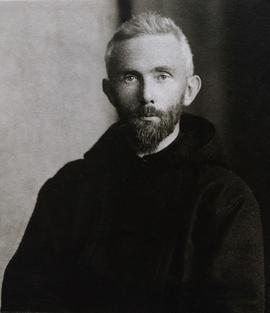
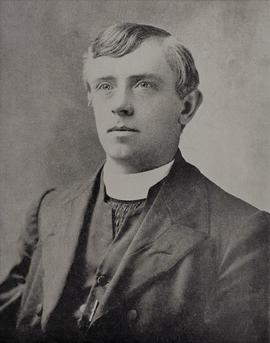
Richard Henebry (Risteard de Hindeberg) was born on 18 September 1863 in Portlaw, County Waterford, the fourth of six children of Pierce Henebry, a farmer, and Ellen Henebry (née Cashen) of Clogheen in County Tipperary. At the age of twenty-one, Richard Henebry entered St. John’s College in Waterford to study for the priesthood, where Canon Patrick Power (1862-1951) was among his contemporaries. He subsequently won a scholarship to finish his studies in St. Patrick’s College, Maynooth. He graduated from All Hallows College in Dublin in 1892. Henebry briefly served on the English mission before he was offered the inaugural Chair of Celtic Studies at the Catholic University in Washington in 1895. The Ancient Order of Hibernians, an Irish American Catholic organization, had funded the chair and Henebry was proposed by classmates Canon Patrick Augustine Sheehan and Fr. Michael Hickey for the appointment. To fully prepare for his role Henebry was given special leave to go to Germany to study, again with effective lobbying on his behalf by Hickey and Sheehan. He studied for his doctoral degree in Celtic philology in Freiburg and Greifswald with the acclaimed celticists Rudolf Thurneysen and Heinrich Zimmer.

Henebry took up his appointment at the Catholic University in Washington in 1898 only to be relieved of his duties within two years. Though he was suffering from ill-health, Henebry had also seemingly fallen out with his colleagues and superiors in Washington. A diagnosis of tuberculosis forced him to spend a year recuperating in a sanatorium in Denver, Colorado. While in America, he edited and translated a large part of the life of Colum Cille by Manus Ó Donnell which he published in ‘Zeitschrift für celtische Philologie’ (1901-05). Following his return to Ireland, Henebry taught Irish in a variety of places in the Waterford area, notably during the summers from 1906 at Ring College (Coláiste na Rinne), which he had helped establish in 1905. Various diocesan appointments followed within Waterford and Lismore, before he put his name forward for the Chair of Irish Language and Literature at University College Cork (UCC) in 1909, again an inaugural position.

Henebry remained at UCC until his death in 1916, but it was not a wholly successful appointment. His efforts to embed his model of Irish language teaching in the university were met with resistance, from students and others. His efforts to establish an archive of Irish traditional music were also thwarted, and his continuing ill-health compromised his own ability to achieve these objectives. During his lifetime, Henebry was recognized as a leading linguist, and his works on the Déise dialect of Irish were widely acclaimed in academic circles. Pedagogically (and perhaps culturally) an enduring part of his legacy was his role as a teacher at, and supporter of, Coláiste na Rinne, in the Waterford Gaeltacht. In addition to his language instruction, Henebry also taught Irish traditional music to any students who were interested. He also relished his role as a contributor to various papers and periodicals, however the longest of his musical works published during his lifetime was a booklet, ‘Irish Music: Being an Examination of the Matter of Scales, Modes and Keys with Practical Instructions and Examples for Players’ (1903). Henebry died on 17 March 1916 in Portlaw, County Waterford, and was buried in Carrickbeg near Carrick-on-Suir. Henebry’s analytical monograph, ‘A Handbook of Irish Music’ (1928), published by University College Cork, appeared posthumously, and was edited by Professor Tadhg Ó Donnchadha (1874-1949), his successor in the Department of Irish in UCC.

IE CA DB/TC · Personne · 4 July 1908-20 January 1996

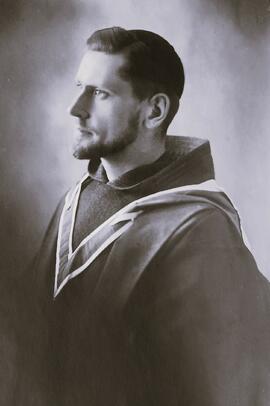
Baptismal name: Edmond (var. Edward) Connery
Religious name: Fr. Timothy Connery OFM Cap.
Date of birth: 4 July 1908
Place of birth: Ballylanders, County Limerick (Archdiocese of Cashel & Emly)
Name of father: Edmond Connery
Name of mother: Catherine Connery (née Barry)
Date of reception into the Capuchin Order: 4 Oct. 1926
Date of first profession: 5 Oct. 1927
Date of final profession: 5 Oct. 1930
Date of ordination (as priest): 17 June 1934 (Letterkenny, County Donegal)
Missionary activities: Travelled to Northern Rhodesia (now Zambia) in 1935. He returned to Ireland in 1938.
Date of death: 20 Jan. 1996
Place of death: Kilkenny
Place of burial: Foulkstown Cemetery, Kilkenny

King, Philip, 1885-1952, Capuchin priest
IE CA DB/PK · Personne · 16 March 1885-22 August 1952

Baptismal name: Patrick King
Religious name: Fr. Philip King OFM Cap.
Date of birth: 16 Mar. 1885
Place of birth: Glin, County Limerick
Name of father: Thomas King
Name of mother: Johanna King (née Ahern)
Date of reception into the Capuchin Order: 17 Mar. 1903
Date of first profession: 17 Sept. 1904
Date of final profession: 31 July 1908
Date of ordination (as priest): 24 Sept. 1921
Educational attainments: BA (RUI)
Date of death: 22 Aug. 1952
Place of burial: Cemetery, Capuchin Friary, Rochestown, County Cork

John Dignan
JDClonfert · Personne · 1880-1953

From : https://www.dib.ie/biography/dignan-john-a2583

Dignan, John (1880–1953), priest and bishop of Clonfert, was born 13 June 1880 at Ballygar, Co. Galway, son of Thomas Dignan, farmer, and Sarah Dignan (née Kelly). He was educated at Esker College, Loughrea, and St Patrick's College, Maynooth, was ordained a priest (6 September 1903) for the Clonfert diocese, and in the same year joined the staff of St Joseph's College in Ballinasloe where he served until 1915, becoming president in 1905. He served as a curate in the parish of Creagh and Kildoney (1915–19) and as parish priest of Abbey, Loughrea (1919–23), and subsequently in Killimer, before being appointed a bishop (March 1924). A staunch nationalist, he had served in 1917 as president of the east Galway board of the Sinn Féin executive and was a central figure in the organisation of Sinn Féin courts in the county; in his absence, his parochial house in Loughrea was raided and bombed by the Black and Tans. He was adamantly opposed to the Anglo–Irish treaty, and at the time of his consecration as bishop of Clonfert in June 1924 caused a minor sensation by declaring: ‘I predict that the republican party is certain to be returned to power in a short time. Prepare for that day. Do your best for its quick approach.’ In communication with Patrick Hagan, the rector of the Irish College in Rome, he defended his remarks, believing that republicans had been treated badly and deserved public endorsement. Known for his strong Fianna Fáil sympathies, he endorsed their programme for economic independence in 1933, and hailed the 1937 constitution as the ‘Christian charter of a Christian people’. In 1936 he was appointed chairman of the National Health Insurance Society (NHIS) and became the hierarchy's leading authority on social issues. He is best remembered for his 1944 pamphlet Outlines of a scheme of national health insurance. Strongly influenced by catholic social theory and following the continental pattern of health insurance, it exalted the authority of the family, and suggested the creation of a central insurance board and the removal of all responsibility for health and welfare from the government's control. GPs (employed in newly created health centres) were to be paid a salary or a combination of salary and fee or capitation with private practice, and church representation on the central and regional committees would supervise the service, to be financed by contributory payments. Dignan maintained the subtext of the plan was that ‘the whole poor law legislation. . . should be blotted out from our statute book and – from our memory. The [present] system is tainted at its root and it reeks now, as it did when introduced, of destitution, pauperism, and degradation.' The main weakness of the plan was that no costings were provided to show that it was financially viable, but it played an important role in forcing debate and articulating a new view of access to the health services. It infuriated the minister for local government and public health, Seán MacEntee (qv), who argued that Dignan's plan would confer power upon ‘doctors and ecclesiastics rather than democratically elected politicians’ and in 1945 Dignan was replaced as chairman of the NHIS by a civil servant. The clash was a catalyst in health becoming a government department in its own right (independent of local government) in 1947 and foreshadowed the Mother-and-Child controversy of 1951: it was ‘the first approximation to a church versus state clash that the country had seen since 1922’ (Garvin, 71–2). Dignan died 12 April 1953. The Labour party, who had supported his proposals, lamented that ‘the cause of social progress is poorer by his passing’.
Sources

Ir. Times, 14 Apr. 1953; John H. Whyte, Church and state in modern Ireland 1923–79 (1980); Ruth Barrington, Health, medicine and politics in Ireland 1900–79 (1987); Bernard Canning, Bishops of Ireland 1870–1987 (1987); J. J. Lee, Ireland 1912–85: politics and society (1989); Dermot Keogh, The Vatican, the bishops and Irish politics 1919–39 (1991); Tom Garvin, Preventing the future: why was Ireland so poor for so long? (2004)

Patrick Morrisroe
PM · Personne · 16/02/1869 - 27/05/1946

Patrick Morrisroe the son of Mary Brennan and John Morrisroe (the baker) was born in Charlestown, County Mayo 19th February 1867. His sponsors were Luke Brennan and Frances Kelly. He joined several siblings. As seemed to follow family suit, he was educated at the local N.S. Seminary, then on to Ballaghadereen and Maynooth College. Following his ordination at the Cathedral at Ballaghadereen he served in the diocese of Achonry. In 1896 Patrick returned to Maynooth to become Junior Dean in the College.

CathedralPatrick was consecrated a Bishop at the age of 44 in the Cathedral, Ballaghadereen along with his cousin Most Rev. Bishop Michael J. O'Doherty, later to become Bishop of Zamboagna, in the Philippines. Most Rev. Dr. Healy, Archbishop of Tuam was the concecrating prelate, and was assisted by Rev. Dr. Clancy, the Bishop of Elphin. The congregation which filled the Cathedral included Messrs. John Dillon M.P., J. McVeagh M.P., and John O'Dowd M.P. The sermon was preached by Rev. Dr. Beechler, Maynooth College.

A man of deep learning Patrick was an authority on theological and liturgical matters. His Lenten Pastoral of 1941, one of great controversy was censored by the government. There are two versions of the Pastoral, one before censorship and one after. In it he directs his final comments to a world in crisis. "As we pen these pages, beloved Brethren, we are face to face with a spectacle probably more appaling than any recorded in the annals of history. Long ago it was predicted that nation would rise agains nation and Kingdom against Kingdom."

At the age of 79 Patrick died at the Palace, Edmondstown House, Ballaghadereen. Priests and people from all parts of the Diocese of Achonry and from around the world attended the removal of the remains to St. Nathy's Cathedral. The Archbishop of Tuam, Most Rev. Dr. Walsh officiated at the house. The funeral procession was headed by the members of the Diocesan Chapter and a large number of surpliced clergy of the diocese who chanted the Miserere. Members of the St. Vincent de Paul and Gardai acted as pall-bearers and marshals, and gardai, under the direction of Supt. J. Lyons provided a guard of honour. Members off all the Catholic organizations marched in the procession. His crypt is located within the sanctuary.

Taken from - https://freepages.rootsweb.com/~morrisroe/genealogy/notjustacouple.html

See also https://www.catholic-hierarchy.org/bishop/bmorr.html

James J. Ryan
Personne · 1851-1939

James J. Ryan (1851 – May 9, 1939) was an Irish Catholic priest in the diocese of Cashel, who served as president of St. Patrick's College, Thurles (1903–1914). Ryan also funded the establishment of Glenstal Abbey, inviting the Pallotine order to establish a presence in Thurles, and funded the re-establishment of the Irish College in Louvain. Born in Thurles, Co. Tipperary in 1851, he went to Louvain to train for the priesthood from 1873, ordained in 1876 he was awarded the degree of J.C.B. (Lovan.) before continuing his studies in Rome.

Returning to Ireland in 1879, Ryan took up a position as a professor of church history, in St. Patrick's College, Thurles, the Cashel Diocesan Seminary, before becoming vice-president and in 1903 president of the college, a position he held until 1914. In 1909 with the support of Archbishop of Cashel, Rev. Dr. Fennelly, he invited the pallottine order to set up in Thurles with their students studying in St. Patrick's College when he died in 1939 he left his residence to the order.
Glenstal Abbey

Reportedly a wealthy man, Ryan purchased Glenstal Castle for £2000, in 1927, from Sir Charles Barrington, where he resided for some time, promising it to the Benedictine order if they set up a monastery there, which they eventually availed of. Initially, there was some discussions between the order and Ryan who wanted to maintain room and hunting a fishing rights on the property, as well as the order considering other locations such as Kylemore.

Re-establishment of the Irish College, Louvain

Ryan was involved in the re-establishment of the Franciscan Irish College, in Louvain, St Anthony's College, Leuven, which had no longer been in the Irish, or orders possession, since the French Revolution. With his friend from their University days in Louvain, Cardinal Désiré-Joseph Mercier, and helped by funding from Irish-born American philanthropist Marquis Martin Maloney. He purchased the property on behalf of the Irish Franciscans, in 1923 (for legal reasons it was nominally under the ownership of the Catholic University of Louvain), worked to have the property repaired after damage from the Great war, and restored the memorial stones of the Irish buried there.

Ryan died at his residence The Hermitage, Cabra, Thurles, on May 9, 1939.

  • Wikipedia
IE CA DB/128 · Personne · 13 July 1901-18 October 1961

Early Life and Ministry
Cornelius Hyland was born John Hyland on 13 July 1901, in County Offaly. He entered the Capuchin Franciscan Order in Kilkenny, where he completed his ecclesiastical studies and was subsequently ordained to the priesthood. During the 1930s, Father Hyland served as the Director of Students at St. Bonaventure’s Friary in Cork. Concurrently, he served the Irish Province as the editor of the Liturgical Calendar.

Missionary Assignment to the United States
Around 1938, Father Hyland was assigned to the Capuchin Custody in America. From 1943 to 1946, he served as Pastor of Our Lady of Angels Parish in Hermiston, Oregon, succeeding the Reverend Alban Cullen. During his tenure in Oregon, he was elected as one of two assistants to the Custos Provincial, the Very Reverend Stephen Murtagh.

Pastorate at Burlingame, California
In 1946, Father Hyland succeeded the Reverend Sylvan Murphy as Pastor of Our Lady of Angels Parish in Burlingame, California, initiating a period of significant parish expansion during the post-World War II population boom.

Under his administration, the parish undertook extensive capital campaigns and construction projects:

• Chancery Approval & Land Acquisition: Secured permission from the archdiocesan chancery, raised necessary capital, and acquired property on Hillside Drive.
• Our Lady of Angels Church: Initiated construction on a new, larger parish church, which opened in 1950.
• Parochial Rectory: Completed construction on a larger friary rectory in 1952.
• Educational Expansion: Built new classrooms to accommodate the growing student body.
• Parochial Convent: Undertook the construction of a convent in 1958 for the teaching staff, the Sisters of Mercy.

Community Life and Final Years

Within the friary, Father Hyland maintained strict adherence to religious life, emphasizing communal meals paired with Scripture readings and the shared recitation of the Divine Office.

By 1960, failing health limited his active ministry. His final public act of devotion was the installation of a Statue of Our Lady of Fatima at the parish, which he had personally acquired during a pilgrimage to Fatima, Portugal, with Father Finnian Carroll. Father Hyland suffered a fatal heart attack the following year, dying on 18 October 1961. He was buried in San Francisco.

IE CA DB/108 · Personne · 8 July 1899-7 August 1946

Early Life and Domestic Ministry
Enda Delaney was born on 8 July 1899 in Castleknock, County Dublin. Following his admission into the Capuchin Franciscan Order and subsequent ordination to the priesthood, he spent his foundational years of clerical ministry serving the Irish Province.

Missionary Transfer and Southern California Foundation
In 1926, Father Delaney travelled from Ireland to join the Capuchin mission field in the United States. He initially ministered in Abbottstown, Pennsylvania. In 1930, his assignment shifted to Southern California when the Archdiocese of Los Angeles entrusted St. Francis of Assisi Parish to the Order. Father Delaney was appointed to the parish’s inaugural Capuchin community near Sunset Boulevard, working alongside the newly appointed pastor, Father Joseph Fenelon, and fellow assistant, Father Ambrose Brunton. Concurrently, he became a prominent regional missioner, traveling extensively to conduct parish missions and public novena devotions.

Parochial Administration in Northern California
In 1937, Father Delaney was transferred north to assume administrative leadership within the Archdiocese of San Francisco:

• Appointment: Commissioned as Pastor of Our Lady of Angels Parish in Burlingame, California.
• Tenure: Directed parish operations and pastoral care for a two-year period, concluding his administration in 1939.

Final Years and Decease
Following his pastorate in Burlingame, Father Delaney eventually returned to the regional houses in Southern California. He died on 7 August 1946. He was buried in Los Angeles, California.