The Irish province of the Vincentian Community was founded in 1833, inspired by the work of Vincent de Paul, who had founded the Vincentians in France in 1625. https://vincentians.ie/who-we-are/the-history-of-the-irish-vincentians/
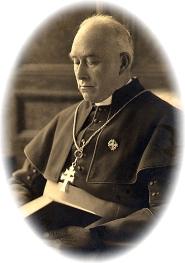
James J. Ryan (1851 – May 9, 1939) was an Irish Catholic priest in the diocese of Cashel, who served as president of St. Patrick's College, Thurles (1903–1914). Ryan also funded the establishment of Glenstal Abbey, inviting the Pallotine order to establish a presence in Thurles, and funded the re-establishment of the Irish College in Louvain. Born in Thurles, Co. Tipperary in 1851, he went to Louvain to train for the priesthood from 1873, ordained in 1876 he was awarded the degree of J.C.B. (Lovan.) before continuing his studies in Rome.
Returning to Ireland in 1879, Ryan took up a position as a professor of church history, in St. Patrick's College, Thurles, the Cashel Diocesan Seminary, before becoming vice-president and in 1903 president of the college, a position he held until 1914. In 1909 with the support of Archbishop of Cashel, Rev. Dr. Fennelly, he invited the pallottine order to set up in Thurles with their students studying in St. Patrick's College when he died in 1939 he left his residence to the order.
Glenstal Abbey
Reportedly a wealthy man, Ryan purchased Glenstal Castle for £2000, in 1927, from Sir Charles Barrington, where he resided for some time, promising it to the Benedictine order if they set up a monastery there, which they eventually availed of. Initially, there was some discussions between the order and Ryan who wanted to maintain room and hunting a fishing rights on the property, as well as the order considering other locations such as Kylemore.
Re-establishment of the Irish College, Louvain
Ryan was involved in the re-establishment of the Franciscan Irish College, in Louvain, St Anthony's College, Leuven, which had no longer been in the Irish, or orders possession, since the French Revolution. With his friend from their University days in Louvain, Cardinal Désiré-Joseph Mercier, and helped by funding from Irish-born American philanthropist Marquis Martin Maloney. He purchased the property on behalf of the Irish Franciscans, in 1923 (for legal reasons it was nominally under the ownership of the Catholic University of Louvain), worked to have the property repaired after damage from the Great war, and restored the memorial stones of the Irish buried there.
Ryan died at his residence The Hermitage, Cabra, Thurles, on May 9, 1939.

- Wikipedia
Bishop James Moynagh S.P.S. (1903–1985), was an Irish-born Roman Catholic priest who served for the Saint Patrick’s Society for the Foreign Missions in Nigeria, and was ordained Bishop of Calabar.
James Roche (b Midleton 19 October 1870; d Cobh 31 August 1956) was a 20th century Irish Roman Catholic Bishop.
He served as Bishop of Ross from 1926 to 1931;Coadjutor Bishop of Cloyne and Titular Bishop of Sebastopolis in Armeniafrom 1931 to 1935; and Roman Catholic Bishop of Cloyne from 1935 until his death. He is buried at St Cemetery in Cobh.
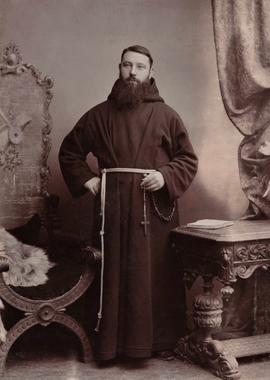
Baptismal name: Joseph Jennings
Religious name: Fr. Bernard Jennings OFM Cap.
Date of birth: 21 Feb. 1850
Place of birth: Donoughmore, County Cork
Name of father: Joseph Jennings
Name of mother: Catherine Jennings (née Buckley)
Date of reception into the Capuchin Order: 12 Nov. 1874
Date of first profession: 12 Nov. 1875
Date of final profession: 26 Nov. 1878
Date of ordination (as priest): 13 July 1879
Leadership positions: Fr. Bernard served as Guardian (local superior) of the Church Street community in Dublin from 1883-1886. He served as Provincial Minister (Superior) of the Irish Capuchins from 1895 to 1898.
Date of death: 26 Dec. 1904
Place of death: Private Hospital, 9 Lower Lesson Street, Dublin
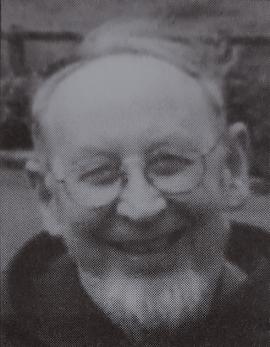
James Jennings was born in Ballintober (or Ballintubber) in County Mayo on 12 May 1928. He joined the Capuchin Franciscans in October 1946 and took Pacificus as his religious name. He was solemnly professed as a friar in October 1950 and was ordained to the priesthood on 19 May 1955. He spent five years at University College Cork and earned a Bachelor of Arts, a Master of Arts, and a Higher Diploma in Education. He served as Dean of Rochestown College in County Cork from 1955-6 and was Master of Novices in the adjoining friary from 1956-8. He filled the same role in Kilkenny Friary for a further four years. He taught at St. Bonaventure’s Hostel in Cork from 1962-4. He subsequently returned to Rochestown for three years as Vice-Rector before moving to Ard Mhuire Friary in County Donegal where he served as guardian (local superior) from 1970-3. There followed spells as a curate (1975-80) in Priorswood parish in County Dublin and later as spiritual director of the diocesan seminary in Carlow. He later acted as retreat master in Raheny Friary in Dublin and spent a year (1985-6) in ministry with Irish Capuchin missionaries in New Zealand. He returned to Raheny and was appointed a chaplain to Irish schools in the Dublin Archdiocese and acted as editor of ‘The Capuchin’ periodical publication. His final appointment was to Ard Mhuire Friary and Retreat House in County Donegal. He died at Ard Mhuire on 18 March 2006 and was buried in the adjoining cemetery.
Baptismal name: James Jennings
Religious name: Fr. Pacificus Jennings OFM Cap.
Date of birth: 12 May 1928
Place of birth: Ballintober, County Mayo
Name of father: Patrick Jennings
Name of mother: Catherine Jennings (née Lavelle)
Date of reception into the Capuchin Order: 3 Oct. 1946
Date of first profession: 4 Oct. 1947
Date of final profession: 4 Oct. 1950
Date of ordination (as priest): 19 May 1955
Educational attainments: BA 1st class hons. (1950); MA, 1st class hons. (1951); Higher Diploma in Education.
Date of death: 18 Mar. 2006
Place of death: Ard Mhuire Capuchin Friary, County Donegal
Place of burial: Cemetery, Ard Mhuire Capuchin Friary, County Donegal
From : https://www.dib.ie/biography/dignan-john-a2583
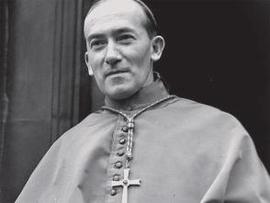
Dignan, John (1880–1953), priest and bishop of Clonfert, was born 13 June 1880 at Ballygar, Co. Galway, son of Thomas Dignan, farmer, and Sarah Dignan (née Kelly). He was educated at Esker College, Loughrea, and St Patrick's College, Maynooth, was ordained a priest (6 September 1903) for the Clonfert diocese, and in the same year joined the staff of St Joseph's College in Ballinasloe where he served until 1915, becoming president in 1905. He served as a curate in the parish of Creagh and Kildoney (1915–19) and as parish priest of Abbey, Loughrea (1919–23), and subsequently in Killimer, before being appointed a bishop (March 1924). A staunch nationalist, he had served in 1917 as president of the east Galway board of the Sinn Féin executive and was a central figure in the organisation of Sinn Féin courts in the county; in his absence, his parochial house in Loughrea was raided and bombed by the Black and Tans. He was adamantly opposed to the Anglo–Irish treaty, and at the time of his consecration as bishop of Clonfert in June 1924 caused a minor sensation by declaring: ‘I predict that the republican party is certain to be returned to power in a short time. Prepare for that day. Do your best for its quick approach.’ In communication with Patrick Hagan, the rector of the Irish College in Rome, he defended his remarks, believing that republicans had been treated badly and deserved public endorsement. Known for his strong Fianna Fáil sympathies, he endorsed their programme for economic independence in 1933, and hailed the 1937 constitution as the ‘Christian charter of a Christian people’. In 1936 he was appointed chairman of the National Health Insurance Society (NHIS) and became the hierarchy's leading authority on social issues. He is best remembered for his 1944 pamphlet Outlines of a scheme of national health insurance. Strongly influenced by catholic social theory and following the continental pattern of health insurance, it exalted the authority of the family, and suggested the creation of a central insurance board and the removal of all responsibility for health and welfare from the government's control. GPs (employed in newly created health centres) were to be paid a salary or a combination of salary and fee or capitation with private practice, and church representation on the central and regional committees would supervise the service, to be financed by contributory payments. Dignan maintained the subtext of the plan was that ‘the whole poor law legislation. . . should be blotted out from our statute book and – from our memory. The [present] system is tainted at its root and it reeks now, as it did when introduced, of destitution, pauperism, and degradation.' The main weakness of the plan was that no costings were provided to show that it was financially viable, but it played an important role in forcing debate and articulating a new view of access to the health services. It infuriated the minister for local government and public health, Seán MacEntee (qv), who argued that Dignan's plan would confer power upon ‘doctors and ecclesiastics rather than democratically elected politicians’ and in 1945 Dignan was replaced as chairman of the NHIS by a civil servant. The clash was a catalyst in health becoming a government department in its own right (independent of local government) in 1947 and foreshadowed the Mother-and-Child controversy of 1951: it was ‘the first approximation to a church versus state clash that the country had seen since 1922’ (Garvin, 71–2). Dignan died 12 April 1953. The Labour party, who had supported his proposals, lamented that ‘the cause of social progress is poorer by his passing’.
Sources
Ir. Times, 14 Apr. 1953; John H. Whyte, Church and state in modern Ireland 1923–79 (1980); Ruth Barrington, Health, medicine and politics in Ireland 1900–79 (1987); Bernard Canning, Bishops of Ireland 1870–1987 (1987); J. J. Lee, Ireland 1912–85: politics and society (1989); Dermot Keogh, The Vatican, the bishops and Irish politics 1919–39 (1991); Tom Garvin, Preventing the future: why was Ireland so poor for so long? (2004)
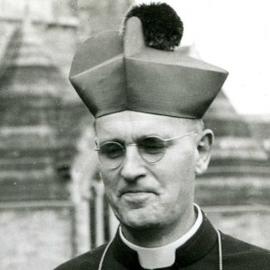
John Anthony "Jack" Kyne (4 November 1904 - 23 December 1966) was the Roman Catholic Bishop of Meath, Ireland from 1947 to his death in 1966.
Kyne was born in Longwood, County Meath on the 4 November 1904. He won a scholarship to St Finian's College in Mullingar and later became a member of staff there. Kyne studied for the priesthood at the Irish College in Rome and was ordained a priest of the Diocese of Meath on 31 July 1927. From 1930, including during World War II, he served as a vice-rector of the Pontifical Irish College in Rome. In 1939 Pope Pius XII named him a Monsignor and further appointed him as Papal Chamberlain in 1940.
Episcopal ministry
Following his predecessors elevation to Archdiocese of Armagh in 1946, he was appointed Bishop of Meath on 29 June 1947,[1] a position he held until his sudden death in Mullingar on 23 December 1966.
John Mary Harty was born in Murroe, County Limerick in 1867. He received his education at Jesuit College, Limerick, Saint Patrick's College, Thurles, and Maynooth. He entered First Philosophy on 1 September 1887 and was ordained priest on 20 May 1894 in Clonliffe College, Dublin, by Dr. William Walsh of Dublin. The next year, after a competitive examination, he was appointed to the Chair of Dogmatic Theology in Maynooth, the year after ordination being spent in postgraduate study in Dunboyne.
He published treatises on Grace and on the Sacraments. Later he was appointed Senior Professor of Moral Theology and held this chair till his appointment as Archbishop on the resignation of Dr. Fennell. The voting of P.P.'s for new Bishop was Dr. Harty, Maynooth College - 20; Dr. John Slattery, Thurles College - 10; Rev. Tom F. Power P.P. V.F. Galbally - 8; Mgr. Riordan, Rector, Irish College, Rome - 2; Canon Arthur Ryan P.P. V.G. - 6. Tipperary - 1; Dr. Kelly, Bishop of Ross - 1.
Dr. Harty was appointed in November 1913 and consecrated in Thurles on 8 January 1914 by Archbishop Fennelly. After consecration the priests of the Archdiocese presented him with a motor car costing Ł500. His gentle manners and kindly disposition endeared him to all - both clergy and laity. For a number of years before his death, ill-health restricted his activities. He requested a Coadjutor from the Holy See, indicating that his wish was Dr. Jeremiah Kinnane, Bishop of Waterford since 1932, and a priest of the Archdiocese. In 1942, the Holy See acceded to his wish and Dr. Kinnane resigned his see of Waterford and became Coadjutor Archbishop of Cashel and titular Archbishop of Dercos and Dean of Cashel Diocesan Chapter, with Cashel as his parish.
Totally confined to the Archbishop's Palace by progressive debility from this period till his death on 1 September 1946, Archbishop Harty died aged 79 years. He was for many years President of the Catholic Truth Society of Ireland (from 14 October1914) and Patron of G.A.A. from 1928.
Dr. Harty received letter of appointment as Archbishop on 2 December 1913, and Bulls of appointment on 8 December 1913. The Bulls stated that perpetual administration of the see of Emly is attached to the see of Cashel. Dr. Harty had Pallasgreen and Solohead as mensal parishes - latter permitted by Rome (January 1915) while Dr. Fennelly lived.